
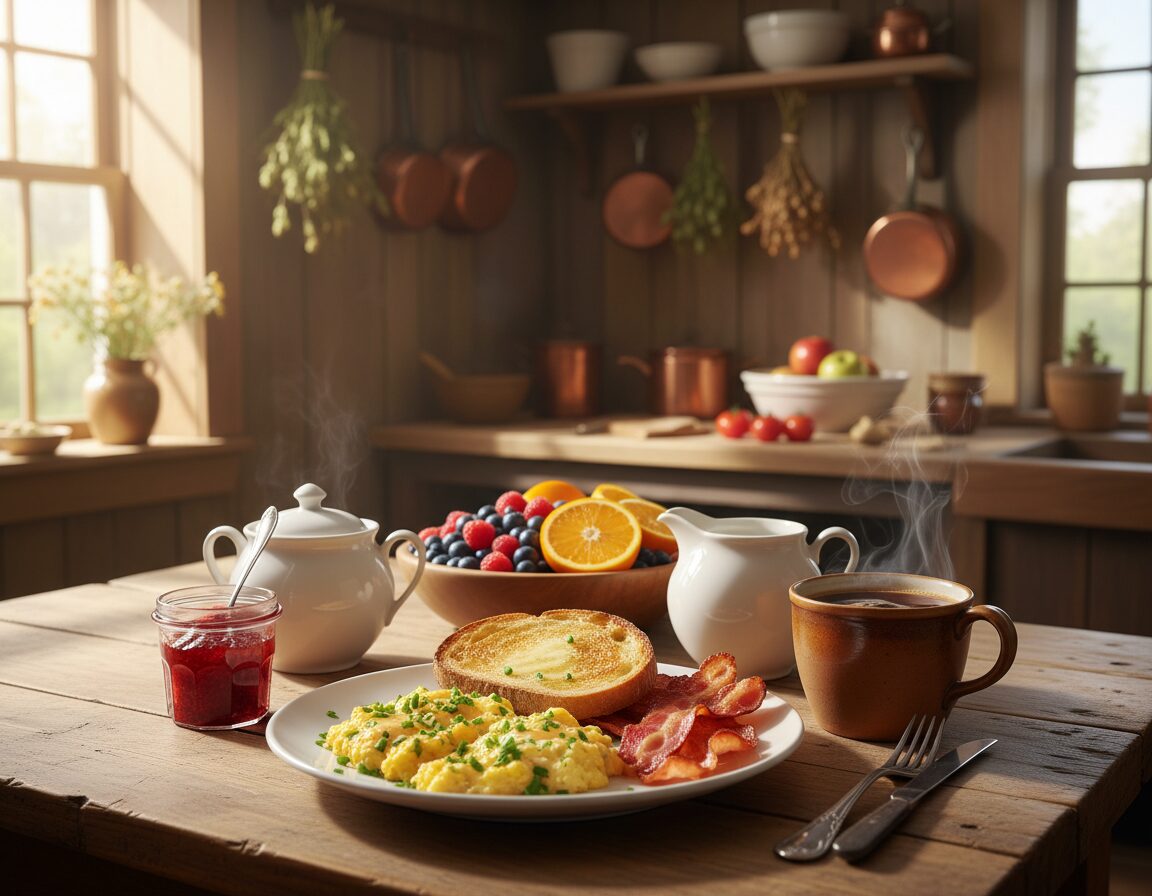
I keep a small toolkit of easy farmhouse breakfasts I reach for on rushed weekdays — oats, eggs, yoghurt and any fruit that needs using up.
I’m writing from a busy UK kitchen where mornings can be hectic. I choose dishes that are quick to make, cut down on washing-up, and still feel hearty and comforting.
Expect honest, practical recipes — not elaborate spreads. I explain what “farmhouse” means in my kitchen: simple ingredients, cosy plates and no fancy gadgets, unless you want shortcuts.
I’ll give a clear “choose your route” plan: eggs, quick parfaits, porridge, freezer egg bakes and one-pan hashes. I also show how I decide what to cook based on time, what needs using, and how long it will keep the family going.
Key Takeaways
- These are real, time-saving ideas I use on rushed mornings.
- Recipes use basic storecupboard items and seasonal fruit.
- Portions are flexible for singles or families.
- Protein boosts and make-ahead options help fuel the day.
- No specialist kit needed — just a few simple shortcuts if you have them.
What I mean by a farmhouse breakfast in the UK
On a typical UK morning I aim for a plate that feels honest and filling without turning into a weekend project. I mean food built from a few reliable ingredients — eggs, grains, tomatoes, mushrooms and proper bread — nothing showy, just dependable.
Why these basics work: they cook fast, stretch well and give the plate weight. A fried egg and toasted bread sit nicely beside roasted tomatoes or a pan of mushrooms. Add beans or bacon if you want extra protein or keep it meat-free depending on what’s in the fridge.
I borrow the spirit of a full English — eggs, toast, beans and tomatoes — but I cut steps. Fewer pans, simpler timing, and no need to fry everything. Think of it as a practical approach to those classic breakfast recipes.
- I’ll share quick assemblies for five-minute mornings.
- I’ll also include make-ahead options for busier weeks.
- Calories? I call plates “hearty” or “lighter” rather than counting — it helps me choose what to add.
How I get breakfast on the table fast when time is tight
On rushed days I lean on small, tested tricks that get a warm plate on the table fast. These habits shave minutes and make the whole morning calmer.
The little prep habits that save me minutes
Chop once, use twice: onions and veg prepped on Sunday cut daily fuss. I wipe the pan as I go and set bowls and spoons out before I cook.
How I balance taste, protein and what my family will actually eat
I follow a simple protein-first mindset — eggs, yoghurt, beans or cheese anchor the plate. That keeps everyone full and keeps family arguments at bay.
My go-to “one pan, one dish” rule for less washing-up
I mostly stick to a single pan or tray. Sometimes I break that rule — toast plus eggs is still the best way when time is very tight.
- Five minutes: yoghurt with granola and fruit.
- Ten minutes: skillet eggs with spinach or mushrooms.
- More time: make-ahead egg tray or a warmed hash.
I keep recipes flexible — swap cheddar for parmesan, or mushrooms for spinach — so I’m never stuck if we’re out of something.
Easy farmhouse breakfasts built around eggs
Most mornings I build the meal around a pan of eggs that cooks quickly and fills everyone up.
Big-batch scrambled eggs with onions, salt and pepper
I sauté chopped onions first until soft. Then I add whisked eggs and cook low and slow, seasoning with a pinch of salt and pepper so the plate tastes like proper breakfast food.
How I keep eggs fluffy (and when I add a splash of milk)
Low-to-medium heat and gentle stirring keep the curds small and soft. I take the pan off the heat just before they look done — carryover heat finishes them.
I add a splash of milk only when I’m stretching the mix for a larger family or if the eggs are cooking quickly. It helps the texture without watering down the taste.
Simple add-ins I rotate
- Spinach: wilts quickly and brightens the flavour.
- Mushrooms: brown first for more depth.
- Tomatoes & herbs: add freshness at the end.
- Cheese: folds in just before serving for silky richness.
What I serve on the side
My go-to side is sourdough toast. If I have time I warm a simple hash or heat beans in a small pan.
Eggs with beans or a scattering of cheese give the plate proper protein and make it last until lunch. This recipe can be on the table in minutes if the onions are ready and the pan is hot.
Parfait breakfasts I can assemble in minutes
I often start with a quick parfait — no cooking, just smart assembly. It’s a reliable way to feed a family when time is short and tastes matter.
My basic layering formula: yoghurt, granola, honey and fruit
Ingredients I use every time: thick yoghurt, a handful of granola, a drizzle of honey and a cup of fruit. Fresh fruit when I have it; frozen berries if I don’t.
To stop soggy granola I add the crunchy layer last. If we’re eating later, I pack granola in a small pot and sprinkle just before serving.
Ways I boost protein when I know it’s a long morning
Simple boosts I actually use: Greek-style yoghurt, a spoonful of nut butter, mixed seeds, or a boiled egg on the side. Scrambled eggs work well if someone needs more staying power.
- Fruit ideas: banana, stewed apples, thawed berries (pat dry to avoid watery taste).
- Portions: one cup for a light start, larger bowl for a hungrier morning.
- Family tip: let everyone build their own jar — it saves time and complaints.
Multigrain porridge for a hearty farmhouse start
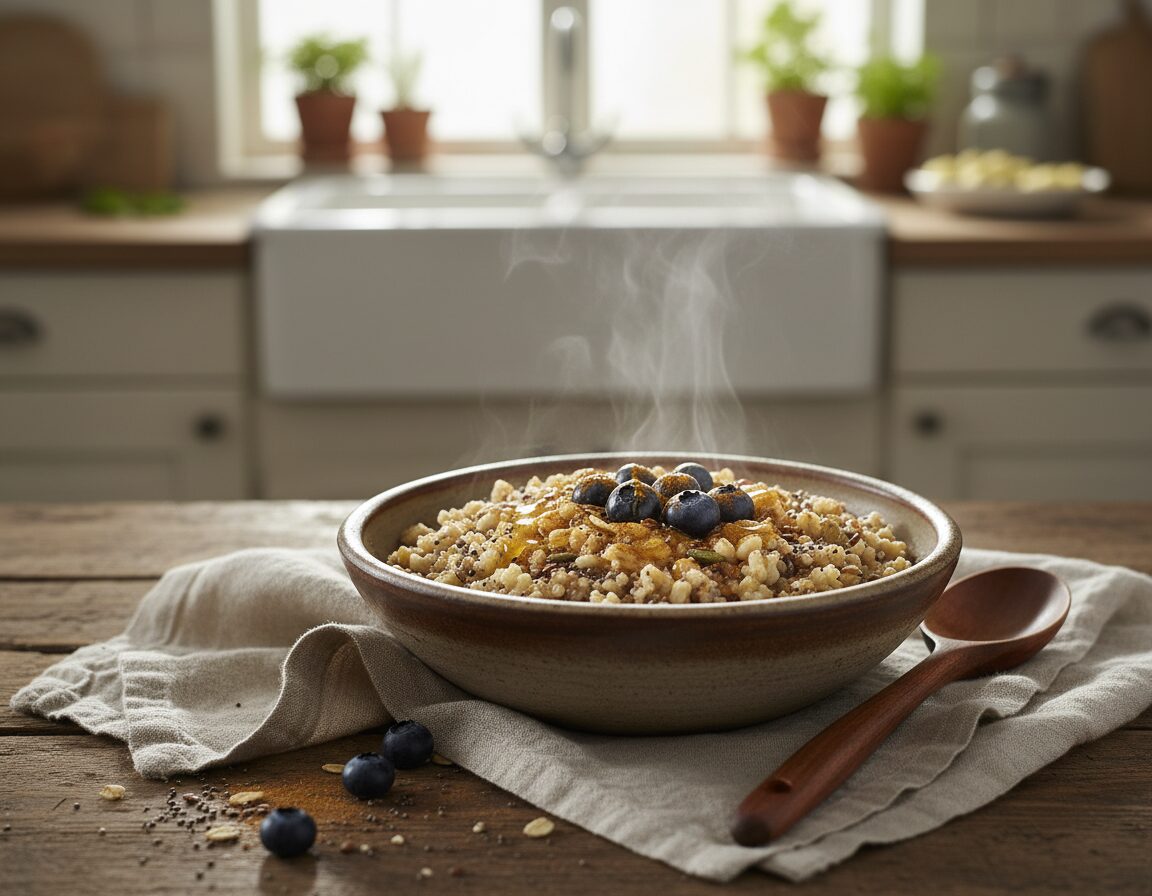
I reach for a bowl of mixed grains on mornings when I want something that will actually see me through the day. A cup-ish portion cooks into a warming, filling plate that lasts until lunch.
The grain mix I like for texture
Kamut, millet and amaranth give a pleasing chew and nutty flavour. Kamut adds body, millet gives light pearls and amaranth thickens without turning mushy. Together they avoid that bland, baby-food texture.
How I make it creamy with eggs
I cook the grains with water or a non-dairy milk and a pinch of salt until tender. For creaminess, I whisk one egg or eggs in a bowl, then temper it with a spoonful of hot porridge. Stir the warmed egg back into the pot off the heat, quickly and steadily, so it emulsifies rather than scrambling.
Toppings that make it feel special
Top with sliced banana, a spoonful of fruit compote, chopped nuts and a tiny pinch of salt to lift the taste. This recipe packs protein and, with nuts and banana, can be one of my higher-calorie starts to the day.
- Serving tip: one cup of mixed grains serves one hungry person; double for two.
Make-ahead egg bakes I freeze for stress-free mornings
A single bake on Sunday can solve hurried mornings for a whole week. I mix leftovers, veg and a couple of dozen eggs into a tray, bake, then portion and freeze. It’s a reliable recipe I use again and again.
My base ratio and simple method
Base ratio: lots of eggs, whatever leftovers need using, some veg, then cheese on top. Think of the eggs as glue — they hold the dish together and boost protein.
Flavour combinations I return to
- Chicken, spinach and parmesan — a mild, green mix.
- Meat with potatoes, rosemary and thyme — hearty and familiar.
- Vegetarian: beans, peppers and onions with melted cheese.
How I cool, freeze and reheat so it works every time
Cool the tray fully before cutting into squares. Wrap parcels well and label with the date. Don’t freeze it steaming hot — that wrecks texture.
Reheat by type of day: oven for best texture, a pan for a crisp edge, or microwave when I have only minutes. I only reheat what we’ll eat to keep food safe and avoid soggy bits.
Farmhouse breakfast hash and skillet meals I cook in one pan
I reach for a skillet meal when I need warming food that feeds everyone and clears the fridge. A hash is filling, forgiving and it uses odd bits of veg and meat without much fuss.
British-style hash with potatoes, red onions and bacon lardons
What I use: new potatoes, red onions, bacon lardons and a splash of oil. I sweat the onions first, then add diced potatoes so they brown rather than steam. A moderate heat and a flat pan give the best crisp edges.
How I finish the pan with free-range eggs
I make little wells in the browned mix, crack free-range eggs into them and pop a lid on the pan. The tops set without flipping and the yolks stay runny if you time it right.
Finely chopped parsley stirred in at the end lifts the taste and keeps the dish bright.
My shortcut when I’ve only got a few minutes
Use pre-cooked potatoes, leftover roasties or a chilled bag of diced spuds. Fry with onions and bacon for five to eight minutes, then add eggs or keep it as a protein-rich side.
| Version | Key ingredients | Time | Best for |
|---|---|---|---|
| Classic skillet | New potatoes, red onions, bacon lardons, parsley, eggs | 20–25 minutes | Weekend or calmer mornings |
| Shortcut | Pre-cooked potatoes, onions, bacon or leftover meat, eggs | 5–10 minutes | Rushed mornings |
| Meat-free | Potatoes, onions, mushrooms, beans, parsley | 15–20 minutes | When we want less grease but still protein |
- Protein and portions: one egg and a good handful of potatoes per person keeps everyone steady until lunch.
- Heat tip: medium-high for browning; lower if things start to char.
- For more one-pan ideas see my collection of one-pan recipes.
Full English-inspired plates that still feel doable
A pared-back full-English plate can feel proper without taking over the morning. I keep to a tight list of must-haves so the meal reads classic but comes together fast.
What I consider “must-have”
My go-to five: bacon, eggs, beans, toast and tomatoes. Those five give me protein, carbs and a bright note from the tomatoes — enough to feel like a full plate without cooking the whole kitchen.
Mushrooms done properly
I cook mushrooms in a hot pan and don’t crowd them. A little space lets them brown rather than steam.
Wait for good colour, then add salt at the end. That preserves texture and deepens taste.
Timing and simple shortcuts
- Warm the beans gently while the bacon cooks — one pan for bacon, a small pot for beans.
- Use the grill for tomatoes while you fry the eggs; toast goes on last so it’s warm and crisp.
- Choose one main meat if you want less grease — one slice of bacon or a sausage keeps things lighter.
I talk about calories as a guide — heavier plates have more, lighter plates less. If I want more, I add a small hash or extra toast as a side. If I want less, I trim the oil and finish with grilled tomatoes and more beans for protein.
| Plate | Key items | Time | Best for |
|---|---|---|---|
| Doable Classic | Bacon, eggs, beans, toast, tomatoes | 10–15 minutes | Weekday mornings when you want the real thing |
| Lighter Version | Grilled tomatoes, beans, one egg, toast | 8–12 minutes | Lower calories but still filling |
| Quick Fry-up | Pre-cooked hash, bacon, mushrooms, egg | 5–8 minutes | Very rushed mornings |
Vegetarian farmhouse breakfasts that don’t feel like an afterthought
I build a meat-free fry-up that looks and tastes like full-on breakfast, not a skimmed-down version. I aim for warmth, colour and a proper hit of protein so it stands up to a busy morning.
One-pan veggie full English with rosemary, thyme and chilli flakes
I use a single pan for minimal washing-up. Start with onions and mushrooms, add a sprig of rosemary or thyme, then turn up the heat to get good colour. Crack in eggs and warm a tin of beans on the side. A sprinkle of chilli flakes lifts the taste — keep them aside for kids.
Simple swaps that keep the plate satisfying
- Eggs for richness and runny yolks.
- Beans for comfort and stays-full protein.
- Mushrooms for savoury bite.
- Grilled tomatoes for sweetness and brightness.
| Version | Main items | Time | Best for |
|---|---|---|---|
| Herb-forward | Mushrooms, eggs, beans, rosemary | 25–30 minutes | Weekend or relaxed morning |
| Speedy | Pre-cooked potatoes, eggs, beans, chilli flakes | 10–15 minutes | Rushed weekday |
| Family-friendly | Grilled tomatoes, mushrooms, beans, thyme | 20–25 minutes | Kids and adults |
Calories depend on portions — vegetarian doesn’t mean light. Increase beans or add toast if you need more fuel; cut oil and trim portions to lower calories. That’s my simple way to make meat-free mornings feel proper.
Herb tricks that make simple breakfast food taste like more
A spoonful of fresh herbs turns a plain plate into something that feels like care rather than effort. I use small herb moves with what’s already on the plate so flavours come alive without extra fuss.
When I use parsley as a garnish and when I cook it in
I usually chop parsley at the end and scatter it over warm food. Fresh parsley brightens taste and looks friendly on eggs or a hash.
If I want a softer, mellow note I stir parsley in near the end of cooking so it wilts. That way it blends rather than pops.
Thyme, oregano and chives: where each one works best
Thyme is my go-to with mushrooms and potatoes — it stands up to slow cooking.
Oregano suits tomato-led recipes; use it in egg dishes that have tomatoes or peppers.
Chives are perfect both ways: snip over a finished egg or fold through a warm parfait for a mild onion note.
My default seasoning: salt, pepper, and one fresh herb to finish
My simple rule: a pinch of salt to lift richness, a grind of pepper, and one fresh herb to finish. It’s the quickest way to make food taste cared-for.
- Tomatoes + oregano — classic pair that needs little else.
- Eggs + chives — clean, bright and fast.
- Dried herbs are fine in a pinch; fresh at the end gives the biggest lift.
| Herb | Best use | Typical pairing |
|---|---|---|
| Parsley | Garnish or light wilting | Eggs, hash |
| Thyme | Cooked into dishes | Mushrooms, potatoes |
| Oregano / Chives | Tomato dishes / finishing | Tomatoes + oregano, eggs + chives |
Cheesy baked dishes for brunch mornings and hungry families
I save oven bakes for days when I want a hands-off meal that still feels like hospitality. These dishes feed a crowd, keep warm, and give a solid hit of protein so no one leaves peckish.
Quiche-style bakes with fresh herbs and mixed cheeses
I use a mix of a sharper cheese and a milder one so the flavour doesn’t go flat. Add a spoonful of chopped herbs—thyme or chives—and a touch of cream for silkiness. Blind-bake the case briefly, then pour in the egg and cheese mix to avoid a soggy base.
Strata and overnight bakes when I’m feeding more people
Strata is my go-to when I have stale bread to use up. Layer bread, veg, meat if you like, and a simple custard. It soaks overnight and bakes into a crowd-pleasing recipe that needs little attention in the morning.
How I stop egg casseroles drying out in the oven
- Don’t overbake—remove when the centre still trembles slightly.
- Cover loosely with foil if the top browns too fast.
- Add moisture: a little milk or softer cheese, or chopped veg that release water.
| Type | Best for | Reheat |
|---|---|---|
| Quiche | Smaller groups | Oven 160°C, 10–12 mins |
| Strata | Large family meals | Microwave or oven, keep covered |
| Overnight bake | Casual brunch | Slice cold or warm gently |
Calories can be higher here, so I serve smaller slices with fruit or grilled tomatoes. Leftovers store well in the fridge for 2–3 days; reheat gently to avoid a rubbery texture. This is my favourite way to host without standing at the pan all morning.
Meat-and-egg breakfasts when I need something really filling
A proper meat-and-egg plate is my go-to when I know the day will be long and calories matter. These meals give quick protein and reheat well if I make extra the night before.
Sausage, egg and cheddar work because the sausage keeps texture, the egg binds, and cheddar melts without going rubbery. I use these in a tray-bake or skillet — both are solid recipe choices for reheating.
For bacon, I start in a hot pan so fat renders fast. I lift the rashers to drain on kitchen paper, then use a spoon of the fat sparingly to finish the dish. That way flavour stays, but the plate is not greasy.
I also turn leftover ham, turkey, chicken or beef into a new dish by folding chopped pieces into scrambled egg or scattering them through a tray-bake. It stretches meat and cuts waste.
- Timing tip: serve with grilled tomatoes or fruit to balance calories and add freshness.
- Clean-up: line a tray or stick to one pan — less washing at 8am.
| Combo | Main ingredients | Best use | Protein / calories |
|---|---|---|---|
| Sausage & cheddar bake | Sausage, eggs, cheddar | Make-ahead tray | High protein / higher calories |
| Bacon skillet | Bacon, eggs, mushrooms | Quick pan meal | Moderate protein / moderate calories |
| Leftover mix | Ham/turkey/chicken/beef, eggs | Stretching leftovers | High protein / variable calories |
Hash browns and potato sides I rely on
I save proper hash browns for slower mornings, when I can give them time to crisp. Other days I reach for toast as a quicker side and move on with the day.
Classic shredded versus grated sweet versions
Classic hash browns use roughly shredded potatoes that brown into golden discs. Grated sweet potato makes a slightly sweeter, faster-colouring option — a good UK swap for hard-to-find yams.
My method for crisp edges: low heat, patience and the right pan
Method: grate, then squeeze out as much moisture as you can. Season with a little salt and pepper.
Heat a heavy frying pan first, add oil, then lower the heat. Press the mix into the pan and walk away for a few minutes. Turning once gives the best crunch.
- Timing note: proper crispness can take a few extra minutes than you expect.
- Serving: tuck them beside beans and eggs or as a smaller addition to a lighter full-English-style plate.
- Calories: tasty, but easy to overdo — I treat them as a side, not the whole meal.
| Version | Texture | Best for |
|---|---|---|
| Classic | Fluffy inside, golden crust | Weekend brunch |
| Grated sweet potato | Quick colour, sweeter bite | When you want a change |
| Shortcut | Pre-cooked potatoes, pan-fried | Rushed mornings |
Breakfast bread ideas I serve alongside eggs
I usually decide the bread on the way to the kettle — toasted slices if time is tight, a chunk of sourdough if I can linger. Small choices like that set the tone for the whole plate.
Toast and sourdough as the “always works” side
Toast is my go-to for speed. It warms, crunches and holds a runny yolk without fuss. If I have a cup of time, I choose sourdough — thicker slices, buttered, and it stands up beside scrambled eggs for a hungrier family.
Overnight pancakes when I want a treat without morning stress
I make a simple batter the night before — a cup of flour, milk and an egg is fine — then cook a few rounds in the morning. It feels like a treat, but the prep is do-able the evening before. Serve with fruit and a protein on the plate so calories feel balanced.
- Toast + eggs: fastest, minimal washing.
- Sourdough + skillet dish: more filling for bigger appetites.
- Overnight pancakes: make-ahead treat that saves time and pleases the family.
| Side | Best for | Quick tip |
|---|---|---|
| Toast | Rushed mornings | Use thicker slices for better yolk soak-up |
| Sourdough | Slower mornings or bigger appetites | Butter while warm |
| Overnight pancakes | Weekend-style morning with less prep | Make batter the night before |
Warm drinks that make the whole breakfast feel calmer
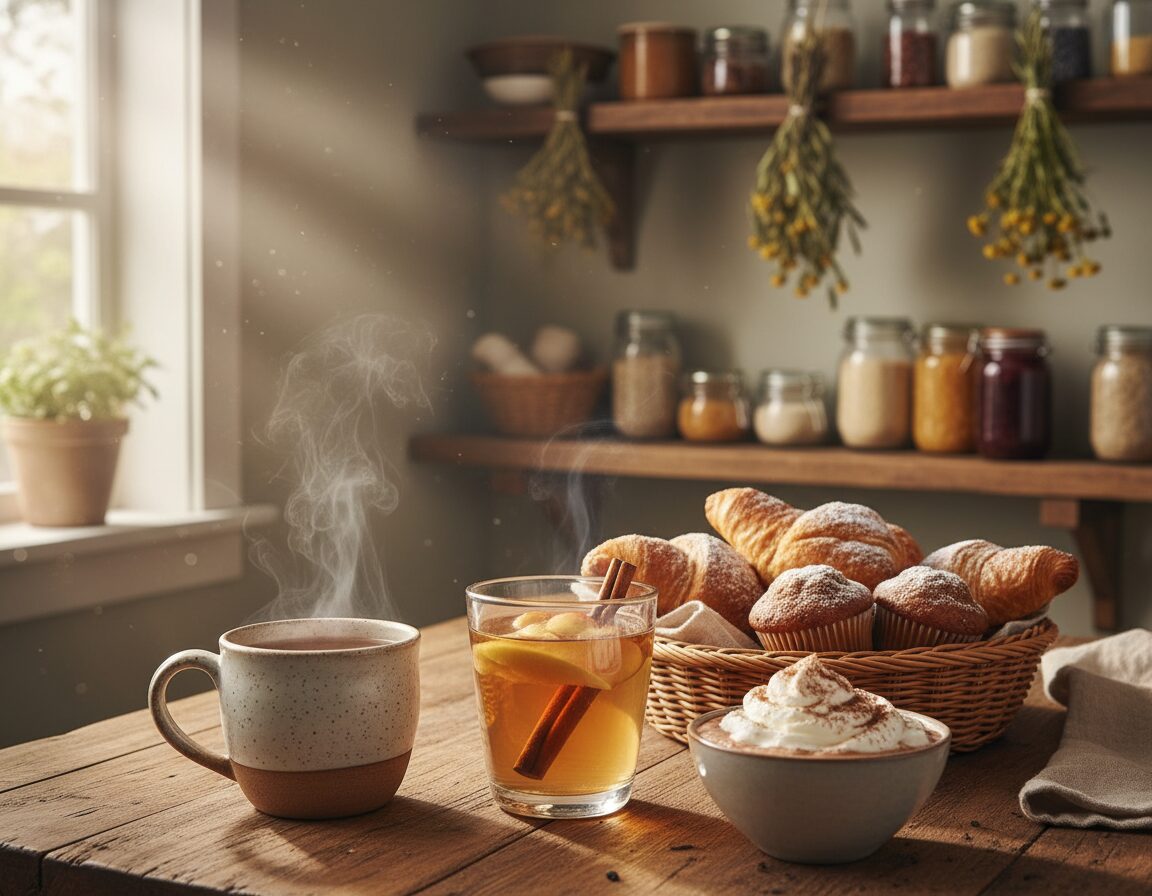
A good cup in my hand makes even frantic mornings feel a little more ordered. It is a small pause that steadies the kitchen and the kids while I sort lunchboxes and shoes.
How I use a French press to keep coffee and tea warm
I use an insulated French press so a brew stays hot when I’m up and down helping everyone. It means one pot on the side of the stove rather than heating the kettle every few minutes — a sensible way to save time and keep things moving.
I favour half-caf or mushroom-blend beans some days. They give flavour without over-caffeinating me before a busy school run.
My caffeine-light options: herbal coffee, green tea and bone broth
When I want gentler drinks I reach for:
- herbal coffee with oat milk or a splash of raw cream;
- green tea — a clean, warming cup;
- bone broth in a big mug for a savoury, filling start.
Choose your day: strong coffee when you need it, lighter drinks when you don’t. A simple trick for a household — make one larger brew so you don’t boil the kettle five times and it helps keep family moving.
| Drink | Best for | Prep |
|---|---|---|
| Strong coffee | Focused mornings | French press, single brew |
| Green tea / herbal | Gentler start | Quick infuse, short steep |
| Bone broth | Savoury, filling | Heat and serve in a large cup |
Conclusion
What I want you to keep is this — a few reliable meals make the day easier. Pick two or three recipes you enjoy and rotate them so you save time most mornings.
Lean on eggs, quick parfaits, porridge or a make-ahead bake — they take only a few minutes and deliver good protein. Adjust calories by portion size and simple sides, not by overthinking the plate.
Use seasonal produce to lift the taste — summer tomatoes, winter mushrooms and warm porridge. The best recipe is the one you actually make on a normal day. If it fuels you and your family, it has done its job.