
I keep an honest, practical homemade sauces guide on my phone for nights when I want dinner to feel finished without fuss.
I cook at home most weeks, and a small pot of something glossy or tangy lifts a plate more than you’d expect. I’ll show you the simple techniques I use — reduction, deglazing, emulsions and a few thickeners — so you can improvise with calm confidence.
You won’t need exotic ingredients; just a short list of staples from any UK supermarket and a couple of safe swaps if you’re missing one thing. I’ll also be clear about timing — some takes five minutes, others need a little patience — and flag basic food-safety tips for egg and dairy-based recipes.
Read on to get a compact flavour framework, a shortlist of pantry essentials, and a handful of flexible options that cover most weeknight meals.
Key Takeaways
- Simple techniques like reduction and emulsifying are the real game-changers.
- Keep a short pantry of staples — they unlock many flavours at home.
- I prefer practical swaps that work with UK supermarkets.
- Some recipes are quick; others reward patience — know which is which.
- Food-safety basics matter, especially with eggs and dairy.
What a good sauce does for a meal (and why I bother making my own)
A splash of something glossy or tangy is often the difference between a meal that’s “fine” and one that feels finished. I notice it every week — lean meat, plain veg or tired rice suddenly become more interesting when a well-made sauce joins them.
Flavour, moisture and that “restaurant” finish
Flavour is the obvious win — salt, acid and richness layer up to give depth. I use a quick reduction or a bright vinaigrette to add lift.
Moistness matters too. A good sauce fixes dryness fast on roast chicken or pork chops and brings leftover rice back to life.
Texture and viscosity
Thin jus and thicker, creamy options behave differently. A glossy, lightly thickened sauce clings to each bite and makes portions feel generous.
Colour and contrast
Green herb purées, red tomato mixes or pale butter finishes add eye appeal. Contrasting colour draws the eye and hints at flavour before you taste it.
- I watch aroma release and how long flavour lingers — thickness changes both.
- Good sauces rarely need long ingredient lists — reduce well and finish with care.
| Role | Practical effect | Example |
|---|---|---|
| Flavour | Adds depth and balance | Red wine reduction for steak |
| Moisture | Fixes dryness immediately | Butter-citrus for roast chicken |
| Texture | Changes bite and aroma release | Lightly thickened jus vs thin stock |
My homemade sauces guide mindset: balance first, recipe second
I trust a simple framework — fat + acid + seasoning — to bring a sauce alive. I taste as I go and make small, honest tweaks rather than chase perfection.
Fat + acid + seasoning: the framework I use to taste as I go
I think in layers. I add fat early for body, then acid for lift, and season gradually so I don’t overdo salt at the end.
- I start with a tiny pinch of salt while cooking aromatics — it helps flavours develop.
- A splash of lemon or vinegar in drops brightens without turning a sauce sour.
- I use pepper for warmth; sometimes I add it late for a fresher bite.
Sweet, bitter, umami: quick fixes when something feels “off”
If a sauce tastes bitter, I check for burnt garlic or over-toasted spices. A small knob of butter or a teaspoon of sugar calms harshness.
Umami lifts often come from simple ingredients: stock, tomatoes, mushrooms or a grating of hard cheese. I add these sparingly so the dish doesn’t go loud.
| Problem | Quick fix | Why it works |
|---|---|---|
| Flat taste | Lemon drops + salt | Acidity lifts and salt sharpens |
| Too bitter | Butter or a pinch of sugar | Fat and sweetness round edges |
| Needs depth | Stock or tomatoes | Adds subtle umami without being fishy |
Essential ingredients I keep in for sauces (UK-friendly staples)
Keep a handful of tried staples and you can turn simple food into something memorable. I store a small selection that covers most quick finishes and longer reductions. It saves time and avoids shopping stress.
Fats I reach for
- Olive oil for everyday sautéing and vinaigrettes; a neutral oil for higher heat.
- Butter for richness and shine; cream or yoghurt for body and cooling acidity.
- Mayonnaise for quick cold dressings and dips.
Acids and lifts
- Vinegar for a sharp punch; wine for depth in reductions.
- Lemon and a little lemon juice when I want clean brightness or to finish seafood and veg.
Aromatics, umami and seasonings
- Garlic, shallots and onions form my usual base; mushrooms add meatier notes.
- Tinned tomatoes, a knob of cheese, anchovies and good stock boost umami for meats and vegetables.
- I keep simple seasonings — salt, pepper, mustard and dried herbs — small amounts, big impact.
| Staple | Use | Quick swap |
|---|---|---|
| Vinegar | Brighten dressings | Lemon |
| Wine | Deglaze & reduce | Stock |
| Yoghurt | Make creamy, tangy finish | Thin cream |
Basic kit that makes sauce-making easier (without fancy gadgets)
You don’t need a cupboard full of gadgets to lift a plate — just a handful of sensible tools. I keep a short, practical kit that helps me move fast and get a clean finish. The right item saves effort and little bits of worry in the kitchen.
Pan, wooden spoon and whisk: the tools I reach for most
I use one good pan as my base for most pan sauces. Using the same pan keeps the fond and flavour in play. A wooden spoon scrapes the brown bits without scratching. A whisk smooths in flour or dairy quickly, with fewer lumps and less stress.
Fine mesh strainer and blender: when to use them (and when not to)
I pull out a fine mesh strainer when I want a silky, restaurant-style finish. For rustic, chopped finishes I skip it — texture is part of the appeal.
The blender is brilliant for a smooth tomato purée or creamy dressing, but it can flatten bright herb mixes. I use the blender when it improves texture, not as a reflex.
- Heatproof jug or bowl: pour off excess fat and keep your sauce base organised.
- Whisk: best for flour and dairy — faster, fewer lumps.
- Use tools to save time: scrape fond properly, whisk in cold butter, then blend only if it helps the final texture.
| Tool | When I use it | Why it matters |
|---|---|---|
| Pan | All pan sauces | Holds fond and concentrates flavour |
| Blender | Smooth purées & dressings | Creates silky texture or emulsion |
| Strainer | Finishing for sheen | Removes lumps for a polished finish |
How I build flavour at the start: sweating, sautéing and getting aromatics right
The first minutes in the pan decide a sauce’s mood, so I give the aromatics the care they deserve. I choose a gentle method when I want sweetness and a quick one when I want colour and a nutty note.
Olive oil vs butter: what each one brings
Sweating means low heat, soft onions or shallots and no colour — it teases out sweetness. Sautéing is higher heat for a quick brown and sharper flavour.
I use olive oil for a clean, savoury fruitiness and an everyday, tidy fat. I add butter for roundness and that proper, glossy finish.
Often I cook in oil to protect the butter, then finish with a knob of butter for shine. That combo saves burning and gives depth.
When I add garlic so it doesn’t burn and go bitter
I wait until onions or shallots are soft before adding garlic. That way the garlic cooks through but does not brown too quickly.
- If garlic starts to brown, I cut the heat straight away.
- A splash of stock or wine calms the pan and stops further colouring.
- Or I add the next ingredient early so the garlic mixes and cools.
For mushrooms and other vegetables I give them space in the pan. Let them colour on one side. That builds a deeper savoury flavour without stewing.
| Ingredient | What it gives | Timing |
|---|---|---|
| Olive | Clean, savoury fruitiness | Start on medium |
| Butter | Roundness and gloss | Finish or low heat |
| Garlic | Warm aromatics, risk of bitterness | Add after softened onions |
| Vegetables | Colour and depth | Give space; brown then stir |
Reduction, deglazing and pan sauces: the fastest route to big flavour
A busy weeknight needs a short sauce ritual — one that uses the pan and finishes fast. I build a quick pan sauce while the protein rests. The prize is the fond: those brown bits are flavour you’ve already paid for.
Finding the fond
Fond is the sticky, browned residue left after searing. I scrape it gently with a wooden spoon. It dissolves when hit with liquid and becomes the base of a proper sauce.
Deglazing and reducing
My routine is simple: remove the meats, tip off excess fat, then sweat a shallot if I want. I add a splash of wine, stock or spirit to the hot pan.
I simmer gently — not a wild boil — and reduce by about three quarters or until it’s nearly au sec. The trick is to stop before it turns sticky or too salty.
Finishing touches
- Swirl in a knob of cold butter for gloss and silk.
- Add a little cream for comfort, or a spoon of yoghurt for brightness.
- For a peppery twist, use a splash of spirit (bourbon-style) instead of wine — same method, different edge.
During the resting time
While a steak rests for five minutes I make the sauce in the same pan. That keeps everything hot and linked. For roast, I scrape the tin juices into the pan, add stock and mustard, reduce quickly, then swirl in butter at the end for shine.
| Step | Action | What to watch for |
|---|---|---|
| Sear | Brown proteins in the pan | Good fond, not burnt |
| Deglaze | Add wine/stock/spirit | Loosen fond, lift flavour |
| Reduce & finish | Simmer, then add butter/cream/yoghurt | Silky texture, glossy finish |
Classic French foundations without the faff
When I strip back the classic french approach, I find three reliable foundations that cover most weeknight needs. They are straightforward to make and even easier to adapt.
Mother sauces in plain English: béchamel, velouté and espagnole
Béchamel is milk plus roux — creamy and gentle. I use it for pasta bakes or to temper strong flavours.
Velouté swaps milk for light stock. It’s my pick for chicken or fish dishes that need a soft, savoury base.
Espagnole is a brown, stock-based base with more body. I reach for it when I want deeper roast-meat flavour.
Roux, singer method and starch slurry: when to thicken
- Roux: good for a stable, creamy consistency — make it at the start.
- Singer method: sprinkle flour into softened aromatics when you’re already in the pan.
- Slurry: cornflour thin with water — quick rescue at the end.
Secondary sauces and why reduction beats long lists
A mother base becomes many recipes with small tweaks. Often a reduction — stock, wine and a final knob of butter or a little cream — gives more flavour than many added ingredients.
| Base | Liquid | When I use it |
|---|---|---|
| Béchamel | Milk | Pasta, gratins |
| Velouté | White stock | Chicken & fish |
| Espagnole | Brown stock | Roasts & red meat |
Getting the right consistency: how I aim for nappé every time
Getting the texture right makes a sauce feel intentional, not accidental. I aim for nappé — a light, glossy coat that clings. It should hang on the back of a spoon and leave a clean line when you drag a finger through it.
The spoon test and what I look for
Try the spoon test. Tilt a warm spoon, spoon some sauce, then run a finger across the back. If the line stays clean, you have nappé. If it floods back, it’s too thin. If nothing moves, it may be too thick.
When it’s too thin: quick fixes and how they change taste
My order of fixes is simple and calm: reduce first, then enrich with butter or cream, then thicken if needed.
- Reduce — simmer in a small pan; this concentrates flavour and salt. Best for fast, bold results.
- Enrich — swirl in cold butter or a spoon of cream to soften acidity and add silk.
- Thicken — use a small slurry or liaison last; starch can mute brightness so taste and season again.
When it’s too thick: gentle loosening (and why I avoid plain water)
I loosen a heavy finish with warm stock or reserved cooking water from pasta. Both restore body without washing out flavour. Plain water is my last resort — it dilutes taste and flattens the sauce, so I only use it if nothing else is available.
| Issue | Fix | Effect on flavour |
|---|---|---|
| Too thin | Reduce / enrich / thicken | Concentrates / softens / may mute — re-season |
| Too thick | Loosen with stock or pasta water | Restores body without dilution |
| Need faster result | Use a wide pan; steady simmer | Reduces quicker; saves time |
Emulsions made simple: vinaigrettes, mayonnaise-style sauces and creamy dressings
A well-made dressing lifts a salad, becomes a handy dip, and brightens leftovers. I keep things simple — clear ratios, small tweaks and a rescue plan if it goes wrong.
A reliable vinaigrette ratio and how I stabilise it with mustard
I use a classic 1 part acid to 3 parts oil as my baseline. If the vinegar is sharp, I trim it to 1:4. For lemon-heavy dressings I favour a little extra oil so it isn’t too bright.
Mustard is my secret stabiliser. A teaspoon helps the oil and vinegar hang together and adds flavour, so the dressing doesn’t split the moment you pour it.
Creamy dressings with yoghurt or mayo (and how I keep them bright)
For a creamy finish I use either mayonnaise or yoghurt. Both give body; mayonnaise is richer, yoghurt keeps things fresh.
I add lemon juice or a splash of vinegar to lift the fat. It keeps the overall taste bright without just adding more salt.
When an emulsion splits and how I rescue it
Splitting is simply fat and water giving up on each other. It usually happens if oil goes in too fast or the ingredients are very cold or hot.
My rescue trick: put a teaspoon of warm water or lemon in a clean bowl, whisk, then add the split dressing very slowly, drop by drop. It nearly always comes back together.
- Use a steady pouring speed when adding oil.
- Match temperatures — very cold oil can cause trouble.
- Leftover dressings work well as a quick sandwich dip or to spoon over roasted veg.
| Issue | Quick fix | Result |
|---|---|---|
| Too sharp | More oil or a touch of honey | Smoother balance |
| Too flat | Extra lemon or vinegar | Freshness restored |
| Split emulsion | Whisk into water/lemon base | Recombined, glossy finish |
My go-to tomato sauce base (and how I turn it into several dinners)
A good tomato base saves me time and makes several dinners feel planned, not rushed.
Choosing tomatoes and the practical pick
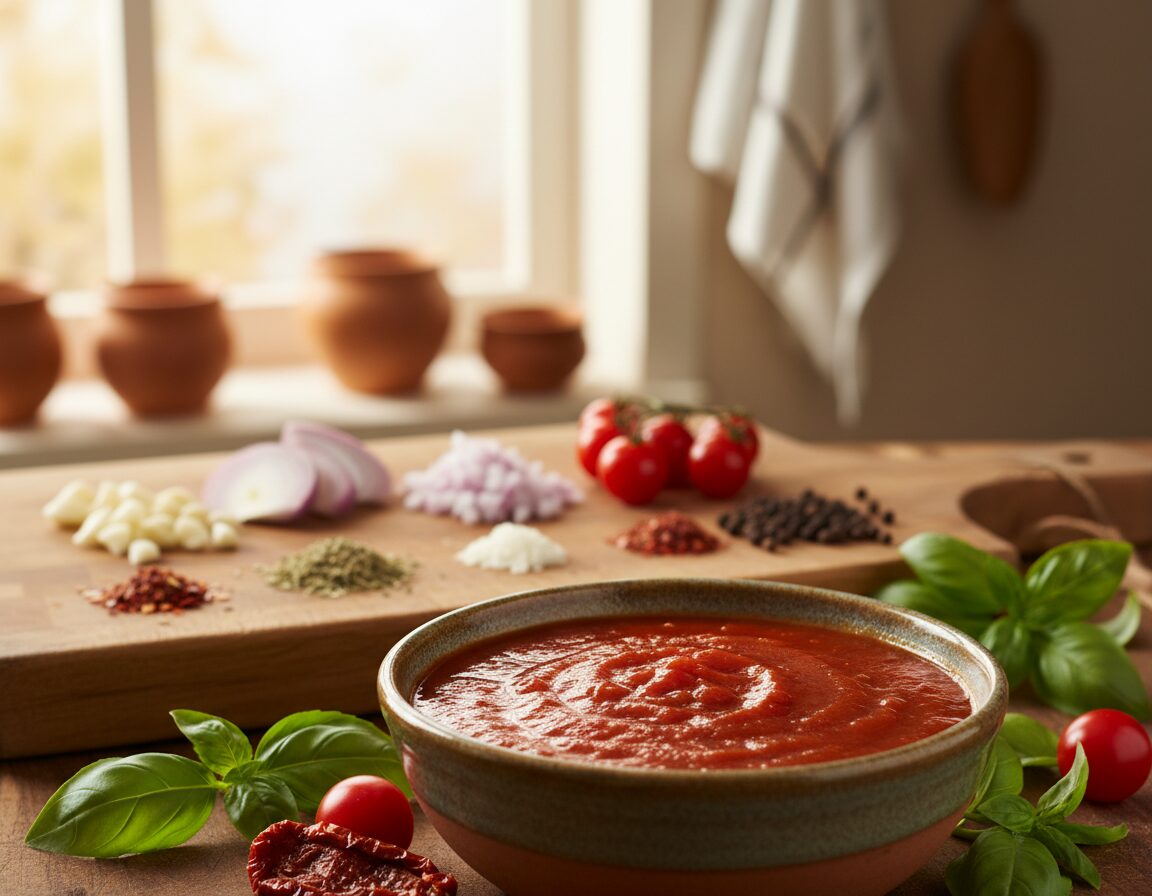
I use fresh tomatoes only when they’re genuinely sweet and ripe. Most weeks I reach for tinned tomatoes — reliable, affordable and packed with flavour.
Garlic, olive oil and the slow-simmer trick
My core method is simple: sweat a little garlic in olive oil, add the tomatoes, then give it the time to reduce gently. A pinch of salt early helps avoid a raw, sharp tomato taste.
Texture choices and quick variations
I decide texture by meal. Rustic — crushed by hand. Smooth — passed or sieved. Blended — a quick spin in the blender for silky pasta hits.
- Arrabbiata: chilli, extra garlic — quick heat for late dinners.
- Veg-packed: add roasted veg for depth and bulk.
- Meat base: brown mince, then finish in the tomato pot for a simple ragu.
- Quick lasagne: layer this base with cheese and sheets when I haven’t got much time.
| Use | When | Finish |
|---|---|---|
| Pasta | Weeknight quick | Fresh basil, grated cheese |
| Meat ragu | Batch-cook | Longer simmer, splash of wine |
| Lasagne | Fast bake | Bechamel or extra cheese |
I batch-cook this base and store portions in the fridge or freezer. It saves me time and turns one pot into several practical recipes. For more inspiration on quick weeknight meals see quick weeknight dinners.
Butter sauces I use for fish, chicken and vegetables
For weeknight cooking I reach for two butter finishes that lift fish, chicken and vegetables without drama. They are fast, glossy and make food feel thought-about even when I’m short on time.
Brown butter for white fish: nutty flavour in minutes
Brown butter is simple: melt, watch for nutty aroma and little brown flecks, then take off the heat. Don’t let it go dark — you want warm hazelnut notes, not a burnt edge.
I spoon it straight over hot fish so the butter melts into the flesh. At home I serve it with new potatoes and steamed greens for balance.
Lemon-and-caper butter: bright, briny and versatile
This one is my bright option for seafood or pan-seared chicken. I add lemon slowly to keep the texture, then stir in chopped capers and cold butter to finish.
To stop splitting, keep the heat low and whisk in small pieces of cold butter. If it looks shaky I lower the pan and add another tiny knob — it usually comes back together.
- Instant upgrade: both finishes are quick and add shine and depth.
- Same pan trick: make the sauce in the pan after you rest the fish or chicken — less washing up, more flavour.
| Sauce | Best with | Quick tip |
|---|---|---|
| Brown butter | White fish, vegetables | Watch colour; remove at nutty aroma |
| Lemon & caper butter | Seafood, chicken | Add lemon gradually; whisk in cold butter |
Blender and chopped sauces for grilled meats, veg and dipping
For busy evenings I turn to chopped and blended condiments that add fresh flavour with minimal fuss. They save a pan and bring texture choices — from rustic chop to silky blend — that suit different grills and plates.
Chimichurri for steak, poultry, seafood and vegetables
Chimichurri is my go-to for grilled meats and veg. It’s herb-forward, garlicky and tangy from vinegar. I chop parsley and oregano fine, crush the garlic, then taste and adjust salt and acid. Spoon it over steak or use it with grilled courgettes and seafood.
Romesco: roasted red peppers, almonds and sherry vinegar for the grill
I use a blender for romesco — roasted peppers, toasted almonds, garlic and sherry vinegar make a smoky, spreadable finish. It doubles as a dip for traybakes and a spread for sandwiches.
Spicy mango sauce: why I chop by hand for better texture
For mango I chop by hand. Chef John’s tip rings true — hand-cut pieces give a brighter taste and pleasant bite. I add chilli, lime and a little salt, then keep it chunky for fish or chicken.
All-purpose dipping sauces: how I taste and adjust to my palate
My rule: start balanced — acid, fat, salt, heat — then taste. Adjust vinegar, oil or chilli until it sings for you. These dips are perfect with leftover roast chicken, grilled vegetables or quick weekday bowls.
| Condiment | Best with | Texture |
|---|---|---|
| Chimichurri | Steak, poultry, seafood | Chopped, bright |
| Romesco | Grilled meats, veg | Blended, spreadable |
| Spicy mango | Seafood, chicken | Hand-chopped, chunky |
Roast and steak sauces that look fancy but are genuinely quick
You can make a proud-looking sauce in the same time the meat rests; that’s my go-to trick. I keep the steps small and honest so the pan does most of the work.
Red wine and shallot reduction for steak and roast beef
I sweat finely chopped shallots, then deglaze the pan with a good splash of wine. I simmer until the bubbles tighten and the liquid thickens — that’s the point when flavour concentrates and viscosity builds.
I finish with a little cold butter to shine the sauce and round the acids. Watch it so it doesn’t become syrupy; you want nappé, not glue.
Mustard pan sauce from roasting juices
Use the roasting juices — scrape the tin into a pan, add stock, then reduce. Mix in a spoon of wholegrain mustard and whisk in cold butter off the heat.
The fond and the juices give depth. It’s my favourite “use what’s already there” trick for roast meat.
Bourbon-style peppery pan sauce: swap spirits as you like
Crush fresh pepper and toast it briefly. Deglaze with spirit (bourbon, whiskey or brandy), reduce, then add stock and finish with butter. Add pepper late so it stays aromatic, not harsh.
This all happens while the steak rests — quick, repeatable and impressive with little extra time.
- Key tip: reduce to the point where bubbles tighten and the sauce coats a spoon.
- Balance: taste after finishing — acid, salt and pepper should be in harmony.
| Sauce | Best with | Finish |
|---|---|---|
| Red wine & shallot | Steak, roast beef | Cold butter for gloss |
| Mustard pan sauce | Roast joint | Wholegrain mustard + butter |
| Bourbon-style peppery | Steak, pork | Crushed pepper + spirit swap |
Cold sauces, spreads and “put it on everything” dips
Cold condiments save me time and lift midweek meals with almost zero fuss. I make a couple of jars on a Sunday and they sit ready to rescue dinners all week.
Remoulade made simple
I mix mayonnaise with a spoon of mustard, chopped pickles and capers, a little garlic and the juice of a lemon. I add chopped herbs to taste.
The result is salty, tangy and brilliant with fish. I use it for fishcakes, prawns, roast-veg sandwiches and as a general dip for anything crispy.
If it’s too sharp I stir in a touch more mayo to soften it. Extra lemon brightens the mix if it needs lift.
Tonnato — my slightly magic spread
Tonnato starts with canned tuna and a touch of anchovy, whizzed with olive oil, capers, garlic and a spoon of mayo. The lemon keeps it lively.
I use it as a spread, a dip, a pasta sauce or spooned over cold meat and grilled fish. It’s creamy but not heavy — the anchovies and capers give real depth.
To mellow intensity add more mayo. To sharpen, add a squeeze of lemon or extra capers.
- Why I love cold options: they’re make-ahead, fix boring leftovers, and need no hob time.
- Where I use them: sandwiches, bowls, plain potatoes, pasta and simple salads.
- Pairing tip: these sauces like plain vegetables, boiled potatoes or a slice of cheese to balance salt and acid.
| Sauce | Best uses | Quick tweak |
|---|---|---|
| Remoulade | Fishcakes, prawns, roast-veg sandwich | More mayo = softer; lemon = brighter |
| Tonnato | Cold meat, pasta, grilled fish | Extra capers for bite; more olive oil for silk |
| General dip | Chips, crudités, warm traybakes | Adjust salt/lemon to match the dish |
Bold, global sauces I batch-cook for flavour on busy nights
I batch a few bold, global flavour boosts so weekday dinners feel effortless. They take a little time once, then save you time for the rest of the week.
Fermented black bean
Fermented black bean sauce keeps well — up to a month in the fridge and frozen in small portions. I spoon frozen cubes into stir-fries or noodles for an instant savory lift.
It is salty, so I always taste before adding any extra salt to the pan.
Alabama white
Alabama white sauce is a tangy mayonnaise-and-vinegar mix with cayenne or horseradish. It began at Big Bob Gibson Bar-B-Q in 1925 and now doubles as a marinade, basting liquid and dressing.
I use it on roast chicken, as a slaw dressing and to baste sausages on the grill.
Cumberland-style fruit
Cumberland-style fruit sauce balances sweetness, citrus and seasoning so it never reads like jam on meat. I add a squeeze of lemon and a splash of vinegar, then check salt and spice.
It’s brilliant with roast ham, leftover turkey, sausages — even on a cheese board.
- Why batch-cook: one pot makes several quick dinners and adds consistent flavour all week.
| Sauce | Best use | Storage |
|---|---|---|
| Fermented black bean | Stir-fries, noodles | Fridge month / freeze portions |
| Alabama white | Marinade, dressing, baste | Fridge 1 week |
| Cumberland-style | Roast meats, cheese | Fridge 2 weeks |
Storing sauces safely (and keeping flavour intact)
Proper storage keeps flavour bright and food safe — a small habit that saves time and worry.
I follow a few simple rules at home. Anything with vinegar or a high acid content usually lasts longer in the fridge. I label tubs with the date and use the oldest first.
Fridge life: what keeps better
Vinegar-based dressings and tomato mixes often last several days. Dairy and egg-based finishes — cream, yoghurt or mayonnaise — need more care and I treat them as short-lived.
Freezing: what freezes well
I freeze tomato and many herb blends happily. Creamy emulsions can split when thawed, so I either avoid freezing them or accept I’ll whisk them back together.
Stopping a skin forming
My three tricks: a thin layer of butter, a parchment cartouche, or cling film pressed onto the surface. For the butter method I ladle from underneath so the finish isn’t greasy.
| Item | Store | Tip |
|---|---|---|
| Vinegar dressings | Fridge 5–7 days | Label date; shake before use |
| Tomato & herb | Freeze or fridge | Freeze in small portions |
| Cream / yoghurt / mayo | Fridge 2–3 days | Use quickly; don’t freeze if avoidable |
Conclusion
Making a good sauce comes down to a few calm decisions, not a long ingredients list. I build flavour early with aromatics, then balance fat, acid and seasoning as I go.
My practical loop is the same: deglaze, reduce to the right consistency, then finish with butter or cream for sheen. Aim for nappé — the sauce should coat a spoon.
These simple templates cover most meals: a tomato base for pasta, a quick pan sauce for roast or fish, a vinaigrette, and a butter finish. Taste often: flat needs acid; sharp needs richness; thin needs reduction; heavy needs a brightening squeeze of lemon.
Do a few of these and you’ll trust your palate more than any recipe. That confidence makes everyday cooking better and keeps dinners feeling finished.