
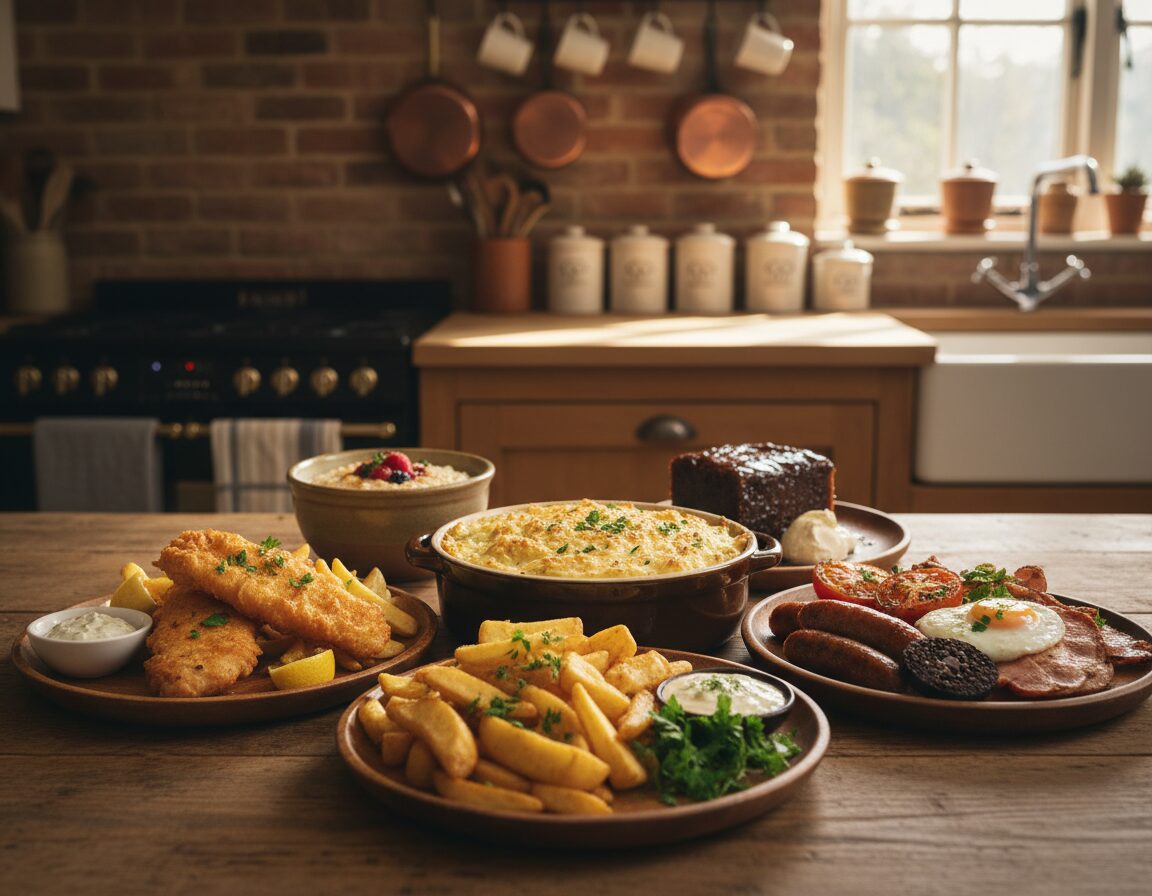
I use the phrase everyday british meals to mean the sort of midweek cooking I actually make when I’ve got work on and no time for fuss. I want this to feel practical and familiar — the kind of recipes you can trust to be quick, cheap and comforting.
I’ll explain why these dishes still count as proper british food at home: simple ingredients, hearty portions and that cosy comfort from gravy, mash and a warm pudding. I talk about food that fits a week — reliable dinners on rotation, quick lunches and the odd bake for weekends.
I write from lived experience — not perfection. I use normal pans, ordinary shops and a realistic amount of washing-up. Britain doesn’t agree on one national dish, so I give permission to pick what suits your week rather than what sounds most “authentic”. Dip in, pick a dinner for tonight, and save the rest for later.
Key Takeaways
- Practical focus: recipes are midweek-friendly and budget-aware.
- Real kitchens: methods work with ordinary pans and stores.
- Comfort matters: simple ingredients create proper British food feel.
- Flexible rotation: a handful of go-to dinners keeps the week simple.
- Permission to adapt: choose what fits your routine, not a single “authentic” dish.
How I stock my kitchen for everyday British cooking
My kitchen is organised around a few trusty staples that keep weeknight dinners simple. If I’ve got a few bagged veg and base ingredients, I rarely need a big shop. I’ll explain what I keep, what runs out fastest and what saves a midweek dinner.
Potatoes, butter, bread and tea as my weeknight backbone
I always have a sack of potatoes, a tub of butter, a loaf of bread and plenty of tea. With those I can make mash, roasties, chips or a buttered sarnie and a hot cup tea while I cook.
Gravy, stock and seasoning that make simple food taste “proper”
I keep stock pots, gravy granules and a small spice jar. A decent stock or a spoon of mustard lifts plain things. That little bit of seasoning turns staples into proper comfort food.
My go-to freezer and fridge staples for busy days
- Sausages, mince and white fish portions in the freezer for quick protein.
- Frozen peas and a tub of homemade stock ready for a fast sauce.
- Fridge basics: milk, eggs, a block of cheese, mustard, and pickles.
My weeknight rhythm is simple — one traybake, one mince dish, one fish night, then leftovers. Small habits help: I keep a butter dish topped up and I always boil the kettle so a proper cup tea is ready when dinner’s on.
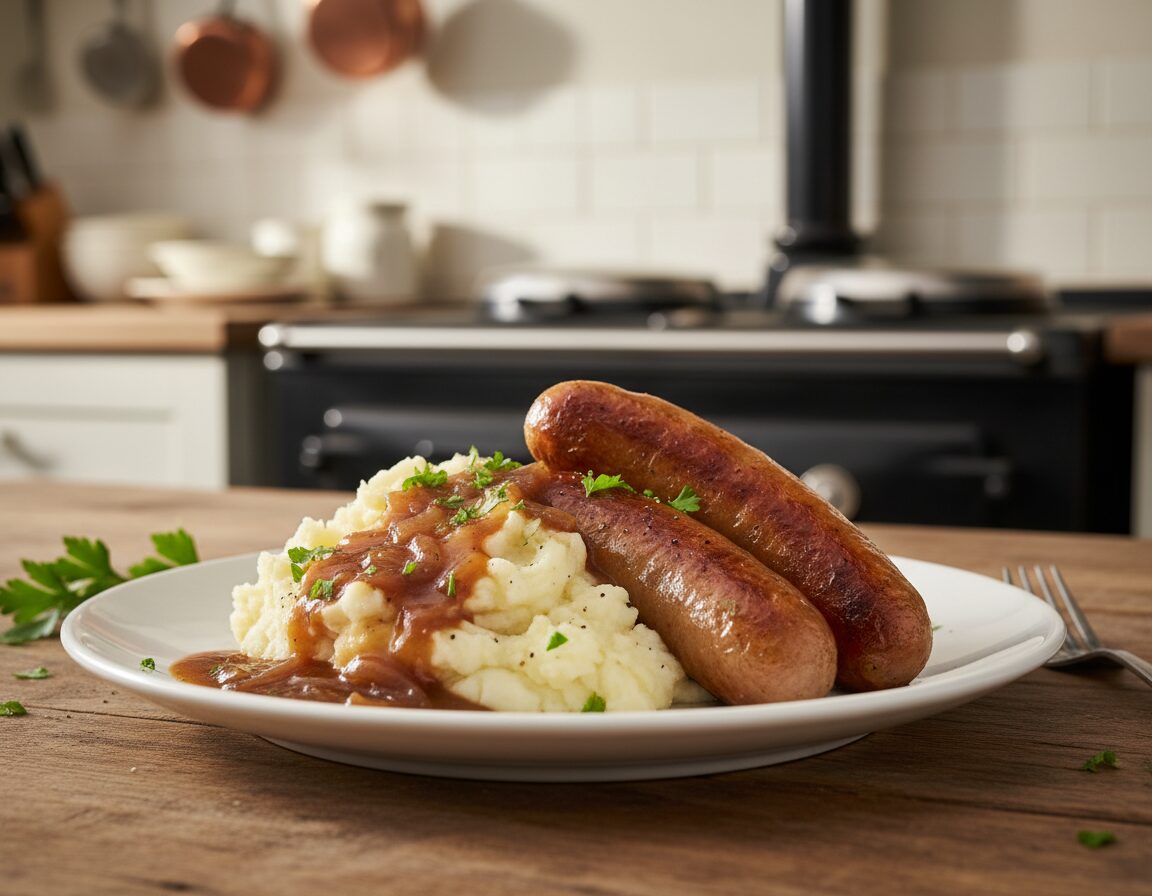
When I need inspiration, I often fall back on a classic like bangers and mash. It uses what I have and tastes like a proper, filling supper.
Everyday british meals I actually cook on a normal week
On a normal week I fall back on a small roster of dinners that cover quick nights, slightly fussier evenings and my Sunday treat. Below I list what I rotate through and why each one makes sense for time, cost and leftovers.
Bangers and mash with onion gravy
I boil floury potatoes in salted water until a fork slides in, then drain and steam briefly. I add a knob of butter and warm milk, mash once—no overworking—and finish with a little salt. That stops mash going gluey.
For onion gravy I brown sliced onions slowly, deglaze with stock, then simmer until glossy. A splash of Worcestershire and a pinch of flour makes it cling to the sausage and mash without tasting pasty.
Shepherd’s pie or cottage pie
The rule is simple: lamb gets shepherd’s pie, beef gets cottage pie. I brown the meat well so juices reduce, then add a little stock and veg so the filling stays saucy but not watery.
I pipe or spoon mashed potatoes on top and blast it under the grill for a golden crust—quick, comforting and easy to reheat.
Toad in the hole
Toad in the hole is just sausages baked in hot Yorkshire pudding batter—first printed in the 17th century. Key tips: preheat the tin with hot fat, pour room-temp batter over sizzling fat, and don’t open the oven while it rises. The sausages stay juicy and the batter puffs up nicely.
Pie and mash
I do a simple weeknight pie with ready pastry for speed, or the full London version for proper comfort. Traditional pie and mash grew from docks and Victorian dining; the parsley “liquor” lifts plain mash and can make the dish feel special.
Sunday roast
Sunday roast is my slow day. I plan timing around roast potatoes—parboil, rough up the edges, then roast in hot fat for crispness. Proper gravy comes from the pan juices, reduced and seasoned well.
I choose chicken for easy carving or beef when I’ve got the time. Warm plates, a pot of tea afterwards and sensible use of leftovers make it feel like a treat.
| Dish | Quick? (mins) | Leftovers | Key tip |
|---|---|---|---|
| Bangers and mash | 25–35 | Good for next-day lunch | Steam potatoes after draining; mash gently |
| Shepherd’s / Cottage pie | 45–60 | Great reheated | Reduce filling so topping stays crisp |
| Toad in the hole | 40–50 | Best fresh | Hot tin, hot fat, leave to rise |
| Sunday roast | 90+ (varies) | Roast meat sandwiches | Parboil and rough up roast potatoes |
Fish and chips at home without the faff
A decent fish and chips supper at home is about texture — flaky fish and chunky, fluffy chips. I try to keep it tidy, with the minimum oil and the maximum crisp.
Cod or haddock, thick chips, salt and vinegar
I usually pick cod or haddock for the fish. I look for thick fillets so they stay moist under a crisp coating. A proper hand-cut chip should be chunky, not a skinny fry.
Salt and a splash of vinegar at the end bring the whole plate together — that finishing touch makes the dish feel like the national favourite it is.
My batter tips for a crisp finish
Cold batter, hot oil and no crowding are my simple rules. Keep the batter light — a touch of sparkling water helps — and drain on a rack so it doesn’t go soggy.
Oven and air-fryer options
For less faff I use the air-fryer or a hot oven. Frozen chips work well if you double-roast them briefly to get a fluffy inside. Brush the fish with oil and time carefully so it stays flaky, not dry.
Fish fingers and midweek nostalgia
Fish fingers arrive with that 1950s “no fuss” promise — quick, familiar and oddly comforting. I serve them with peas, lemon, or a small pot of gravy if I want a cheeky twist.
- Quick tip: Serve with mushy peas or a lemon wedge for the full experience.
| Choice | Best for | Quick note |
|---|---|---|
| Cod | Flaky, meaty | Thicker fillets hold batter well |
| Haddock | Clean flavour | Great with a light batter |
| Fish fingers | Midweek ease | 1950s classic — no fuss |
Quick comfort staples for lunch, snacks and “can’t be bothered” dinners
A few simple things rescue my busiest days: proper comfort, tiny effort and good flavour. These are the recipes I actually eat when I’m short on time — nothing fancy, just reliable and satisfying.
Chip butty on soft white bread with lots of butter
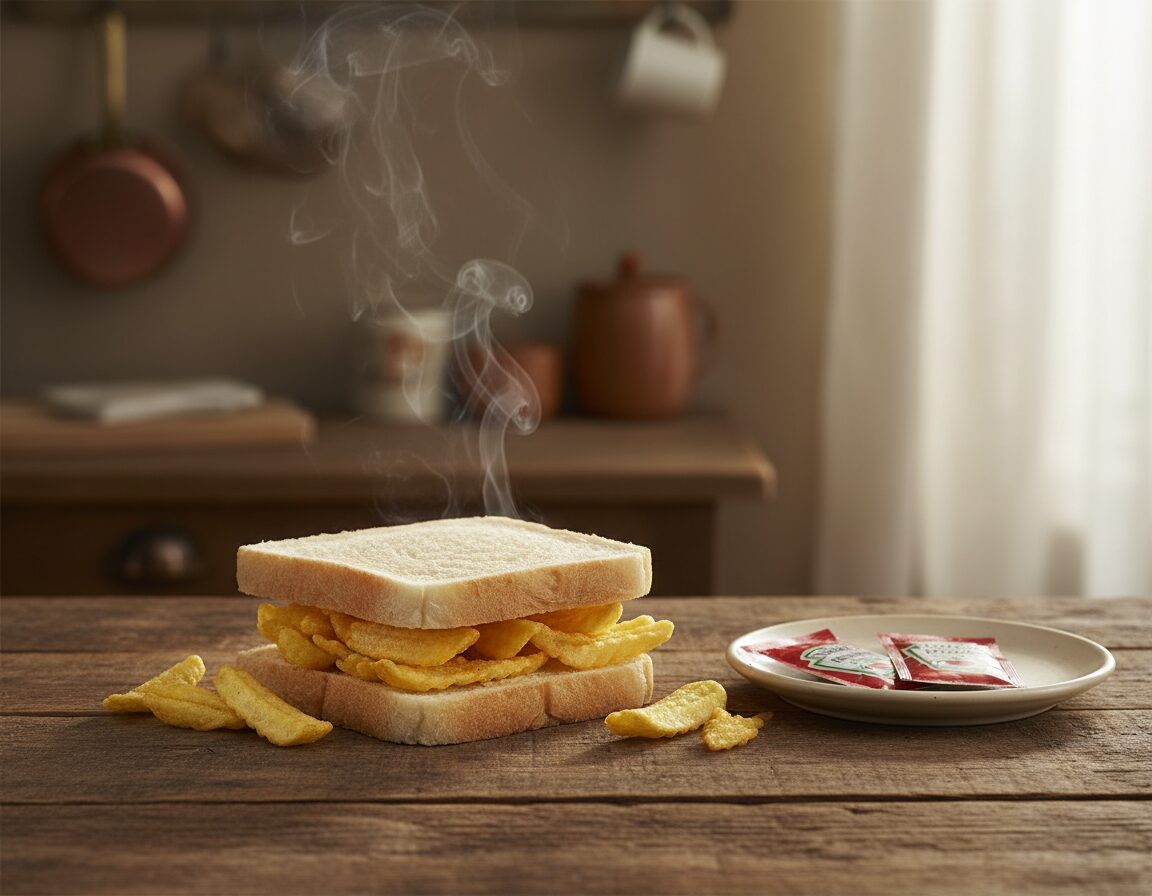
The classic chip butty is gloriously simple: hot chips piled on soft white bread with plenty of butter. Use proper butter so it melts into the bread and seasons the chips; a little salt is all it needs.
Tip: Don’t use crusty artisan loaves — soft bread gives the right give and soak. It’s a brilliant grab-and-go treat for an easy meal or a quick afternoon pick-me-up.
Bubble and squeak for using up roast potatoes and cabbage
Bubble and squeak is my top leftover trick. I mash together cold roast potatoes and cabbage, then press into a hot pan so edges go crisp and golden.
Add bacon bits, spring onions or a fried egg if you fancy. Cook it slowly and press down so it holds together — it keeps well for one more day in the fridge and reheats nicely in a pan.
Scotch eggs for packed lunches (and the truth that they’re not actually Scottish)
Scotch eggs are a pub classic but not Scottish — the name comes from a maker called Scott. I make a lighter version: soft-boiled yolk, seasoned sausage meat and baked breadcrumb coating to cut oil.
Storage: They’re great cold in a packed lunch or sliced warm on toast. Keep them in the fridge up to two days; avoid soggy breadcrumbs by storing uncovered on a plate if you can.
- What I reach for: bread and butter for a quick sandwich; leftover potatoes for bubble and squeak; a Scotch egg for a proper portable protein.
- Why it works: Barely any prep, familiar flavours and small tweaks make them feel like a favourite rather than a chore.
| Staple | When I use it | Storage note |
|---|---|---|
| Chip butty | Lazy dinner or snack | Eat fresh; bread softens if left |
| Bubble and squeak | Leftover roast day | Fridge 24–48 hrs; reheat in pan |
| Scotch eggs | Packed lunch or picnic | Fridge up to 2 days; best cold or room temp |
Classic British baking I make when I’ve got time
If I’m going to make a cake, I want it to be simple, dependable and worth the oven time. Baking is what I do when I can linger with a cuppa and not rush the steps.
Victoria sponge — the proper afternoon cake
The victoria sponge is named after Queen Victoria and sits with the rise of afternoon tea in the 19th century. I aim for an even rise and a soft crumb—room-temperature eggs, weighed ingredients and gentle folding do the job.
I choose buttercream if the cake must travel. I pick fresh cream when it will be eaten straight away. For jam I favour strawberry or raspberry and use a thin smear to avoid sliding.
Scones and the jam-first debate
For scones I use cold butter and light hands. That keeps them tender and gives a decent rise without toughness. I bake them until just golden—overbaking dries them out.
I’m relaxed on jam-first vs cream-first. At home I do jam then cream; for guests I follow local convention and let people choose.
- Practical tip: add a thin buttercream “dam” to stop jam escaping if you’re taking the cake somewhere.
- Texture note: test sponge by touching gently—spring back means it’s done, not dry.
| Bake | Best when | Key tip |
|---|---|---|
| Victoria sponge | Served same day | Weigh ingredients; fold gently |
| Scones | Afternoon tea | Cold butter; minimal handling |
| Jam & cream | Quick teatime treat | Jam-first at home; cream-first if serving |
Old-school puddings I reach for when I want a proper treat
When I want a proper treat, I reach for old-school puddings that feel like a warm hug.
Fruit crumble is my go-to for simple comfort. I balance tart fruit with a flour-butter-sugar crumble and bake until the fruit bubbles. If I want cosy comfort I serve it with custard. For richness I pick cream, and for contrast I add a scoop of ice cream.
Little details matter — rub the butter in quickly so the topping stays crumbly. Bake long enough for bubbling juices; that tells you it’s done.
Spotted dick and custard
Spotted dick is a steamed sponge dotted with currants — the “spotted” name goes back years to 1849. I serve it warm with a generous pour of custard. Keep the sponge moist by not over-steaming and by turning it out carefully.
Sticky toffee pudding
For pub-at-home vibes I make sticky toffee pudding — a date sponge with a lush toffee sauce. Serve it hot so the sauce seeps into the sponge. It feels like a real treat and works well reheated briefly in the oven.
Eton mess
Eton mess is my quick special: ripe strawberries, lightly whipped cream and broken meringue folded in at the last minute. It keeps a little crunch and needs no oven time, so it’s perfect if I want something easy but still celebratory.
- Make-ahead: crumbles can be assembled ahead and baked before serving.
- Serve right away: Eton mess and anything with meringue lose texture if left too long.
- Leftovers: Sticky toffee reheats well; spotted dick is best within a day if kept moist.
| Pudding | Best served with | Make-ahead note |
|---|---|---|
| Fruit crumble | Custard, cream or ice cream | Assemble; bake before serving |
| Spotted dick | Custard | Steam same day for best texture |
| Sticky toffee pudding | Cream or ice cream | Reheat gently; add sauce just before serving |
| Eton mess | Cream | Assemble just before eating |
Conclusion
The trick is a short rotation of reliable recipes that you enjoy and can actually cook. Nail the basics and most dinners taste proper.
Build a plan: a roast for when you have time, a pie night for comfort, and a potato-based dish when the budget is tight. Swap chicken for beef, change the veg, or use a different pastry top for a fresh version.
Not everything must be daily—treats like a full english (black pudding if you like it) suit weekends. That’s fine.
Pick one dinner from the list this week, stock the few staples, and let the rest fall into place. If you need ideas, try these quick weeknight dinners.