
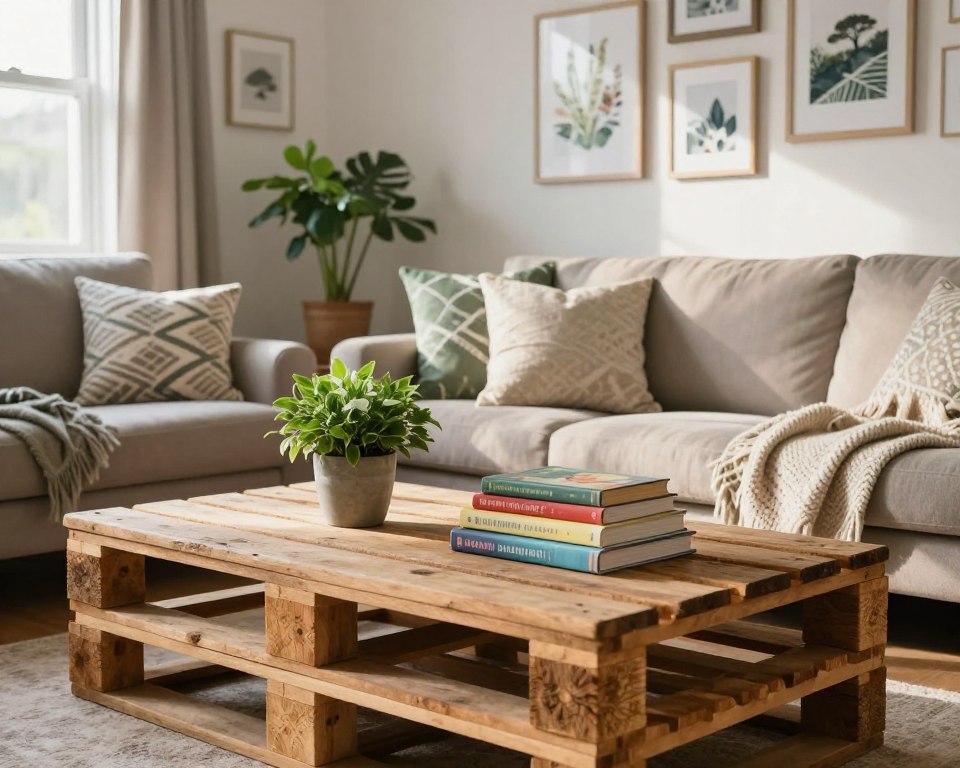
I’m sharing my go-to Budget-Friendly Home Decor Tips because small, well-chosen changes can make a room feel calmer and more intentional.
I’ll set expectations up front: these are about getting a room to feel better fast, not chasing perfection. I explain how I choose one high-impact change and where I refuse to spend when the budget is tight.
I follow a simple order so you don’t waste money: layout, declutter, paint, lighting, soft furnishings, then styling. This approach helps me treat each room as a system — light, storage, surfaces and walls — so small tweaks add up.
Practical advantage: these ideas aim to refresh your home without breaking bank, and they work in rentals and awkward spaces.
Key Takeaways
- Focus on one high-impact change first to stretch your budget.
- Follow a clear order: layout, clear, paint, light, soft furnishings, style.
- Treat rooms as systems so small tweaks combine effectively.
- Avoid buying many small items that don’t fix the real issue.
- Practical ideas suit rentals and rooms that do double-duty.
Budget-Friendly Home Decor Tips I Actually Rely On When Money’s Tight</h2>
My first move is a quick scan to find the single thing making the room feel off.
I check layout, clutter and light — usually one of those is the problem, not a lack of decor. Rearranging furniture costs nothing and can make a space feel completely different; it’s the easiest test I do.
I “shop my own home” next. I move a lamp, swap cushions between rooms or borrow a mirror for a weekend to test a new look. These small swaps help me see which items are doing the work.
- Quick scan: ask what’s making the room feel off — layout, clutter or light.
- One smart spend: pick a rug, curtains or a larger art piece instead of lots of small things.
- Simple reset: clear walking paths, pull furniture off walls and face seating towards light.
- Declutter method: strip surfaces, add back only what earns its place.
My rule is plain: fewer things on show, better placed. Don’t panic-buy small bits that only add visual noise and never fix the room.
Paint Tricks That Change a Room Fast (Without a Full Redecorate)
A few smart brushstrokes can make a space feel deeper and more finished without a full redecoration.
Start with prep: clean surfaces, degrease kitchen doors and label any cupboard parts you remove. Good prep saves time and gives a neater finish. Ventilate the room and use a decent primer where needed.
Where paint gives the biggest difference: backs of shelves, alcoves and trim. I use a darker tone on the back of cupboards or shelves to create instant depth. A tonal skirting or a thin border line can stop a flat room from feeling two-dimensional.
- Painting doors or woodwork in a contrasting colour makes rooms feel bespoke. Pick a shade that ages well; mid-tones and muted greens or greys are safe choices.
- Repaint chairs and stools by hand: clean, sand lightly, prime if bare wood, then two thin coats. Most furniture paint costs under £20 and lasts if you let it cure.
- For cupboards: label doors, degrease, sand, prime, paint and allow full cure time before heavy use.
| Project | Effort | Impact | When not to bother |
|---|---|---|---|
| Backs of shelves / alcoves | Low | High depth | When structural damp is present |
| Internal doors & trim | Medium | Makes rooms feel finished | If joinery is badly damaged |
| Furniture (chairs, stools) | Low | Big colour difference | If frames wobble or need repair |
| Painted floor or chequerboard | High | Character or calm | Severely warped or rotten boards |
Practical warning: painting can hide issues. If there is mould, rot or structural movement, plan the repair first. For quick weekend wins, stick to surface work and follow safety basics: masks, gloves and good ventilation.
Make Your Walls Work Harder Than Expensive Decor</h2>
I find the biggest change often comes from making the walls work harder. They are a great way to change the feel of a room without buying new furniture. You see walls constantly, so one calm change pays off every day.
Wallpaper the ceiling for a big payoff
Wallpapering the ceiling uses less paper than a full room and gives a real wow factor in small spaces. I use it in halls, box rooms and dining areas where the surprise works best. Pick a patterned roll and match the trim colour to keep it calm.
Frame samples or offcuts as affordable art
I frame wallpaper offcuts in identical mounts to create a tidy grid. Same frames and mounts keep the display cohesive and uncluttered. It’s an easy way to add art without a high spend.
Make fabric wall hangings that last
A scarf, charity-shop duvet cover or a fabric remnant makes a soft, tactile piece. Mount it on a wooden batten or a simple dowel so it hangs flat. Add a small backing board if you want it to sit neater and feel permanent.
Think large and keep it considered
Large-scale art reads as thoughtful even when DIY. One big piece often looks better than many tiny frames. If you do a gallery, map it on the floor, limit the palette and repeat one frame finish.
| Project | When to use | Fixings |
|---|---|---|
| Ceiling wallpaper | Small rooms, halls | Lightweight paste, ladder, helper |
| Framed samples | Cheap art update | Same-size frames, picture hooks |
| Fabric hanging | Soft focal point | Dowel, wall hook, Command strips for light pieces |
- For heavy frames use British-standard picture hooks and wall plugs.
- For lighter pieces try Command strips but check weight limits first.
- Keep a simple palette and repeat finishes so the walls read as one calm surface.
Kitchen Updates That Look Pricey (But Aren’t)
With a few practical moves you can raise the look of a kitchen without the usual cost.
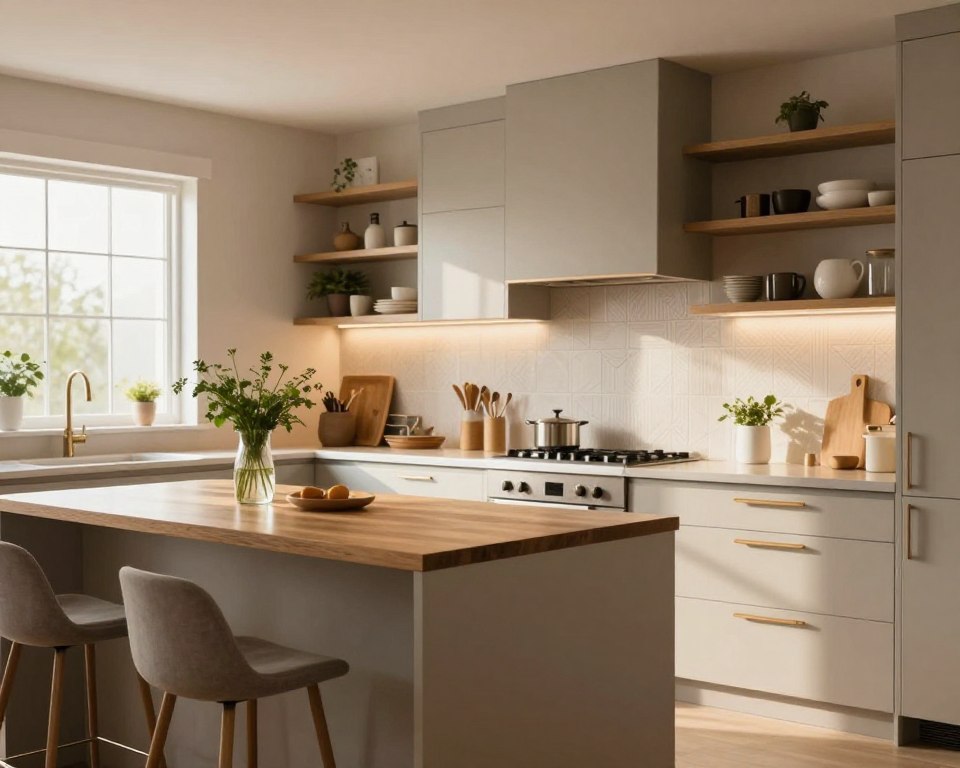
Use vinyl tile stickers to refresh a splashback
Vinyl tile stickers are a renter-friendly quick fix — many sets come in at around £10 per set (Flitch). They work best on clean, flat tiles.
Prep is everything: degrease, dry fully and measure twice so lines stay true. Avoid textured tiles or crumbling grout — they make the job a faff and reduce adhesion.
Wrap tired worktops with vinyl for a new surface look
Vinyl wrapping from retailers such as The Range is a cheap way to change a surface. A careful wrap can hide scratches and refresh colour.
Warm the film slightly, smooth from the centre, and trim neat edges to avoid bubbles. If the worktop is badly worn or damp underneath, this project won’t last — save your money for proper replacement.
Swap cupboard handles for a small change with a big payoff
New handles are a very cost-effective swap. Measure hole centres, pick a finish that matches taps and keep all furniture handles consistent for a calm look.
Use curtains instead of cabinet doors to soften utility areas
Curtains are a great way to hide open shelves or appliances in a utility place. Choose a cotton or poly-cotton that stands up to steam and easy washing.
- Make sure to order one test sheet of vinyl first.
- Don’t start this project the night before guests arrive — give time to dry and settle.
- Small details like matching handle finishes pull the look together on a budget.
| Update | When to use | Typical cost |
|---|---|---|
| Tile stickers | Flat, clean splashbacks | Around £10 per set |
| Worktop vinyl | Surface scratches, sound base | Low to mid cost |
| Handles | Tired cupboards, mismatched furniture | Low cost per item |
Bedroom Upgrades That Feel Like a Treat, Not a Spend</h2>
I focus on simple bedroom moves that make mornings and evenings feel calmer.
DIY statement headboard: I stretch inexpensive fabric over a padded board and fix it with a staple gun. Use foam from a craft shop and a plain plywood or MDF backing. Trim corners neatly by folding like a parcel and stapling in stages.
If you prefer no build, hang a large fabric panel from a simple rod or drape a cloth behind the bed. This works well in rentals and saves time. Alex Stubbs-style panels read bespoke but are quick to remove.
Crisp white bed linen changes the room’s mood fast. I use white sheets, a percale or cotton mix, and wash on a cool cycle with mild detergent. Treat stains quickly and avoid cheap, bobbly fabrics so the set lasts.
- I focus on changes that improve day-to-day life: the first thing you see and the last thing at night.
- Pick one upgrade only: make the bed the most pulled-together thing in the room.
- Practical cautions: keep fabric away from open flames and choose soft, non-itchy textiles.
| Option | Effort | Cost | Renter-friendly |
|---|---|---|---|
| Padded board + fabric | Low–medium | Low | No (fixed) but removable |
| Hanging fabric panel | Low | Very low | Yes |
| Store-bought faux headboard | Low | Medium | Depends on size |
These are small, honest tips that work without breaking bank and fit into real life. Do one change and give it time; comfort matters and it should be easy to keep up.
Lighting and Mood Shifts That Cost Less Than New Furniture</h2>
Good lighting is the quickest way to change how a room feels after dark. It’s an evening fix that often takes an hour, not a weekend.
Layer your lighting in three simple parts: one main light, two lamps placed at different heights, and one soft accent (a small spotlight or fairy lights). Together they stop a room feeling flat at night and let you choose mood by switching sets on and off.
Swap a lampshade rather than the whole lamp. A new shape or a softer fabric changes how the light spreads. It’s cheap, quick and far less fussy than a full replacement.
Choose warm bulbs around 2700K to make spaces feel cosier. Mixing warm and cool bulbs makes a room look inconsistent. Keep the warmth the same across major fittings.
- Go slightly oversized with a ceiling fitting if the ceiling height allows — it reads intentional and more considered.
- Place lamps to lift dark corners and add a timer plug to switch evening lights on automatically.
| Fix | Effort | Impact |
|---|---|---|
| Layering (main + lamps + accent) | Low | High mood change at night |
| Lampshade swap | Very low | Noticeable light quality change |
| Warm bulbs (2700K) | Very low | Immediate cosiness |
Soft Furnishings That Quietly Make a Big Difference</h2>
Soft textiles and well-chosen rugs do more work than most furniture when a space needs calming. They change scale, tame echoes and add a lived-in touch without a major outlay.
Hang curtains high and wide to fake taller windows
Fit the pole 10–15cm above the frame, or as close to the ceiling as you can. Extend the track 15–30cm each side so the windows read larger when curtains are open.
Measure tip: curtain width should be 1.5–2x the window width for a natural fold. For radiators under windows, leave a 10–15cm gap so fabric clears heat and dries well.
Choose the right rug size so the room feels balanced
A rug that’s too small floats and chops the room. Aim for either: all front legs of furniture on the rug, or at least the front legs on it. In narrow spaces, pick a runner that aligns with the longest furniture edge.
If you can’t afford a large rug, layer a larger inexpensive natural base beneath a smaller patterned piece.
Mix textures like jute, sisal and linen for warmth
Natural fibres add a calm, durable touch and age well. Combine a jute rug with linen cushions and a woven throw to keep the palette simple and tactile.
Common mistakes: skimpy curtains, short rugs in the middle of a room, or too many clashing textures. Keep one dominant texture and add two supporting touches.
- Why it works: soft furnishings adjust scale and sound more than new furniture.
- Practical rule: measure twice—curtain drop, pole width, rug placement—before buying.
- UK realities: allow for radiators, narrow terraces and practical fabric choices for high-traffic rooms.
| Element | Measure rule | Practical note |
|---|---|---|
| Curtain pole height | 10–15cm above frame or near ceiling | Makes windows appear taller |
| Curtain width | 1.5–2× window width | Creates natural folds; avoid skimpy panels |
| Rug placement | All front legs on rug or rug under whole seating | Keeps room balanced; avoids ‘floating’ rugs |
| Texture mix | 1 dominant + 2 supporting | Use jute/sisal/linen for warmth and durability |
Second-Hand, Freebies, and Upcycling Without Regret Later</h2>
I look for pieces with good bones rather than perfect finishes when I hunt second-hand. That way a find feels useful, not like another job on the pile.
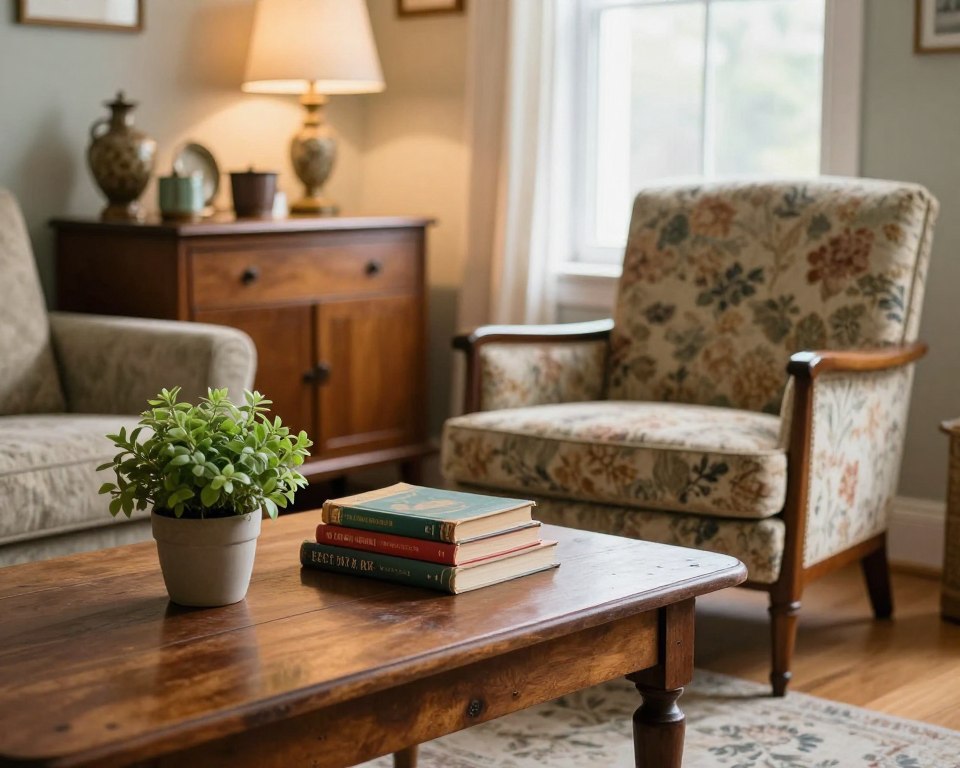
Where I search: Olio, Trash Nothing and Facebook Marketplace. I filter by distance, screen for photos and set alerts so I don’t miss giveaways of furniture, plants or small items.
- Before you collect: measure, check access and transport, sniff for damp or smoke, look for woodworm holes, and ask whether it solves a real need.
- Upcycle rule: pick one strong colour, keep hardware the same finish, and avoid over-distressing so pieces read current.
- Mixing method: repeat one material or colour across mismatched pieces to make the room feel collected, not chaotic.
- Plant advice: check for pests, quarantine new plants for a week and don’t take on fussy types if you’re busy.
| Source | Best for | What to check | Quick win |
|---|---|---|---|
| Olio | Small items & plants | Photos, pickup window | Collect small pots or soft furnishings |
| Trash Nothing | Free furniture | Measure doorways, confirm condition | Arrange van lift or strong friend |
| Facebook Marketplace | Vintage & larger pieces | Ask age, finish, any repairs | Agree price, bring tape measure |
| Charity shops | Textiles & décor items | Check seams, odours | Pick one standout piece |
I don’t bring projects home unless I can picture where they’ll live and how soon I’ll finish them. Done thoughtfully, second-hand is one of the best ways decorate house on a small budget.
Styling Moves I Use to Make a Home Look “Done”</h2>
I treat styling as finishing work: the neat, lived-in details that change everything. For me, “done” means clear surfaces, a few repeated tones and a sense of order rather than perfection.
Display collections where they make sense
I place plates above the breakfast table, baskets in the hall and a couple of hats on a peg in the bedroom. These ones belong where they are used so the display feels natural.
Rotate objects to keep rooms fresh
I swap a vase or the books on the living room shelf once a month. The coffee table gets a new centrepiece every few weeks — even a single bloom or a stack of interesting ones does plenty to change the mood.
Pair flat art with real objects
On shelves I mix a framed print with a small plant, a shallow bowl and a taller vase. That play with dimensions stops the shelves looking like a shop and adds depth.
Use baskets for fast tidy-up and texture
Baskets hide toys, throws or magazines and add warmth to the living room. I keep a couple of sizes so there’s always a quick place to stash things without making a mess.
Be intentional with everyday items
Decant soap, washing-up liquid or cotton pads into glass where it helps. It reduces visual clutter and makes ordinary things feel considered. Make sure you leave breathing space and stick to a small palette so surfaces don’t feel crowded.
- What “done” looks like: clear surfaces, repeated tones, and a few well-placed objects.
- Quick rule: don’t fill every table or shelf — leave some air.
- Rotation tip: change one thing rather than everything for an easy refresh.
| Move | Where I place it | Practical gain |
|---|---|---|
| Plate display | Above dining or breakfast table | Adds personality without clutter |
| Basket storage | Hall or living room | Fast tidy-up and texture |
| Decanted essentials | Bathroom or kitchen table | Reduced visual noise, more calm |
Glass, Mirrors, and Clever Reflective Details for More Light</h2>
Reflective surfaces are a low-effort way to lift a dim room without building work. They change perceived light and scale, so rooms feel brighter and more considered with little fuss.
Add fluted or patterned film to glazed doors and cabinets
Fluted or reed-style film modernises internal glazed doors and cabinet panes. It hides scratches and fingerprints and reads more intentional than plain frosting.
I use specialist suppliers such as Purlfrost for reliable film. Measure the glass, cut with a small overlap, and apply with a soapy spray for neat positioning. Trim excess with a sharp blade and smooth bubbles with a squeegee.
Use a large mirror to bounce daylight around darker rooms
Place a mirror opposite or beside a window to reflect light deeper into a room. Don’t hide mirrors in corners; propping one for a few days shows you how the light moves before you fix it.
- Frame choices: warmer metals or wood soften the look; slim frames keep the finish calm.
- Cleaning & longevity: wipe film with mild soap; avoid abrasive pads. Mirrors need secure fixings and safety hangers in homes with children or pets.
| Detail | Best use | Practical note |
|---|---|---|
| Fluted glass film | Internal doors, cabinet panes | Hides small scratches; renter-friendly removal |
| Large mirror | Opposite/near window | Prop first; use secure fixings |
| Slim framed mirror | Living rooms, bedrooms | Creates calm, avoids harsh reflections |
Plants and Fresh Flowers for Instant Life (Even If You’re Busy)
Greenery and flowers bring an instant, low-effort lift that doesn’t demand a lot of time.
I keep things simple and judgement-free. Plants soften hard edges and add a sense of life without needing perfect care.
Use a mix for real depth
A simple formula works: one floor plant, one shelf plant and one trailing or hanging piece if you can. This layering gives depth and helps the room feel collected, not cluttered.
Keep fresh flowers minimal
Buy a small bunch or even a single bloom. One well-placed stem changes the mood and feels deliberate.
Quick care: clean the vase, fresh water every two days and trim stems at an angle to help flowers last longer.
When faux plants are the sensible choice
If you have very low light, travel a lot or simply dislike watering, good-quality faux plants are a practical option. They add texture and the same calm without chore guilt.
- Low-effort plant picks: snake plant, pothos, ZZ plant — forgiving and low maintenance.
- Avoid thirsty fussy types if you’re short on time.
| Use | Best for | Care level |
|---|---|---|
| Floor plant | Adds scale and anchors a corner | Low–medium |
| Shelf plant | Softens shelves and fills eye-level gaps | Low |
| Hanging/trailing | Creates depth and motion | Low |
Conclusion</h2>
One clear decision about scale or colour steadies the whole space.
I stick to a simple rule: a few well-chosen changes beat a trolley full of random decor. Start with the order I use—declutter, check layout, paint, lighting, soft furnishings, then styling—and you’ll save money and time.
Try a one-hour reset (clear surfaces, move furniture, swap a lamp) or a one-weekend project (paint an alcove, hang new curtains, swap a rug). Pick one anchor—rug size, curtain height or a single piece of art—to hold the plan together.
Paint and lighting are a great way to change how a home feels without replacing furniture. To finish, make sure surfaces read clear, repeat two colours, and hide clutter in sensible storage.
I promise: do this slowly, one budget step at a time, and the room will feel genuinely lived-in and done.