
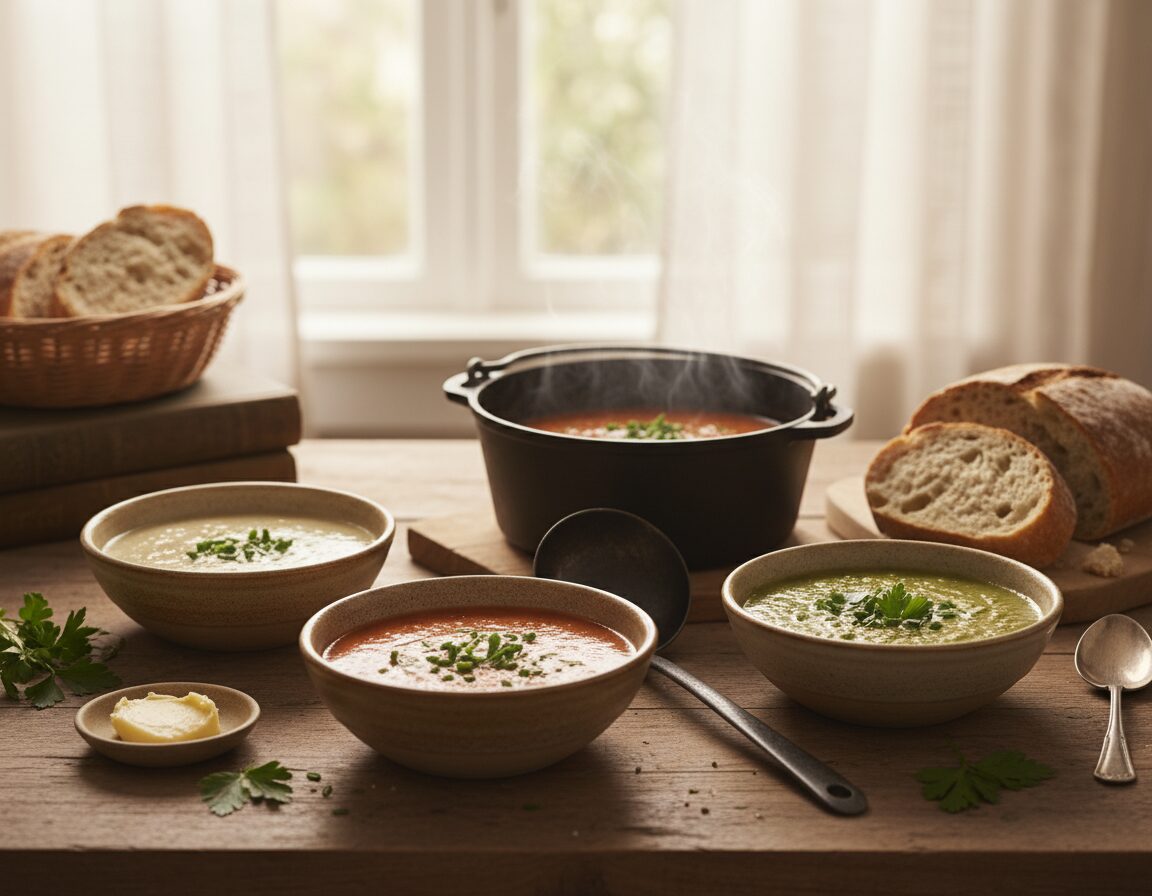
I often reach for the phrase traditional uk soups when I want something that feels like home — quick, comforting and sensible on a tight budget.
I cook these bowls for weeknight dinners, slow Sunday pots and the times I need something a bit soothing. I’ll tell you what I buy, how I simmer things, and what I do when a pot needs rescuing.
Expect honest, usable recipes that work in real kitchens: basic veg, cheap cuts, freezer-friendly batches and smart ways to use leftovers. I’ll also explain how I pick a soup for the day — weather, time, fridge contents and whether I want gentle comfort or a dish with a bite.
Note: these are the recipes I actually make, not a museum list. Most are forgiving — I’ll point out easy swaps so you won’t wreck the end result.
Key Takeaways
- These are practical, familiar recipes I make at home.
- Includes quick weeknight bowls and slower weekend pots.
- Focus on affordable ingredients and freezer-friendly batches.
- Advice on choosing a soup based on weather and fridge stock.
- Simple swaps and troubleshooting to keep things forgiving.
- For more cosy ideas, see a related collection of hearty recipes: cosy winter soup ideas.
What I mean by “traditional” when it comes to British soup
What counts as classic here is simple — familiar ingredients, steady heat and honest flavour. I mean the recipes people turn to when it’s grey outside and they want something that comforts without fuss.
Broth, potage or purée: the textures I lean on depending on the day
Some days I want a clean broth that smells of herbs and bones. Other times a thick potage — chunky, warming and a little rustic — is the answer. When I need comfort, a smooth purée with butter or cream fills the bill.
Why soup suits the climate (and my budget) so well
It handles blustery weather by offering heat and scent in one bowl. It also stretches small amounts of meat and uses veg on the turn — a reliable way to save money without losing flavour.
- Rule of thumb: rich soups — smaller portions; brothy ones — serve as a starter.
- Season cautiously early, especially with ham or stock cubes, and adjust at the end — that habit saves disappointment.
When I serve a bowl as a starter versus a main
I keep brothy bowls light as a starter to raise expectations for dinner. If it’s thick, I bring a big bowl and bread and make it the meal. Simple choices like portion size and a slice of good bread change the whole feel.
Traditional uk soups I come back to again and again
When I need a reliable pot, a handful of these recipes see me through the week. I keep notes on what I use, when I add it, and how I finish each bowl.
Cock-a-leekie: clear, comforting broth
I soak prunes first, simmer chicken gently and skim the scum. I add a tied bundle of leeks early, then stir in shredded leek right at the end. Prunes go in late so they stay plump and sweet. The aim is a bright, clear chicken soup that smells fresh.
London particular: split pea and ham
I cook a ham hock with aromatics and strain the stock. If it feels salty, I let it down with water before adding peas. I simmer until soft, blitz part for body and return the ham and celery leaves at the finish for texture and taste.
- Leek & potato: cook leeks soft, push to a silky but not gluey texture.
- Easy potato: onion, potato, water or light stock—season hard at the end so it feels like dinner.
- Green pea: use frozen peas, don’t overcook; finish with basil oil for lift.
- Celery: soften in olive oil, simmer in stock, add milk or a splash of cream, then blitz smooth.
- Watercress, tomato, chestnut: finish with decent stock and a swirl of cream if you like.
| Soup | Key step | Finish |
|---|---|---|
| Cock-a-leekie | Gentle simmer; skim regularly | Prunes late; shredded leek at end |
| Split pea & ham | Strain ham stock; dilute if needed | Blitz partly; add ham and celery |
| Leek & potato | Soft leeks before liquid | Silky texture; season at end |
| Green pea | Short cook on frozen peas | Basil oil or lemon to brighten |
Hearty, old-school British soups for weekends and dinner parties
Some bowls deserve time and patience — they are the ones I save for slow weekends and chatty dinner parties.
Oxtail
I brown the oxtail, sweat onion and veg, then simmer for 3–4 hours and strain. I always make it the day before so the fat firms; chilling lets me lift the fat cap and the stock shines. Reheat gently with the meat, finish with sherry and parsley for a glossy finish.
Mulligatawny
This Raj-era pepper water became a proper British chicken soup. I use chicken, rice, creamed coconut, tomato purée and curry powder. Finish with lemon, a spoon of cream and coriander if you like — it stays true if you keep the spice gentle.
Mock turtle
A Victorian showstopper — it needs planning and a good butcher. Long simmering, thickened with beurre manié, finished with sherry, mace and cayenne. Expect forcemeat balls bound with eggs as the classic garnish; it’s a commitment but very grand.
Roast parsley root
Parsley root tastes of parsley with celeriac and a whisper of parsnip. I roast it with carrot, celery and onion, add thyme and bay, then simmer, deglaze with wine and blitz smooth. It’s forgotten but practical and elegant for a party starter.
| Soup | Key step | Time | Make-ahead tip |
|---|---|---|---|
| Oxtail | Brown, long simmer, chill to remove fat | 4–6 hrs total | Make day before; skim fat |
| Mulligatawny | Cook rice in soup; balance coconut and tomato | 1–2 hrs | Finish with lemon just before serving |
| Mock turtle | Long gentle simmer; thicken with beurre manié | Several hours | Prepare stock ahead; make forcemeat with eggs |
| Roast parsley root | Roast veg, deglaze, blitz | 1–1.5 hrs | Roast ahead; blitz and reheat |
Bottom line: these are my weekend and dinner recipes — some are projects, some I do ahead, and all reward a bit of time and care. Choose by effort and the ingredients you want to show off in life.
Stock and broth basics that actually make these soups taste traditional
Good stock is the quiet trick behind the bowls that taste like someone’s been stirring them for hours. I focus on small moves that change flavour—browning, a gentle simmer, skimming and chilling to remove fat.
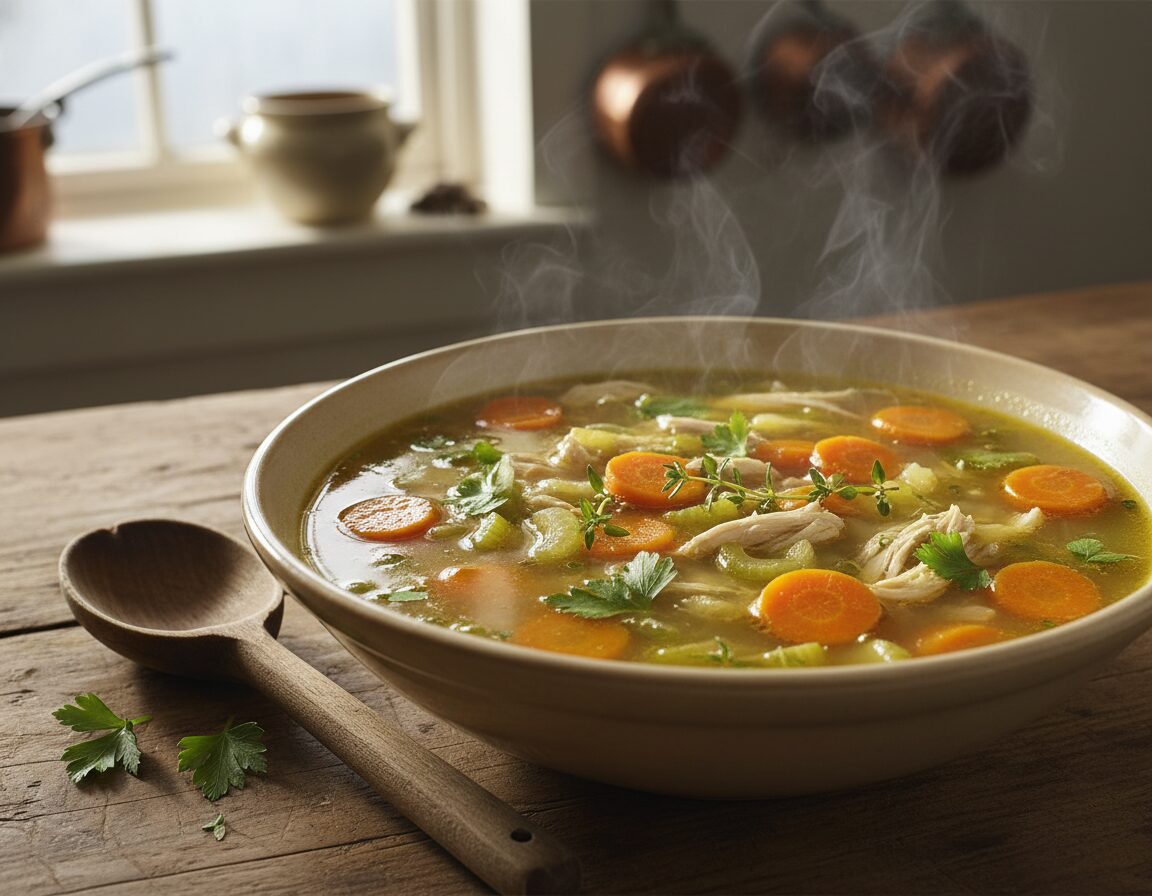
Turkey stock from leftovers: brown for colour and depth
I roast or pan-brown the carcass and veg first. That caramelisation adds colour and a deeper flavour than simmering raw bones.
I barely cover with cold water, add bay, thyme, rosemary, parsley stalks, peppercorns and a touch of mace. Simmer gently for about two hours, then strain, press the solids and chill to lift the fat.
Veal stock for body without a beefy hit
I blanch the bones five minutes to cut scum, then start in cold water and coax up to a very slow simmer. I skip peppercorns for a clear finish.
After five hours I strain and reduce by a third for body; chill and remove the fat before using.
Keeping stock clear, and rescuing salty ham stock
- Skim early and often; don’t stir hard.
- Strain through a fine sieve and chill to de-fat.
- If ham stock is too salty, let it down with water before you build the soup and taste as you go.
| Stock | Key move | When I use it |
|---|---|---|
| Turkey | Brown carcass & veg; short simmer | Light, fragrant bowls |
| Veal | Blanch; very slow long simmer; reduce | Posh, rounded recipes |
| Ham | Dilute if salty; finish carefully | Pea & ham, richer broths |
Practical tip: I keep a freezer bag of veg trimmings and bones to save a day’s worth of effort—then making stock feels doable, not daunting. For a quick how-to, I’ll include a link in the recipe notes.
Ingredients and swaps I use in real UK kitchens
I keep a small larder of vegetables and fats that shape nearly every pot I make. These choices make busy cooking feel reliable and homely.
Leeks, onions, carrots and celery: the basic veg I start with
The veg I nearly always use: carrots, onion, garlic, white leek and celery. I dice to a similar size so everything cooks evenly. If onion pieces are large and carrot tiny, the texture will be uneven.
Milk, cream, butter and olive oil: how I choose richness
I pick milk for everyday bowls and save cream for finishing or when I want a fancier touch. Butter adds sweetness; olive oil keeps a cleaner edge. Below is a quick comparison.
| Fat | Use | Result |
|---|---|---|
| Butter | Sweat veg | Sweet, rounded |
| Olive oil | Light sautés | Cleaner flavour |
| Roast fat | Leftovers | Deep, meaty |
Using leftovers properly
For a leftover turkey recipe I fry 2–3 tbsp fat, cook the basic veg until golden, add herbs and celery salt, then potato and 1.5–2L turkey stock. Add the turkey late and blitz with hazelnuts; stir back with cream, parsley or tarragon and diced stuffing.
Herbs and seasonings that matter
I rely on bay and thyme for warmth, tarragon for lift and parsley at the end. I freeze bones, veg ends and herb stalks to save time. Small swaps work — almonds for hazelnuts or leave nuts out entirely — so the recipes still fit a normal weekly shop.
How I serve, store and revive soup so nothing gets wasted
Make-ahead soup is my shorthand for an easy dinner that actually tastes richer the next day. I cook with the idea of saving time and flavour. A rested pot often tastes more rounded—herbs and spices settle and meld.
Making ahead and chilling safely
I cool soup quickly by portioning into shallow containers. That helps the centre chill fast and keeps it safe at home.
Tip: label with date and use within three days from the fridge.
Freezing for near-instant comfort
- Freeze in usable portions so you only defrost what you need for dinner.
- Leave a little headspace in tubs so lids don’t crack as contents expand.
- Label clearly with name and day frozen.
| Storage | Time | Reheat note |
|---|---|---|
| Fridge | Up to 3 days | Reheat gently; stir and taste |
| Freezer | 3–4 months | Defrost in fridge overnight; finish on low heat |
| Fatty stock (eg oxtail) | Chill, remove fat cap | Reheat gently for warming richness |
Reviving and finishing
If a pot has thickened in the fridge, loosen with water or stock and re-season at the end. If dairy looks split, warm slowly and stir in a spoon of cream off the heat.
Small upgrades make leftovers feel new—fresh herbs, a drizzle of olive oil, or a chunk of good bread beside the bowl.
Conclusion
I always pick a pot that fits the time I have and what’s in the fridge.
For quick comfort go for clear broths on lighter days. Choose a thick pea-and-ham style bowl for proper cold-weather warmth. If you need a simple starter, a smooth purée works every time.
If you’re new to these recipes, try leek and potato or an easy potato soup first — forgiving, cheap and fast. Spend time on the small things: sweat the veg, use decent stock and season at the end. That’s where most flavour comes from.
Use leftovers generously — cooked meat, odd veg and herbs all help you save money and cut waste. Serve plainly with bread, or lift a bowl with a swirl of cream and fresh herbs when you fancy it.
And if you want proper comfort on a slow day, a good leekie soup or an old classic is worth the effort — but not every week. Soup should make life easier, not harder.