

I start from a simple truth: Navigating Travel Insurance Claims works best when I prepare early, keep clear evidence and stick to the policy wording. I write as a UK traveller who likes to plan, not panic.
I’ll explain what I actually do and why. First, I check policy terms and note deadlines. Then I make a habit of saving receipts and photos so I’m not relying on memory later.
Most problems I see come from avoidable gaps — undisclosed medical conditions, missed reporting deadlines, lost paperwork or poor theft reports. My aim is practical: make the claim easy to validate from day one, not to argue with an insurer.
Below is a short, calm guide to the simple flow I follow: before I travel (policy checks), when something happens (notify + evidence), while I’m abroad (authorisation + receipts), and at home (submit quickly + keep copies).
Key Takeaways
- Check the policy and note any special conditions before you go.
- Act quickly: report incidents and get authorisation when needed.
- Keep clear proof: receipts, photos and official reports help validate a claim.
- Follow the policy wording rather than assuming a flexible outcome.
- Small steps at each stage make the claims process smoother and faster.
Before anything goes wrong, I make sure my policy will actually pay out
Before I leave home, I run a quick checklist on my policy so there are no surprises later. I read what is covered, what is excluded and any special conditions in the small print.
I declare pre-existing medical conditions upfront. Even small issues can lead to a rejected medical claim if not disclosed. I fill in health details before I buy the cover to keep the policy valid.
I match cover limits to reality. I check cancellation limits against the full cost of the trip and compare baggage limits with what I will carry. I also note differences in medical costs for my destination.
I check the excess and decide when a claim isn’t worth it. If the excess is high and the loss is small, I accept the cost rather than submit a claim that will be mostly eaten by the excess.
- Read covered vs excluded items (alcohol, risky activities, unattended goods).
- Note time limits and special conditions that void cover.
- Store the policy number and emergency phone number on your phone and a printed copy.
Quick reference
| Check | Why it matters | My action |
|---|---|---|
| Coverage & exclusions | Shows what will be paid | Flag exclusions and risky activities |
| Pre-existing conditions | Non-disclosure risks rejection | Declare everything before buying |
| Excess & limits | Determines claim value | Decide whether to claim or absorb cost |
| Contacts | Fast access when needed | Save policy number and emergency phone number offline |
When an incident happens on my trip, these are the first things I do
When something goes wrong on a trip, I keep my first steps simple and focused. Quick action makes the later claim process much easier.
My first contact rule: if there is any chance the problem changes my plans — medical care, curtailment or missed connections — I call my insurer straight away. Early contact avoids wasted time and gives me a reference for later.
Record exact information while it’s fresh
I write down date, time and location. I note names, reference numbers and what staff told me. I save the name of the person I spoke to and any case number.
Collect evidence as you go
I take photos and screenshots. I keep tickets, boarding passes and pharmacy receipts. I save email confirmations and a card-statement snippet as proof of payment.
- One phone folder for the trip with subfolders: medical, baggage, delays, cancellations.
- Keep story consistent across forms, calls and emails to avoid delays.
- Store all documentation promptly so nothing needs recreating later.
| What I collect | Why it matters | Example |
|---|---|---|
| Date, time, names | Shows exact chronology | Staff name, case number |
| Receipts & proof of payment | Validates expense amount | Receipt + card statement snippet |
| Photos & tickets | Supports loss or delay | Damaged item photo, boarding pass |
Navigating Travel Insurance Claims while I’m still abroad
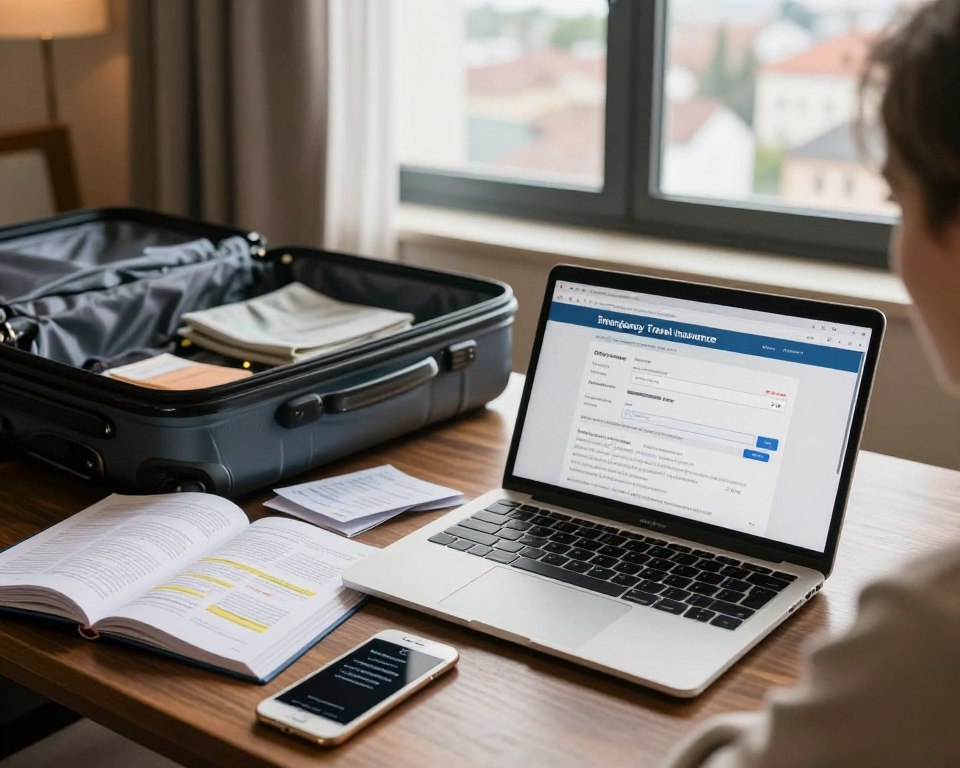
If I fall ill or need care abroad, my first move is to call the emergency assistance line. I treat this as urgent for hospital admission, an expected stay of 24 hours or more, repatriation risk, or any major change to my trip plans. The line runs 24/7 and can liaise with hospitals and arrange transfers if needed.
Before I phone I gather my policy number, current location, hospital or doctor details and a short summary of symptoms. This helps the provider authorise care faster and gives me a reference to use later. I keep the insurer’s phone number and my policy details to hand.
If the insurer can pre-authorise treatment I ask them to agree the plan before it goes ahead. Pre-authorisation matters for larger bills and avoids questions about cover later. If I must pay upfront, I get itemised invoices, a medical note matching dates and treatment, and proof of payment so I can claim medical expenses back.
Receipt habit: I put every extra cost caused by the incident into one claim pot — taxis to appointments, extra nights, replacements. I keep receipts and all documentation together. Small costs can be paid myself if the excess makes it sensible, but I record them anyway so nothing is missed when I start the process at home.
| Situation | My action | Why it matters |
|---|---|---|
| Hospital admission >24 hours | Call emergency line immediately | Insurer can arrange care and repatriation |
| Planned treatment with high cost | Request pre-authorisation | Reduces dispute over cover |
| Paying up-front | Collect itemised invoice and proof of payment | Needed to reclaim medical expenses |
| Extra travel costs | Save all receipts in one folder | Makes the later claim clearer and faster |
How I handle travel insurance claims once I’m back home in the UK
Once I’m back at my front door, I make a short list and act on it straight away.
Day one: I check the policy for the claim time limit and note any specific deadlines. If the policy says submit within 60 days, I start even if I’m missing one receipt.
I ask the provider for the claim form by phone or email. An emailed form is quicker and gives me a timestamp. I save a PDF copy and a screenshot of the completed form for my records.
I then choose the easiest submission option. Many firms have an online portal with uploads and a save-and-return feature. If online isn’t available, I use email attachments or post the form.
- I list documents to match each question on the form so nothing is missed.
- I check the excess and decide if the claim is worth submitting before I spend time on paperwork.
- I keep copies of everything I send: receipts, photos and any written information from the provider.
| Action | Why it matters | Tip |
|---|---|---|
| Check time limit | Prevents late rejection | Note deadline and start immediately |
| Request form early | Creates a paper trail | Save PDF and screenshots |
| Choose submission option | Reduces errors and delays | Use online upload where possible |
| Organise documents | Makes assessment faster | Match files to the questions on the form |
The documents and evidence that usually make or break an insurance claim
Good documentation makes the difference between a quick payout and a long dispute.
What insurers typically want is clear: financial receipts, third‑party reports and medical paperwork. I sort these into three simple piles so a handler can see the facts at a glance.
- Financial proof: receipts, invoices and proof of payment for expenses and replacements. I keep both a till receipt and a bank or card snippet so value and payment method are obvious.
- Third‑party reports: police reports within 24 hours for theft or loss. If that isn’t possible I get a written note from the hotel, airline or tour rep.
- Medical proof: itemised bills, discharge notes and a short certificate stating dates and treatment in plain terms.
I photograph damage immediately and keep the damaged items until the case is closed. Insurers may ask to inspect or salvage goods.
Carrier confirmations matter for delays and cancellations. I ask for written confirmation of the reason and length of disruption, and I keep booking proof and any refunds received. The provider will deduct recoverable refunds from what they pay out.
Submission pack habit: label files by date and type (for example “2025-06-01_receipt_airfare”). A tidy folder speeds up the decision and reduces follow-up requests.
Quick mapping of evidence to claim type
| Claim type | Key documents | Why it matters | My action |
|---|---|---|---|
| Lost/stolen items | Police report, receipts, photos | Shows ownership and prompt reporting | Report within 24 hours; keep originals |
| Replacement expenses | Receipts + proof of payment | Verifies cost and payment method | Keep card statement snippet with receipt |
| Medical treatment | Itemised bills, discharge note, certificate | Confirms treatment, dates and costs | Get plain‑English certificate from clinic |
| Delay/cancellation | Carrier confirmation, booking proof, refunds | Shows what you cannot recover elsewhere | Request written reason and keep ticket copy |
For a fuller checklist on policy selection and proof preparation, see this concise guide: the ultimate guide to travel insurance.
Lost, stolen, or damaged baggage and belongings: how I make the claim stronger
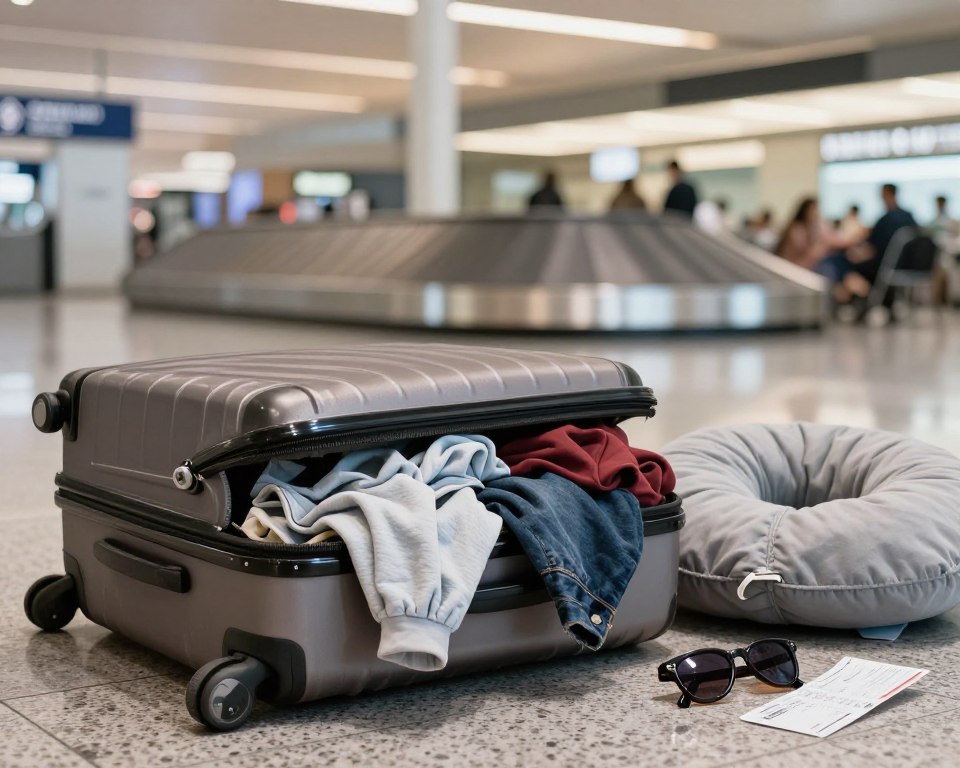
My first move with missing baggage is to gather short, dated evidence before anything else.
What reasonable care looks like: I keep valuables on me, use hotel safes when sensible and never leave bags unattended. I take quick photos of packed bags and safe usage to show I acted with care.
If a police report isn’t possible: I ask a hotel manager, tour rep or transport provider for a written report. It makes a clear, dated document that supports my loss and shows I reported promptly.
Essential receipts and gadget proof
- I keep receipts for small replacement items (toiletries, underwear, one change of clothes).
- For phones and gadgets I add proof of purchase/value and a note showing I stopped the service with my provider.
- I keep the airline property irregularity report (PIR) for delayed or lost bags.
| Who to report | Why | What to get |
|---|---|---|
| Police / local authority | Official timestamp | Report number and copy |
| Hotel / tour rep / transport staff | When police not available | Signed written statement |
| Airline | Baggage delayed or damaged | Property irregularity report (PIR) |
Insurers set limits and may apply deductions, so I keep expectations realistic and focus on clear documents and prompt reporting to strengthen the claim.
Medical emergencies and personal injury claims without the stress
Getting authorisation fast starts with a few simple facts I give the insurer the moment care is needed. I keep this calm checklist in my phone so I can speak clearly under pressure.
When I call and what I say
I state where I am, where I’m being treated and a short note of what the doctor says. I ask if the treatment is authorised and for a reference number. If pre-authorisation is refused, I record who I spoke to and why.
GHIC/EHIC and receipts
GHIC/EHIC can reduce or remove charges in the EU, but it does not replace travel insurance. I still pay if asked and keep every receipt and medical note to reclaim costs later.
Common non-payable areas and special situations
- I avoid non-essential private treatment where a public alternative exists; insurers often decline elective care.
- I keep pharmacy receipts with a medical note linking medication to the incident.
- Pregnancy is usually covered if it was normal at purchase, but I always check policy limits and airline rules before flying.
| Risk | My action | Why |
|---|---|---|
| Pre-existing conditions | Declare or update insurer | Avoids rejection |
| Non-essential private care | Use public option first | Insurers may not pay |
| Missing receipts | Collect invoices & notes | Proof for any later claim |
Cancellation and curtailment: proving I had a valid reason to cancel or come home early
If circumstances force me home, the first thing I do is record exactly why and when. I act quickly and keep everything written so the policy handler sees facts, not memories.
What I collect for accepted reasons
- Illness or injury: a dated GP or hospital note describing condition and dates.
- Bereavement: original death certificate or funeral director confirmation.
- Redundancy: employer redundancy letter showing date and effective notice.
- Home emergency: police or fire report, or a signed hotel/agent note if local services can’t help.
Refunds, unused nights and extra costs
I list refunds already received — airline reimbursements, hotel vouchers or partial refunds — and attach screenshots or bank statements. Insurers will subtract what I got back from what they pay.
For unused accommodation I show the booking terms and the nights not used. If a provider refuses a refund, I add their email or refund policy to the file.
| Reason | Documents to send | What insurer expects | My action |
|---|---|---|---|
| Illness/injury | GP/hospital note, dates, treatment | Medical proof linking inability to travel | Request written note and keep receipts |
| Bereavement | Death certificate or funeral note | Confirm close relative and date | Send certified copy and contact details |
| Redundancy | Employer letter with date | Shows employment ended after policy started | Scan letter and add bank evidence if needed |
| Home emergency | Police/fire report, contractor note | Proof property was unsafe or needed urgent attention | Photograph damage and keep official report |
Timing and practical tips
- I cancel bookings as soon as advised and keep the cancellation email or screenshot.
- I keep receipts for extra travel costs to get home and any replacement expenses.
- I check my policy wording for who counts as a close relative and any per-person limits.
Travel delays, missed departures, and unexpected extra costs
A clear timeline and a handful of dated documents turn a messy delay into a tidy claim file.
First thing I do: I ask the carrier at the desk or gate for written confirmation stating the reason and the length of the delay. I never rely on a verbal update alone. I take a photo of any posted notice and a screenshot of emails or texts from the operator.
Receipts that matter: I keep itemised receipts for extra transport, overnight accommodation and essential meals. I also save booking confirmations, card snippets showing payment and any refunds received.
Documenting a missed departure from a car breakdown
If a car fault causes a missed flight, I get the police or motoring authority report and any recovery or repair paperwork. I keep invoices for taxis, recovery and extra hotel nights. These documents show the delay was outside my control.
- Take screenshots of departure boards and operator messages.
- Note exact times: when I left home, where I was delayed, and when I finally arrived.
- Ask the carrier what assistance they will provide before I pay for my own solutions.
| Issue | What to get | Why it helps |
|---|---|---|
| Operator delay | Written reason & length, posted notice screenshot | Proves cause and duration for a claim |
| Additional costs | Itemised receipts for transport, hotel, meals | Validates expenses for reimbursement |
| Missed departure due to vehicle | Police/motoring report, recovery/repair invoice | Shows external cause and supports missed-departure claim |
For fuller guidance on choosing cover and organising documents, see the ultimate guide to travel insurance.
Common reasons insurers reduce, slow, or refuse claims and how I avoid them
I’ve seen well‑intentioned claims held up for one basic reason: missing or mixed‑up details.
Incomplete forms and inconsistent information
Incomplete paperwork is the quickest way to slow the claims process. I check every date, reference number and attachment before I send a form.
I make sure what I wrote on the claim form matches the airline note, police report and receipts. Consistency avoids repeated questions and delays.
Alcohol and other common exclusions
Be frank about circumstances. If alcohol played a part, many policies will limit or refuse a payment. I read the exclusions so I know where I stand.
Double cover and other policies
If my home contents or another insurer might help, I tell the insurer early. You cannot claim twice, but disclosure speeds settlement and prevents future disputes.
Delays in notification and missing evidence
I notify the insurer as soon as possible and upload documents quickly. Some providers ask for submissions within 60 days of return; missing that time can be fatal to a claim.
| Issue | Effect | What I do |
|---|---|---|
| Incomplete form | Case paused for queries | Check dates, refs, and attachments before submit |
| Alcohol exclusion | Reduced or refused payment | Note incident honestly and supply medical/third‑party notes |
| Double insurance | Slower settlement | Declare other cover and provide policy details |
| Late notification | Evidence lost; claim refused | Tell insurer immediately; keep receipts and third‑party notes |
Conclusion
Conclusion
I finish with a short, practical recap you can use before, during and after a trip. First, make sure your policy number and emergency contact are saved where you can find them quickly.
Second, act fast when something happens. Get written confirmation for delays or theft, ask the insurer to authorise treatment where possible, and gather receipts, invoices and third‑party reports at the time.
Third, on return start the claim process quickly and keep a full copy of everything you send. Declare any other cover and hold damaged items until the case closes.
Quick checklist: who to call, what to keep, and what to request in writing. Do these things and a problem stays inconvenient rather than costly.