
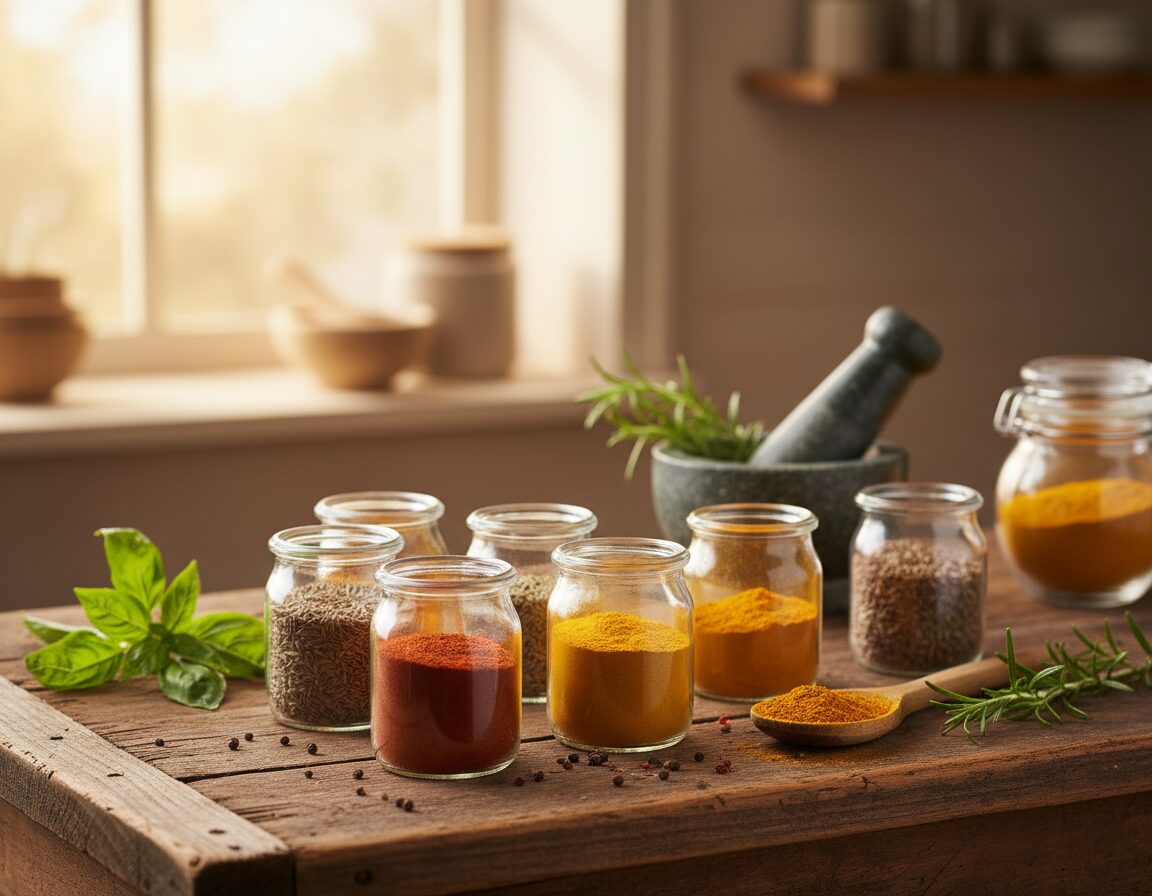
I love having a jar of homemade spice blends within reach — it saves time and gives instant flavour to whatever I’m cooking.
I’ll show the exact method I use, the cupboard basics I keep, and the homemade spice I actually reach for on busy weeknights. This is practical, not precious — small jars, clear labels and realistic storage habits that work in a UK kitchen.
Making your own seasoning is quick, budget friendly and keeps you from hunting through cupboards. It gives reliable flavour fast and lets you tweak heat and salt without wrecking a dish.
By the end you’ll have a repeatable approach, a few go-to spice blends, and a simple way to adjust each recipe to taste. I mostly keep mixes salt-free so I can control seasoning per dish — no fancy gear needed, just sensible ratios and a bit of time.
Key Takeaways
- My simple method makes flavour fast and reliable.
- Keep basic jars and label clearly for ease.
- Most mixes are salt-free for better control.
- Baseline ratios are flexible — tweak to taste.
- No special equipment needed; it saves time and money.
Why I bother making my own seasoning mixes (and what I avoid)
I make my own seasoning because it gives me control when dinner needs rescuing. I can set the heat and the salt level exactly, and skip any unnecessary sugar that a brand might have added.
I do a quick label scan in the shop. I avoid products with maltodextrin, anti-caking agents, added oils such as sunflower oil, or fat powder that may hide lactose. Often they are bulked out with salt and sugar instead of real flavour.
What I check
- Ingredients list: short and recognisable.
- No dairy-adjacent items if I want allergy-safe mixes.
- No odd fillers that add little to the taste.
| Feature | Shop-bought | What I do |
|---|---|---|
| Salt & sugar | Often high | Keep separate or minimal |
| Fillers | Maltodextrin, oils, anti-caking | Avoid; use pure ingredients |
| Allergy risk | Possible lactose, seed oils | Default to gluten/dairy-free |
One jar I trust saves me time and stops me opening ten pots when I’m tired. It works across soups, traybakes, quick pasta and rescue dishes—making cooking easier, not fussy.
My basic method for mixing spice blends that taste consistent
To get a repeatable result I follow one clear way: measure, mix, test, adjust, then scale. I always start with a tiny batch so I don’t waste ingredients.
Choosing between whole, seeds and ground powder
I use whole spices or seeds when I want texture and fresh aroma — I toast and crush them last minute. I reach for ground or powder for speed and even coating.
How I balance base notes, aromatics and heat
I build from an earthy base (cumin or coriander), add aromatics (garlic or onion powder), then a small hit of heat (black pepper or cayenne). I keep ingredients in simple ratios so nothing dominates.
When I add salt
I usually keep salt separate so each dish can be seasoned correctly. Exceptions are novelty salts — for example a turmeric salt for chips.
The teaspoon test
- Mix one level teaspoon with a neutral base — oil, yoghurt or tinned tomatoes.
- Taste and tweak: add heat in tiny steps, boost aromatics if flat, reduce sweet notes if it leans BBQ.
- When it’s right I scale up and record the version and date on the jar. Keep mixes in airtight containers.
| Choice | When I use it |
|---|---|
| Whole / seeds | Fresh aroma, texture |
| Ground / powder | Speed, even cover |
| Salt | Usually kept separate |
What I keep in my cupboard to make most blends any time
A tidy cupboard with a few reliable jars gets me out of cooking scrapes fast. I top up a short list so I can combine herbs and spices without a special shop trip.
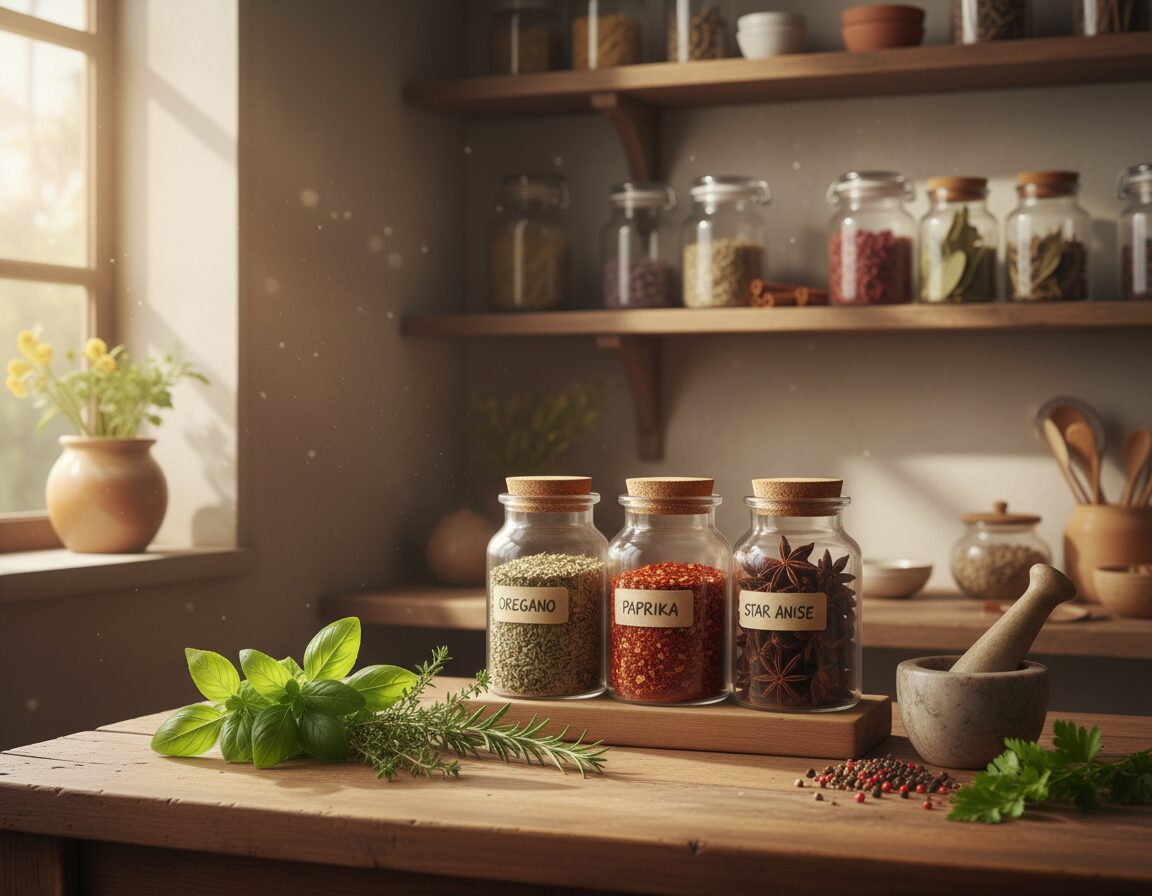
Dry herbs I use most
- Oregano — bright and slightly bitter; great for tomato dishes but can take over if used too much.
- Thyme & rosemary — woody notes that suit roasting and slow cooking.
- Parsley & sage — parsley gives green freshness; sage holds up in rich, buttery sauces.
Core spices and their jobs
- Cumin & coriander — earthy and warm; coriander lifts the mix with citrusy hints.
- Paprika & turmeric — paprika for colour (smoky or sweet), turmeric for warmth and colour.
- Nutmeg & allspice — small amounts add sweet-warm depth to savoury dishes.
Aromatics and heat
I keep garlic powder and onion powder for speed, but use fresh garlic or onion in wet marinades for a cleaner taste.
For bite I reach for black pepper; cayenne for clean heat; chilli flakes or powder when I want texture. If you lack smoked paprika, use sweet paprika plus a little extra pepper.
| Category | Examples | Swap tip |
|---|---|---|
| Herbs | Oregano, thyme, rosemary | Use parsley if you want a lighter note |
| Spices | Cumin, coriander, paprika | Sweet paprika + pepper = smoky stand-in |
| Heat | Pepper, cayenne, chilli flakes | Reduce cayenne to avoid harshness |
Shopping habit: I buy what I actually use. Fewer, fresher jars taste better than a crowded shelf of past-its-best ingredients.
Tools and containers that make this easy (no fancy kit)
You don’t need a rack of gadgets — just a couple of small helpers that save time. I keep a tiny kit by the jar shelf and it makes making a mix quick and tidy.
What I actually use
- The kit: a small funnel, a mixing bowl, a spoon and a handful of airtight jars.
- My go-to jar is about 4‑ounce (120 ml) — roomy enough for regular cooking, small enough to remake before it loses punch.
- I keep a spare teaspoon for testing and quick tweaks.
Why airtight matters — and what that means
Airtight to me means a tight lid, no steam in the jar, and storage away from heat or above the hob where moisture creeps in. That stops aromas fading and keeps the container working well for longer.
Filling, labelling and a neat trick
- Low‑mess fill: funnel over the jar, tap the sides, then level the top before sealing.
- Label with: name, date and—my non‑negotiable—salt status (salt‑free or contains salt).
- I sometimes add a quick note for ratio tweaks (for example “v2: +½ tsp cayenne”) so future batches aren’t guesswork.
| Item | Why I use it | Notes |
|---|---|---|
| 4‑ounce jar | Small batches stay fresh | Good for most containers on the shelf |
| Funnel | Prevents spills | Plastic or steel — nothing fancy |
| Labels | Stops seasoning mistakes | Include date and salt status |
Some sources say blends can last years in perfect conditions. I keep it realistic — I remake favourites regularly so the flavour stays bright. If you want tips beyond storage, I also cover non‑cleaning uses and small kitchen tricks on my natural cleaners page: natural cleaners.
How I store spice mixes so they stay fresh for ages
Shelf placement is the small habit that saves most of my flavour. A good spot keeps a spice mix vivid for longer and saves you waste.
Where I keep them (and where I don’t)
I store jars in a cool, dark cupboard away from the oven, hob and kettle steam. That place is quiet and steady — ideal for seasoning.
- Do: cool cupboard, away from sunlight and heat.
- Don’t: open shelf above the hob, near the kettle, or in direct sun.
- Tip: label each container with date and salt status so you know at a glance.
How long I realistically keep a blend before remaking it
Some sources say blends last up to two years in an airtight container — that’s a best case. I don’t chase that number.
I rub a pinch between my fingers and smell it. If the aroma feels dull, I remake it. That’s my simple freshness check.
| Best place | Avoid | Typical time |
|---|---|---|
| Cool, dark cupboard | Above hob or near kettle | Several months to a year |
| Airtight jar or container | Open jars on worktop | Up to two years (best-case) |
I use smaller jars so I refill a couple of times a year rather than save a huge jar that’s lost its spark. And I never shake a jar over a steaming pan — condensation ruins the aroma fast.
Homemade spice blends I actually use every week
Each jar I keep has to pull its weight — here are the ones that do. These mixes save me time and lift everyday dishes without fuss.
My “kitchen rescue” all-purpose seasoning for fridge-bottom dinners
I aim for a balanced hit — not too hot, not salty. I mix ground cumin, paprika, garlic powder and a little black pepper. Start with ½ tsp per portion and add more if needed. It perks up limp veg, mince or a tin of tomatoes.
Simple Italian seasoning for pasta sauce, pizza and chicken
Ratio I use: 3 oregano : 2 basil : 1 thyme : 1 onion powder : 1 garlic powder. Sprinkle 1 tsp into a pan of tomatoes or under roast chicken skin. It’s my quick pasta and pizza saver.
Taco and fajita blend for quick weeknight wraps and bowls
Classic backbone: chilli powder, paprika, cumin, oregano, garlic powder and a pinch of cayenne. I keep it salt-free so it suits beans or chicken. Start with ½–1 tsp per portion and taste.
Garlic chilli blend for chilli con carne, beans and hearty soups
My shortcut: chilli powder, garlic powder, onion powder, cumin, oregano and smoked paprika. Use 1 tsp for a medium pot of soup or stew. Add more after tasting if the base is mild.
Roasted veg and potato blend for trays of vegetables and crispy wedges
I lead with herbs: oregano, rosemary, parsley, sage, plus pepper and a whisper of cayenne. Toss 1–2 tsp with oil over vegetables before roasting. For delicate veg use less heat.
- How I start: small amounts per portion, then adjust — easier to add than remove.
- Freshness note: older ground ingredients need a touch more to hit the same flavour.
| Use | Main ingredients | Start amount per portion |
|---|---|---|
| All-purpose seasoning | cumin, paprika, garlic powder, pepper | ½ tsp |
| Italian seasoning | oregano, basil, thyme, onion powder, garlic powder | 1 tsp |
| Taco / fajita mix | chilli powder, paprika, cumin, oregano, garlic powder, cayenne | ½–1 tsp |
| Garlic chilli | chilli powder, garlic powder, onion powder, smoked paprika, cumin | 1 tsp |
| Roast veg & potato | oregano, rosemary, parsley, sage, pepper, cayenne | 1–2 tsp |
Blends for comfort food and cosy cooking
On cold evenings I reach for two jars that turn plain meals into proper comfort food. They are practical, not twee — and they work across breakfast, pudding-ish fruit and roast veg.
Pumpkin spice mix for oats, fruit and sweet potato
Ratio: 4 tbsp cinnamon, 2 tbsp nutmeg, 2 tsp dried ginger, 2 tsp allspice. Mix and store in a small jar.
I use a half teaspoon to start — stirred into porridge or dusted over sliced apples or pears. It’s also my quick rub for baked sweet potato before roasting.
Keep doses small; a little goes a long way. If it tastes flat, a tiny splash of orange juice or a pinch of sugar wakes it up.
Spicy turmeric salt for popcorn and chips
Ratio (by eye): turmeric + smoked paprika + modest cayenne + sea salt. This is intentionally salty, so use sparingly.
- Popcorn: spritz with a little oil, then scatter a pinch while warm so it sticks.
- Chips/wedges: toss with oil and a light shake—smoky paprika and turmeric add colour and warmth.
- Watch-out: if you’re using packet sauces or extra salty toppings, go easy — this seasoning replaces salt rather than piles on top.
| Mix | Main use | Start amount |
|---|---|---|
| Pumpkin mix | Oats, fruit, sweet potato | ½ tsp per portion |
| Turmeric salt | Popcorn, wedges | Pinch — to taste |
| Notes | Colour & warmth vs sweetness | Adjust cayenne to avoid bitterness |
Blends for chicken, meat and fish when I want big flavour fast
For quick, confident dinners I keep a trio of rubs that turn plain protein into proper meals. They save time and give a reliable lift to chicken, meat or fish without a lengthy marinade.
Jamaican jerk (oil rub — tofu, chicken or fish)
Key flavours: thyme, allspice and nutmeg with a note of brown sugar for roundness. I use garlic powder and onion powder for depth, plus cayenne and black pepper for heat.
- Basic ratio (per 250g protein): 1 tsp thyme, 1 tsp paprika, ½ tsp allspice, ½ tsp nutmeg, ½ tsp garlic powder, ½ tsp onion powder, ¼ tsp cayenne, ¼ tsp black pepper, ½ tsp brown sugar.
- Method: coat with a splash of oil, rub on, then marinate at least 1 hour. If you have 10 minutes, rub and cook on a hot pan or in a hot oven; finish with citrus.
Peri peri‑style seasoning for fakeaway nights
Think “Nando’s at home”: paprika, chilli powder, ground garlic and a touch of lemon zest. I keep the heat under control so it doesn’t become sharp.
- Start: 1 tsp per 250g chicken or for a tray of chips. Sprinkle or rub, then let sit 15–30 minutes if you can.
- Use on chicken, over rice or scattered on oven chips for quick takeaway-style dishes.
Gyro-style seasoning for kebabs and wraps
This mix aims for that Greek takeaway place — oregano, cumin, ground coriander, pepper and a little garlic. It works on sliced meat, halloumi or chickpeas.
| Use | Main notes | Start amount |
|---|---|---|
| Kebabs / wraps | oregano, cumin, coriander, garlic | 1 tsp per 250g |
| Halloumi / chickpeas | same mix, lower heat | ½–1 tsp depending on taste |
Practical tip: add spices in small pinches and let them cook for a minute so the flavours bloom. Keep an eye on sugar‑containing mixes — they brown faster, so lower the heat to avoid burning the coating.
My favourite textured blend for bread, oil and dipping
A textured mix lifts simple bread and oil in a way that ground powder never quite does. I like the crunch and the scent — it feels homemade without fuss.
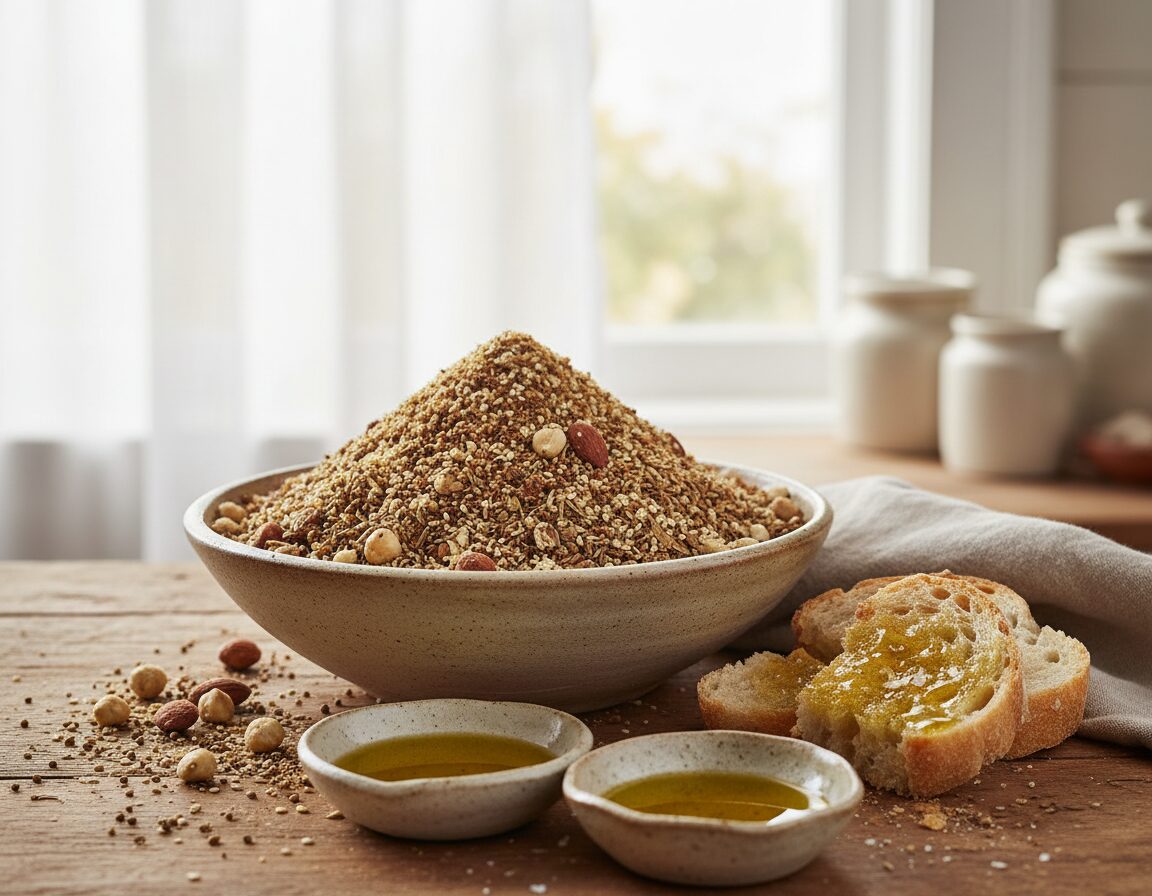
Dukkah-style mix: I toast nuts and sesame seeds, then stir in warm spices — coriander, cumin and fennel if I have it. I pulse the nuts briefly so they stay coarse; I don’t grind to dust. That texture clings to oil and gives a proper bite.
Toasting and use
- Toast in a dry pan over low–medium heat and keep it moving.
- Watch closely — it jumps from golden to burnt fast.
- Serve with good olive oil and warm bread: dip bread in oil, then into the mix.
I also scatter a little over soups, roasted veg or salad for crunch. Because it has nuts and seeds I make small batches and keep it airtight so the ingredients stay fresh.
| Component | Purpose | Texture |
|---|---|---|
| Toasted nuts | Rich, nutty flavour | Coarse, gives crunch |
| Sesame seeds | Toasty, binds to oil | Small, crunchy |
| Coriander, cumin, fennel | Warm aromatic spices | Lightly ground, not fine |
| Storage | Keep airtight, small batch | Fresh for weeks |
How I use a seasoning blend properly in real dishes (without overdoing it)
A little timing goes a long way when you want a seasoning to feel grown-up, not raw. I use the same simple rules so dishes taste rounded, not like a jar dumped in at the end.
When to add it for the best taste: early vs finishing
For long-cooked stews and soups I add most of the seasoning early so flavours have time to marry. For pasta, salads or quick veg I save a small pinch to finish — that keeps herbs and pepper smelling bright.
How much I start with per portion (and how I adjust)
I normally start with about a half to one teaspoon per portion depending on the mix. I taste, then add in small steps. If the blend already has salt, I hold back elsewhere.
Matching blends to soups, stews, vegetables, pasta and rice
- Italian-style seasoning for tomato sauces and pasta.
- Taco seasoning for beans, rice bowls and wraps.
- Jerk or peri peri rubs for chicken and roasted meat with oil to help them stick.
- Herby mixes for roasted vegetables and potatoes.
How I avoid common mistakes: I don’t add loads of seasoning at the end — it can taste harsh. I “bloom” mixes for 30 seconds in a little oil before adding onions or stock; that deepens the aroma and stops a dusty taste.
| Problem | Fix | When to use |
|---|---|---|
| Too sharp after adding late | Add a splash of acid or dairy (yoghurt/cream) | Just before serving |
| Over-salted | Add bulk (potatoes, veg) or acid to balance | During cooking |
| Burnt spices | Lower heat and add liquid | Immediately |
Time-saving note: once you trust a few jars, weekday cooking gets easier — flavour is basically prepped in advance and dinner comes together faster.
Conclusion
The best outcome is one you actually reach for when time is tight.
I keep a tiny system: a short set of herbs and spices, mix in small batches, do the teaspoon test, then store each jar in an airtight container. It’s simple and repeatable — no fuss, just better results.
Good homemade spice blends give me control over taste, salt and heat. They speed up cooking and make everyday recipes more reliable. Start with modest amounts and tweak — you can always add, rarely remove.
If you want a sensible first week set, make an Italian mix, a taco/fajita mix and a roasted‑veg mix. They cover most dishes and save plenty of time.
My last tip: label the jar, add the date and note if it contains salt — future you will thank you on busy nights.