
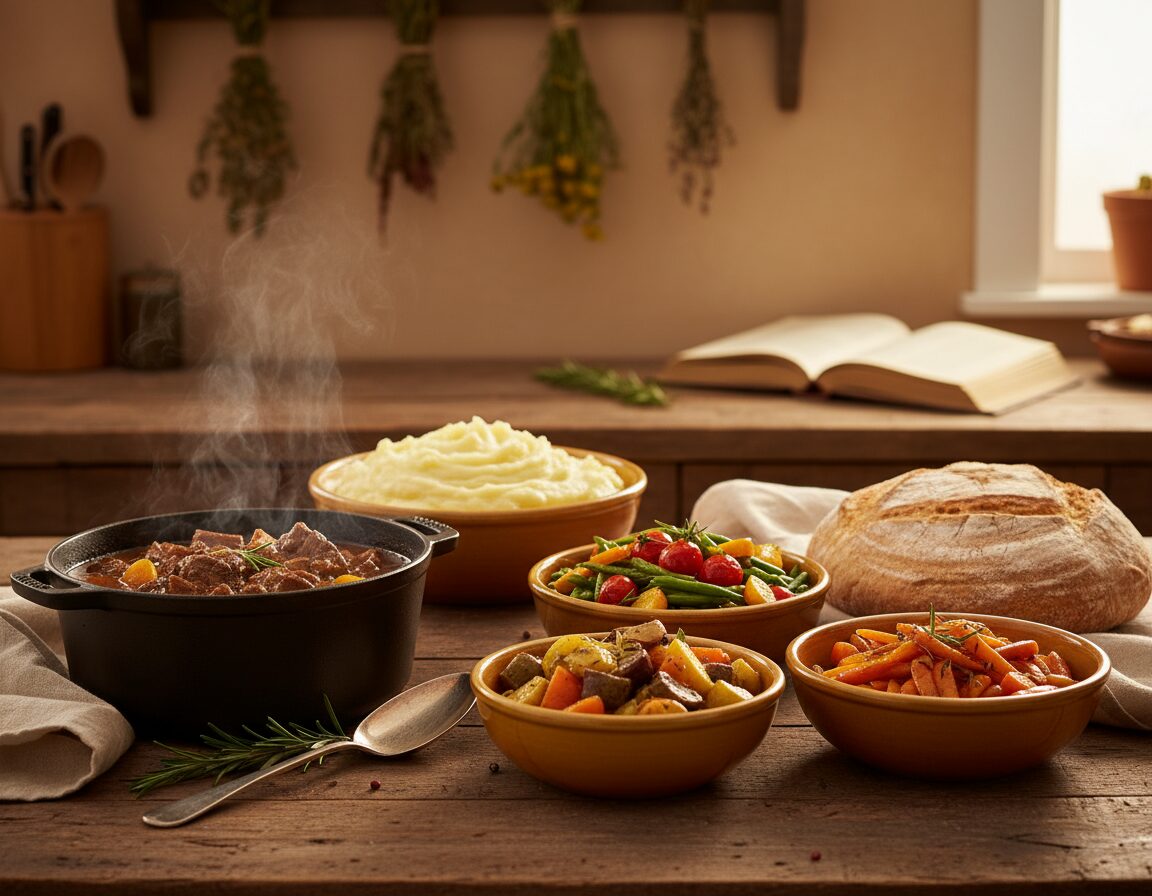
I reach for slow cooked recipes when it’s dark at four and I want dinner to feel like a proper reset, not another chore. For me, comfort means warmth, a rich, slightly nostalgic gravy-ish note and food that settles you without fuss.
I’ll share dependable dinners and a couple of puddings that suit busy UK weekdays and lazy Sundays. Expect practical tips on timing, prep, liquid levels and how to get full flavour from common supermarket ingredients — and from whatever beans or veg you’ve got in the cupboard.
I favour dishes like braised steak stew with mushrooms or smoked paprika, pork casserole with apples, creamy-but-light chicken casserole, beef & chipotle chilli using pantry beans, and a fuss-free sausage casserole. I’ll keep things realistic for workdays and show categories so you can skim to what you fancy tonight — beef, chicken, pork, lamb, veggie, soups and puddings. For more ideas, see a handy list of simple meal ideas here.
Key Takeaways
- I choose dishes that give warmth, richness and a touch of nostalgia.
- Meals use everyday supermarket ingredients and pantry staples.
- Advice focuses on timing, prep and liquid for reliable results.
- The list covers beef, chicken, pork, lamb, veggie, soups and puddings.
- These ideas suit both busy weekdays and relaxed Sundays.
What I actually want from comfort food slow cooking on a cold day
On a bleak, chilly afternoon I want a pot that works while I get on with life, not another evening of faff. I mean proper comfort — deep, rounded flavours — without three pans and a sink full of washing-up.
“Set it and forget it” meals that still taste full of flavour
By “set it and forget it” I mean I can do a quick prep and leave the cooker to build the dish. I still build a base: onion, garlic, salt and a splash of something acidic. That small step makes a huge difference.
I finish with a bright or salty note at the end — lemon, a splash of vinegar, or fresh herbs — so the meal doesn’t taste flat after long time in the pot.
How I plan a slow-cooked meal around my day
My morning routine is quick. Chop what I can, throw in the aromatics and meat, add liquid, and set the cooker. If I’m rushing, I use larger chunks or pre-chopped veg from the supermarket.
- I decide sides the night before — rice, mash or crusty bread — so the evening payoff is simple.
- I leave a few jobs until the last ten minutes — fresh herbs, a splash of cream or a squirt of lemon.
- On weekdays I don’t bother browning meat; on calm Sundays I do for extra depth.
Food safety matters: I don’t prep long before the cooker goes on. And I pick the dish to suit the day — a dump-and-go chilli for a busy one, a richer brisket when I have time to fuss. That’s how I make the slow cooker make work for me.
Slow cooker basics I rely on for beautifully tender meat
I want clear, practical rules that turn cheap cuts into something comforting and satisfying. Below are the basics I use every time I set the cooker — no fuss, just results.
Low and slow: why tough cuts turn meltingly soft
Long, gentle heat gives connective tissue time to break down. Collagen becomes gelatin and the result is beautifully tender meat rather than chewy pieces.
When I brown meat first (and when I don’t bother)
I brown for deeper flavour and a richer gravy. It adds colour, toastiness and helps thicken the sauce.
I skip browning when I’m short on time or the sauce is already punchy — it still works, just with a lighter finish.
Getting the liquid level right for stew, casserole and curry
My rule of thumb: for a stew, cover the meat by about two-thirds. For a curry use slightly less so spices stay intense. For a casserole use the least stock — there’s little evaporation in the cooker, so you often need less than you think.
Herbs that hold up for long cooking
Woody herbs are my go-to. I add whole sprigs of rosemary, thyme or sage early and stir in fresh herbs at the end for lift.
- Go-to cuts: braising steak, brisket, chicken thighs, lamb shoulder.
- Avoid: lean steaks that can dry out — they suit fast cooking.
| Cut | Why I pick it | Result |
|---|---|---|
| Braising steak | Good fat and connective tissue | Fall-apart, rich |
| Brisket | Handles long heat well | Deeply flavoured |
| Chicken thighs | Stay moist in long cooking | Tender meat |
Final fixes: a squeeze of lemon, a splash of vinegar, a pinch more salt or a spoon of yoghurt will wake the dish up at the end.
My go-to slow cooked recipes when I need proper comfort
For nights when I want something that feels like a hug, I have five staples I always turn to. They are easy to prep, forgiving, and get better if left to sit.
Beef stew with braising steak
Why I love it: braising steak becomes meltingly tender. I choose one of two flavour routes—toss in button mushrooms for earthy depth, or add smoked paprika for warmth and a deeper note.
Pork casserole
Why I love it: it’s hearty and bright. I add chopped apples in the final hour so they keep a little shape and fresh flavour.
Chicken casserole, creamy-but-light
Why I love it: cosy without being heavy. I use a low‑fat creamy element and lots of herbs and veg to keep the sauce light and tasty.
Beef & chipotle chilli
Why I love it: flexible and bold. I use whatever beans are in the cupboard and tweak heat with chipotle paste or a smoked chilli to suit the mood.
Sausage casserole for minimal effort
Why I love it: bulked out with veg and a good sauce, a few sausages feed the family. Serve with mash or crusty bread for instant warmth.
- Serving shortcuts: microwave rice for chilli, bagged greens at the side or a quick mash.
- Leftovers: most of these taste better the next day—store in the fridge and reheat gently.
| Dish | Key add-ins | When to add |
|---|---|---|
| Beef stew | Button mushrooms or smoked paprika | Add mushrooms at start; paprika with the liquid |
| Pork casserole | Chopped apples | Add in the final hour |
| Chicken casserole | Low‑fat cream, fresh herbs | Add cream 10 minutes before serving |
| Beef & chipotle chilli | Mixed beans, chipotle paste | Stir in beans mid-cook; adjust heat at the end |
| Sausage casserole | Root veg, stock | Add veg at the start; finish with a splash of vinegar |
Slow cooker beef recipes with rich gravy vibes
When I want a truly beefy pot, brisket gives me deep flavour for little money and almost no fuss. It loves long, gentle heat and makes a proper gravy without complicated steps.
Budget-friendly rolled beef brisket cooked in its own juices
Why I pick it: rolled brisket is forgiving and cheap. I salt it well, tuck in a few sprigs of thyme and pour just enough beef stock to come two-thirds up the meat. Prep takes about ten minutes — then the cooker does the rest.
Beef brisket with red wine & shallots for deep, sweet-savoury flavour
Red wine gives a rounded, slightly sweet note that pairs wonderfully with whole shallots. I use a drinkable bottle — nothing precious — and add it with stock. Long cooking makes the shallots melt into the gravy.
Beef brisket stew with golden ale gravy and horseradish mash
Ale adds malt and gentle bitterness that lifts the sauce. For a pub-style finish, thicken the gravy only if it tastes thin and serve with horseradish mash for a sharp contrast.
- Gravy tip: go easy on extra liquid. The meat releases juices; add stock sparingly and reduce or thicken at the end if needed.
- Shopping tip: look for rolled brisket or a labelled braising cut on offers — cheaper joints work best.
- Serving: mash, steamed greens, buttered carrots or roasties make it proper comfort.
- Leftovers: sandwiches, pies or freeze portions for a no-effort midweek meal.
| Dish | Key flavour | Finish |
|---|---|---|
| Rolled brisket in its juices | Thyme, stock | Slice thin, serve with mash |
| Brisket with red wine & shallots | Red wine, shallots | Reduce sauce, add parsley |
| Brisket stew with ale gravy | Golden ale, horseradish | Serve with horseradish mash |
Slow cooker beef for feeding a crowd (and making future you very happy)
A big bolognese is my answer to busy weeks—one effort, several calm evenings. It scales cleanly, freezes well and saves me from last-minute panic.
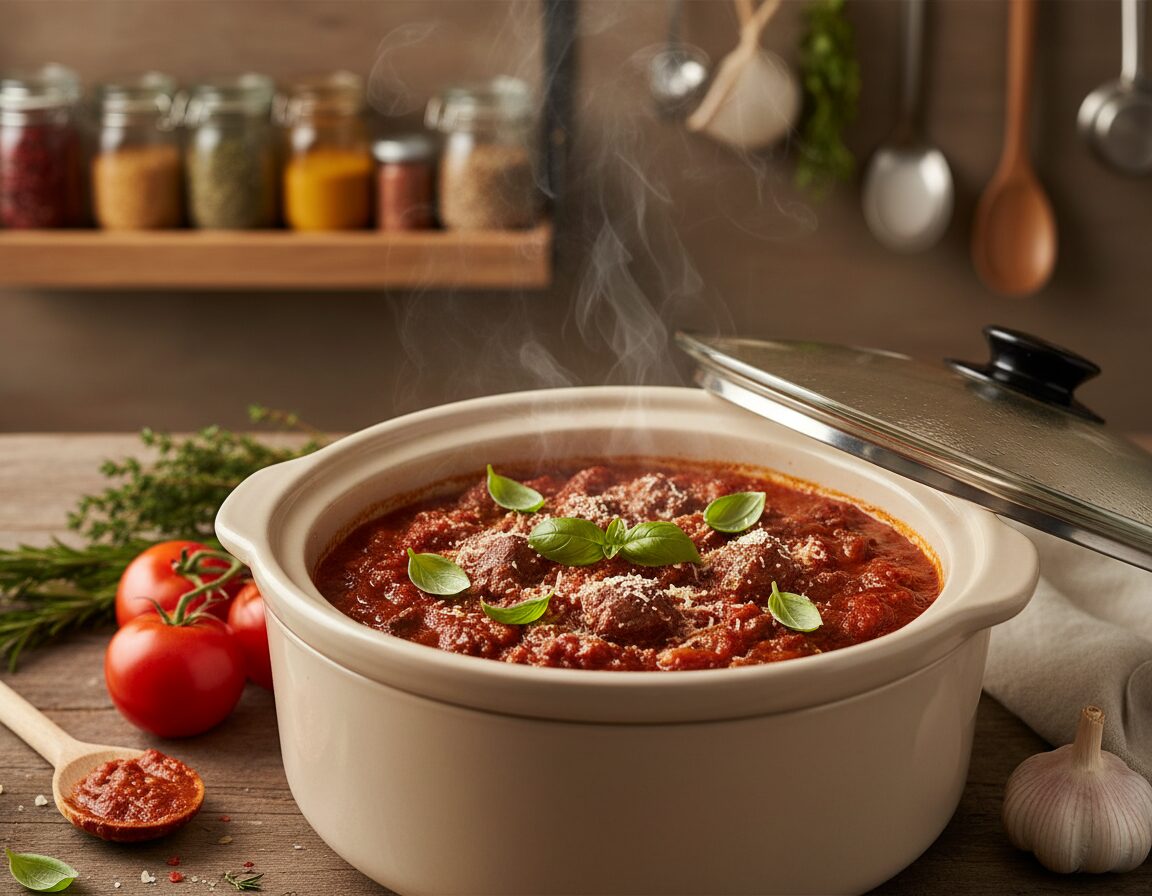
Big-batch slow cooker bolognese (freeze half for midweek)
I make a generous batch, eat some that night and freeze the rest in meal-sized tubs. I brown the beef briefly for depth, then let the cooker do the rest so flavours knit together over time.
How I portion: I use 500g portions for single meals and 1kg tubs for family dinners. Label with date and use within three months.
Healthy slow cooker spaghetti bolognese for busy nights
For a lighter take I bulk the sauce with extra veg and keep pasta portions sensible. The cooker make this hands-off—while I work or do the school run, dinner builds itself.
- Swap half the mince for grated carrot and mushrooms to stretch flavour and add veg.
- Serve with wholewheat pasta, baked potatoes or turn leftovers into a quick pasta bake.
| Tip | Why it helps | When to use |
|---|---|---|
| Freeze flat in zip bags | Saves space and thaws evenly | For midweek meals |
| Label with portion & date | Prevents mystery meals | Every batch |
| Reheat gently | Avoids watery sauce | Defrost overnight, rewarm slowly |
Chilli, beans and bold flavours that get better overnight
When I need a dinner that deepens in the fridge, chilli is my reliable win. It builds full flavour as it rests and makes the best leftovers.
Chilli con carne with fall-apart brisket and black beans
I use beef brisket for a silky texture — the meat falls apart and feels indulgent without fuss. Add black beans and a handful of frozen veg for body if you don’t have time to chop.
Beef & chipotle chilli with cupboard beans
This is my flexible option. Use whichever tins you’ve got and start mild. Chipotle gives smoky heat rather than pure fire — I add a little, then taste and adjust so it doesn’t dominate.
Chicken and white bean chilli with rice and lime
For a lighter turn, I make a cooker chicken version with white beans. Serve with rice, lime wedges, tortilla chips and a spoon of yoghurt to cool the chilli.
- Spice tip: add heat gradually and finish at the end.
- Extra goodness: frozen peas or sweetcorn bulk it out fast.
- Store & reheat: cool quickly, fridge up to 3 days; reheat until piping hot.
| Variant | Key feel | Serve with |
|---|---|---|
| Brisket chilli | Fall-apart, rich | Crusty bread or mash |
| Beef & chipotle | Smoky, flexible | Rice or baked potatoes |
| Chicken & white bean | Bright, fresh | Rice, lime & chips |
My favourite slow cooker chicken recipes for cosy nights
I turn to chicken for cosy nights because it’s comforting yet not overly heavy. I want a pot that gives warmth without leaving me ready for bed.
Whole slow-cooker chicken with tender veg and woody herbs
I tuck rosemary, thyme and sage under the skin and around the bird. I place sturdy veg like carrots and potatoes beneath so they steam, not mush.
Tip: lift the bird from the veg to rest briefly so the skin stays intact and juices settle.
Coq au vin using chicken thighs
I use thighs because they stay juicy after hours of cooking. I add wine and shallots early; pop in mushrooms near the end so they keep some texture.
Serve with mash for pure comfort or tagliatelle when I want it to feel a bit more formal.
Chicken curry when I want warming spice with minimal effort
I rely on a good paste and canned tomatoes for balance. Stir in yoghurt or coconut at the end and finish with coriander or lime to lift the dish.
Fixes: too thin—simmer with the lid off; too spicy—add a spoon of yoghurt; flat—more salt or a squeeze of lime.
- Why I pick chicken: cosy, light and forgiving.
- When to add veg: dense veg at the start; soft veg in the last hour.
| Dish | Key step | Serve with |
|---|---|---|
| Whole slow-cooker chicken | Herbs under skin; veg beneath | Roast potatoes or greens |
| Coq au vin (thighs) | Add mushrooms late; reduce sauce | Mash or tagliatelle |
| Chicken curry | Finish with yoghurt/coconut and lime | Rice, naan or simple salad |
Porky, sticky, savoury: slow cooker pork and gammon comfort
When I want sticky, savoury comfort that feeds a few nights, gammon is my go-to.
What I love about gammon in the cooker: it’s hands-off, stretches to feed a family and leaves useful leftovers. The cooker pork approach means minimal prepping and a steady, reliable finish.
Slow cooked gammon with cola for sweet-treacly balance
Cola gives a sweet, treacly note that tames the gammon’s saltiness without making it dessert-like. I add a little stock or water to stop the glaze dominating.
To keep it from tipping too sweet I stir in a spoonful of mustard or a splash of vinegar near the end. That brightens the glaze and keeps the meat tasting savoury and balanced. Serve with plain mash or simple greens to ground the flavour.
Gammon stew with loads of veg for an easy “all-in-one” meal
For an all-in-one meal I cut gammon into chunks and bulk it with carrots, parsnips and potatoes. These root veg hold up to long cooking and give body to the stew — you’ll easily hit four of your five-a-day.
I add softer veg, like peas or swede, in the last 30–40 minutes so they don’t collapse. Season steadily and finish with a splash of stock or a squeeze of lemon if the broth needs sharpening.
- Veg that lasts: carrots, parsnips, potatoes — add later: peas, tender greens.
- Fix if too sweet: dilute with stock/water; add mustard or vinegar; serve with plain sides.
- Leftover ideas: gammon sandwiches, pea and ham soup, stir through pasta or use in fried rice.
| Dish | Key balance | Best veg |
|---|---|---|
| Gammon with cola | Sweet-treacly glaze cut with stock or vinegar | Roast or mashed potatoes, greens |
| Gammon stew | Savoury broth, steady seasoning | Carrots, parsnips, potatoes |
| Cured gammon leftovers | Used to add salt and body to other dishes | Peas, leeks, pasta or beans |
Slow-cooked pulled pork for batch cooking and easy extras
When I plan a big cook, pulled pork is the kind of project that pays me back for days. The active work is short—season, pop in the slow cooker, and walk away. The rest is gentle time doing the heavy lifting for you.
How I portion, store and stretch it
I portion straight away so leftovers are useful. I divide into meal-sized tubs—500g for two, 1kg for a family. Label and chill or freeze flat for quick thawing.
Quick ways to make it feel new
- Tacos with pickled onion and lime.
- Beans on toast topped with warm pulled meat and a drizzle of sauce.
- Stuffed jacket potatoes with cheese and greens.
- Pizza-style leftovers with a barbecue-ish finish, sliced red onion and a sprinkle of chill flakes.
Keep it moist: when reheating add a splash of the cooking juices or a little sauce so the meat doesn’t dry out; the cooker make gives you that liquid for later.
| Flavour | What I add | Best use |
|---|---|---|
| Smoky | Smoked paprika, chipotle | Tacos, pizza-style |
| Spicy | Chilli flakes, cayenne | Jackets, beans on toast |
| Herby | Rosemary, thyme | Sandwiches, simple plates |
Think of one long session of slow cooking as an investment—one evening’s patience, several calm dinners after.
Lamb low and slow when I want something that feels special
C is right: lamb makes a midweek meal feel considered, and the cooker does most of the heavy lifting. I pick lamb when I want comfort that reads a little more grown-up, but I don’t want to spend the evening faffing.
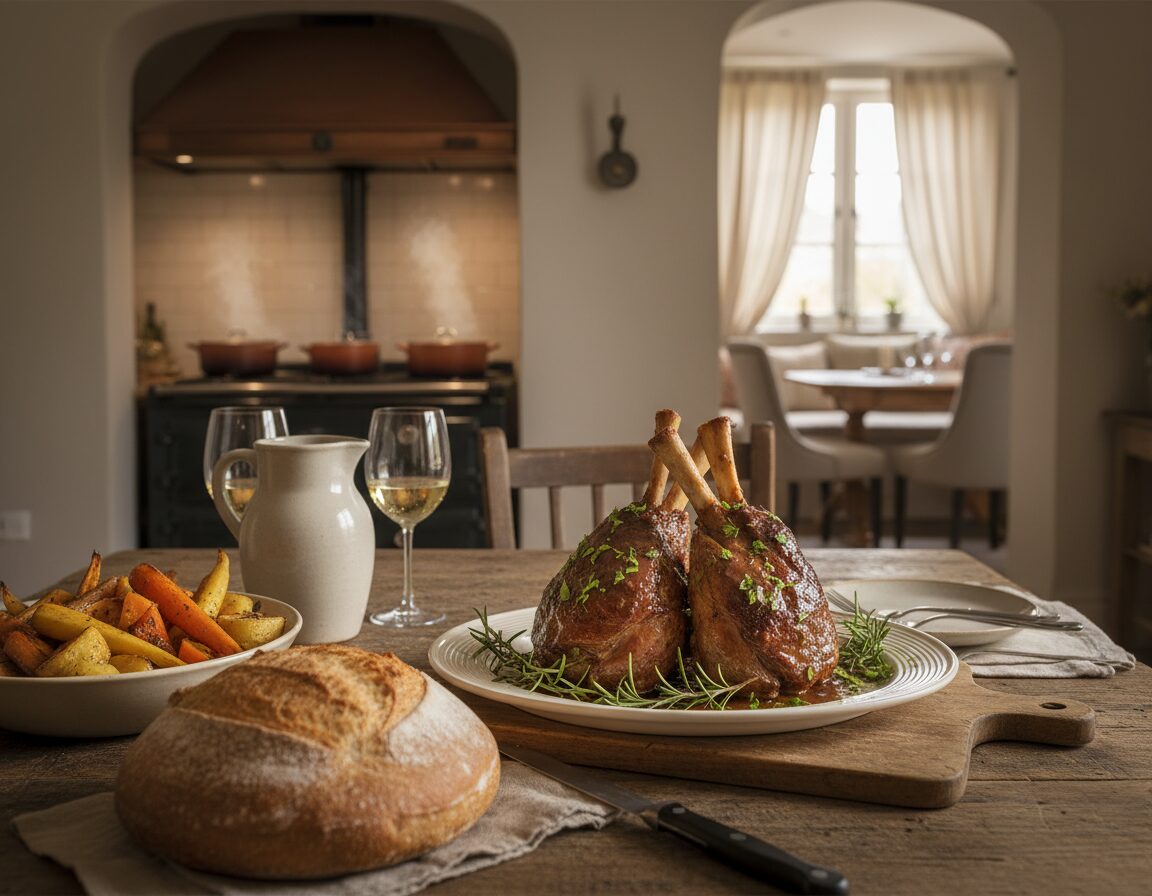
Slow cooker leg of lamb with mash and steamed veg
I keep this simple. A leg of lamb, a little salt, a few sprigs of rosemary and a splash of stock are enough. Serve with creamy mash and seasonal greens for a calm, proper dinner.
Lamb cooked until it falls apart, with potatoes and greens
For fall-apart meat I build a gravy early — onions, a glug of stock and a bay leaf. The cooker turns everything into a glossy sauce that tastes like I’d fussed, even when I haven’t.
Lamb & chickpea curry using lamb shoulder for succulent results
Lamb shoulder is my go-to for curry because it stays rich and tender. I add chickpeas for bulk and finish with a spoon of yoghurt or a squeeze of lemon to lift the dish. Leftovers are brilliant: wraps, a shepherd’s-pie topping or stirred through lentils make the next day feel deliberate, not tired.
- When to choose lamb: nights when you want something a bit special but still easy.
- Serve simply: mash, steamed veg or rice and a bright finish at the end.
- Leftover ideas: wraps, pies, or mixed into lentils for a new meal.
| Cut | Why I pick it | Best use |
|---|---|---|
| Leg of lamb | Clean flavour, slices well | Simple roast-style with mash |
| Shoulder | Fatty and forgiving | Curry with chickpeas |
| Shank | Gelatinous, rich | Fall-apart stews |
Short ribs nights: when I’m craving tender meat and big flavour
Some nights I want food that feels a bit special without extra fuss — short ribs do that for me.
Why I pick short ribs: they are rich, forgiving and turn properly tender with minimal effort. In a slow cooker they break down into silky pieces that still hold a shape when you lift them.
Gochujang short ribs with tangy apple slaw for a winter warmer
Gochujang is a fermented chilli paste — savoury, a touch sweet and quietly deep. It gives the sauce a sticky, glossy finish that clings to the ribs rather than pooling on the plate.
The texture goal is simple: ribs that pull away easily, stay juicy and wear a thick glaze. The apple slaw cuts through that richness. The crisp, tart apple and a vinegar dressing refresh each mouthful.
- Serve with: steamed rice, udon-style noodles or plain mashed potatoes — all work well in a UK kitchen.
- Entertaining tip: make the slaw shortly before serving so it stays crunchy.
- Leftovers: reheat gently; the sauce often tastes better the next day and makes an excellent sandwich or bowl topping.
| Element | Why it matters | When to add |
|---|---|---|
| Short ribs | Fat and collagen for tender, unctuous texture | Place in cooker at the start |
| Gochujang sauce | Sweet-umami heat that caramelises | Pour with stock at the beginning; reduce at the end |
| Apple slaw | Bright, crisp counterpoint to the glaze | Make 10–30 minutes before serving |
Comforting casseroles that don’t rely on meat
When I want a meat-free supper that still feels like a proper meal, I turn to casseroles that build real texture and depth.
I focus on three things: texture, seasoning and a sauce that feels cosy rather than watery. Soft veg needs a contrast — a chewy bean, a nutty grain or a crisp topping so the mouth doesn’t tire of mushy food.
Veggie stew with creamy sauce and cheesy dumplings
For a rich but light finish I use a splash of milk or low‑fat crème fraîche and a spoonful of mashed potato to thicken. That gives body without feeling heavy.
I add dumplings in the last 45 minutes so they rise and set, not go soggy. A scattering of grated cheese just before serving makes them golden and comforting.
Versatile veggie casserole for batch cooking on a budget
I pick veg that withstands long heat: carrots, parsnips, potatoes, squash and leeks. Layer in canned tomatoes, stock and a tin of chickpeas for protein and bulk.
- Batch tip: make a big pot, freeze portions flat and label dates — under £1 a portion if you use seasonal veg and tins.
- Seasoning: build in onion, garlic, a bay leaf and a splash of vinegar at the end to lift the dish.
- Make it yours: swap spices, stir in cooked lentils, or finish with grated cheese or a dollop of yoghurt.
| Dish | Key add-ins | When to add |
|---|---|---|
| Veggie stew | Mashed potato, milk, cheese dumplings | Thicken mid-cook; dumplings last 45 mins |
| Versatile casserole | Chickpeas, seasonal veg, canned tomatoes | Add tins at start; fresh herbs at the end |
| Batch & freeze | Portion tubs, label, freeze flat | Cool, then freeze within 2 hours |
Serve with crusty bread, mash or a simple green salad for contrast. Small swaps — a chilli flake, a spoon of pesto, or a handful of parsley — make each portion feel new.
Slow cooker pasta bakes and tray-bake feelings, without the hassle
There are nights when a bubbling pasta bake sounds perfect, but time and patience do not. I want the oven-style finish without standing over layers and multiple pots.
My quick fix: build a layered, low-calorie veggie lasagne in the cooker using ready ratatouille, sliced aubergine and lasagne sheets. It gives that tray-bake vibe while packing in veg so you hit your five-a-day.
Low-calorie veggie lasagne layered with pasta, ratatouille and aubergine
I layer ragged spoonfuls of ratatouille, a thin slice of aubergine and lasagne sheets. Less liquid up front stops it from turning watery.
Key moves I use:
- Drain or reduce the ratatouille slightly if it’s very runny.
- Lightly salt aubergine and pat dry so it sheds less moisture.
- Use no-boil sheets and press layers down so the cooker works like a tray bake.
Serve with a sharp green salad, garlic bread if you’re feeling indulgent, or simply a big spoon straight into a bowl. Leftovers improve overnight and reheat well for lunch—slice, chill, then warm gently.
| Element | Tip | When to add |
|---|---|---|
| Ratatouille | Reduce excess liquid | Start |
| Aubergine | Pat dry after salting | Layer between pasta |
| Lasagne sheets | Use no-boil for less faff | Layer as usual |
Soups, pulses and rice for the nights I want something simple but satisfying
When my day has been long, I reach for soups and pulses that need little attention but give a lot back. These are the dishes I make when I want comfort without effort — filling, gentle on the head, and easy to stretch into lunches.
Vegan slow cooker soup with pasta and beans for winter
Why I pick it: pasta and beans bulk a bowl up so it reads as a meal, not a starter. I use tinned tomatoes, seasonal veg and white pasta shapes for body.
I season boldly — smoked paprika, a bay leaf, and a good pinch of salt — then check acidity at the end with lemon or vinegar to brighten the finish. This recipe stores and reheats well for workday lunches.
Aubergine daal cooked until super creamy with ginger, garlic and spices
The aim is velvet texture — long, gentle heat breaks pulses down so the sauce becomes silky. I fry garlic and ginger first, then add spices, lentils and diced aubergine.
Serve with steamed rice and a quick flatbread if you have one. A squeeze of lime wakes the dish just before serving and keeps the flavours lively.
Sweet potato chilli with black beans and chipotle paste
Sweet potato makes the pot hearty without meat. Tinned black beans and a spoon of chipotle paste give smoky heat and texture.
This recipe is thrifty and satisfying; leftovers taste even better the next day as the spices settle.
| Dish | Main bulking agent | Best serve |
|---|---|---|
| Vegan pasta & bean soup | Pasta & tinned beans | Crusty bread or salad |
| Aubergine daal | Red lentils | Steamed rice & lime |
| Sweet potato chilli | Sweet potato & black beans | Rice or jacket potato |
Slow-cooked comfort puddings I make when the evening calls for something cosy
When evenings draw in, I often want a pudding that feels like a warm blanket and asks for almost no fuss. I reach for dishes that build gentle flavour while I relax — not something that needs an oven marathon.
Icelandic rice pudding with vanilla, cinnamon and honey
I love this because the rice soaks up vanilla and cinnamon and becomes meltingly soft. I stir a little honey at the end for warmth. My aim is creamy texture, not a gluey mess.
To stop it catching I use a heavy-bottomed pot to start, a low heat and an occasional stir. I judge doneness by feel — the rice should be plump and tender, the sauce just thick enough to coat a spoon.
Saffron‑poached pears with cardamom and a reduced syrup
These feel quiet and grown-up. Pears simmer gently with saffron, cardamom and a scrape of vanilla. I then reduce the poaching liquor to a glossy syrup — that lift makes them special.
- Serve with a spoon of cream, plain yoghurt or a small scoop of ice cream.
- Keep it simple: minimal finishing touches, maximum warmth.
Conclusion
Let’s finish with a short, practical plan you can use this week.
My core approach: pick the right cut, don’t drown it in liquid, season steadily and use woody herbs so you get dependable flavour. I trust these rules every time I set the pot.
Match the meal to your day. On busy evenings I choose chilli or a sausage casserole. When I have more time I turn to brisket or lamb for something a bit special.
If you’re new to slow cooking, start with three easy wins: beef stew, sausage casserole and pulled pork. They’re forgiving and scale well.
Leftovers are a gift — one cook can make two or three calm dinners. Pick one recipe for this week, write a short shopping list and let the slow cooker do the rest of the time.