
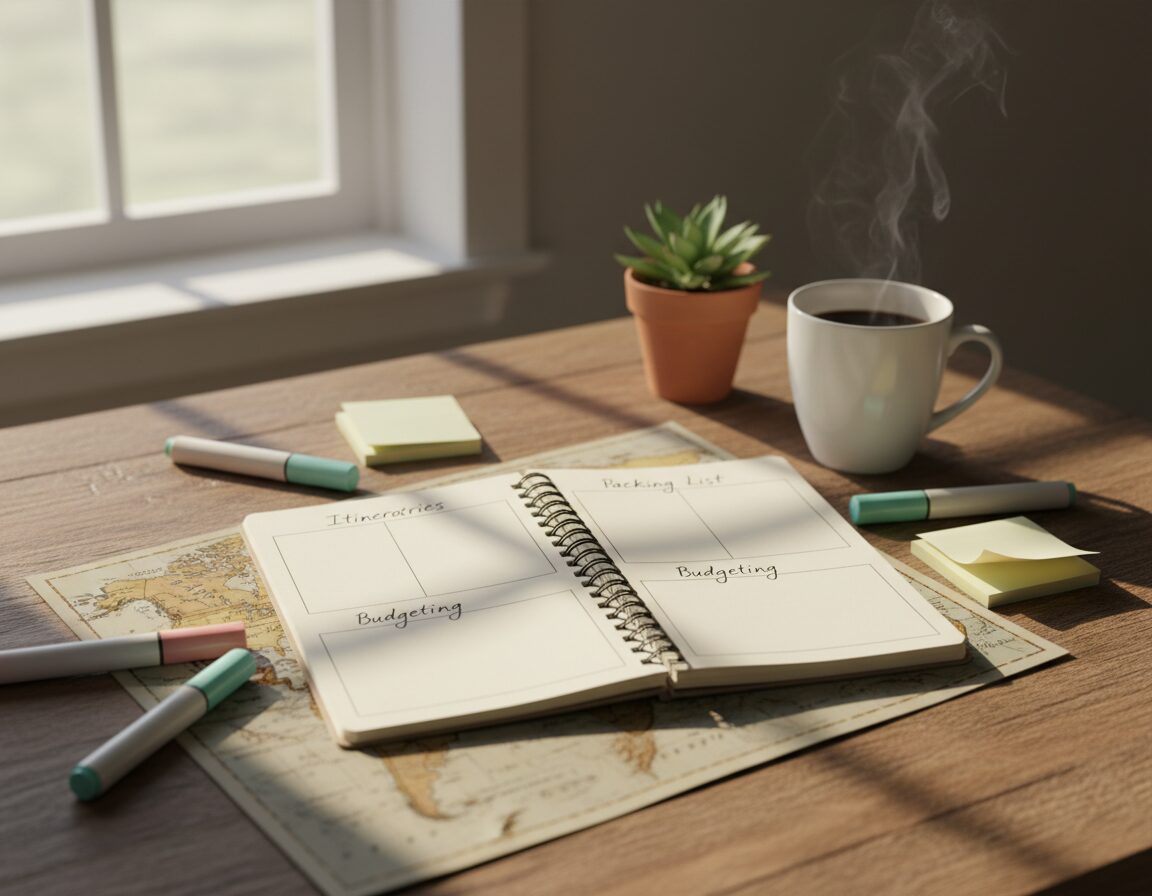
Ever felt that sinking feeling when your trip’s details are scattered across notes, emails, and your memory? I know it well—until I discovered how the right travel planning templates can turn chaos into calm.
Getting ready for a journey requires real attention to detail. Without a clear structure, it’s easy to feel overwhelmed before you’ve even left home.
My own approach changed completely when I began using a simple itinerary. Suddenly, I had a single, reliable reference for flights, bookings, and ideas. This meant I could actually relax and enjoy my holiday, knowing the logistics were safely sorted.
These tools give you back your time and peace of mind. You’re free to focus on the experience itself, not the endless admin.
Key Takeaways
- Starting your preparations early with a template helps capture every important detail.
- A structured itinerary template prevents last-minute panic and disorganisation.
- Using a reliable planner gives you more free time to enjoy the trip itself.
- A clear plan helps you stay on track, even when surprises happen.
- Keeping your trip itinerary in one place makes the entire process feel manageable.
- A good travel planner provides the structure needed for a relaxing, stress-free holiday.
My Journey to Stress-Free Travel Planning
My early attempts at organising a getaway often left me more frazzled than excited. I’d have notes on my phone, paper scraps, and a head full of ideas—but no clear plan.
Preparation for any journey requires real attention to detail. Without it, the whole process can become a stressful experience.
Overcoming Common Travel Planning Hurdles
The main issues I faced were scattered details and an overbooked schedule. Using a structured planner changed everything.
It gave me a single place for every reservation, idea, and task. This simple shift was a game-changer.
| Common Hurdle | How a Planner Helps | My Result |
|---|---|---|
| Scattered Notes & Emails | Centralises all trip details in one document | No more frantic last-minute searches |
| Overbooked Days | Visual timeline shows your schedule clearly | Realistic time for activities and rest |
| Budget Surprises | Integrated tracker manages spending | No nasty shocks when I return home |
| Forgotten Essentials | Packing list ensures nothing is left behind | Peace of mind from the moment I pack |
Real-life Tips From My Experiences
For a weekend break, I use a dedicated planner to keep destinations in order. A road trip needs a clear itinerary to visit all the places on my list.
A business trip requires a different approach to a vacation itinerary. I always adjust my schedule accordingly.
I design my own planner to include a budget tracker. This helps manage spending on a long journey.
It’s vital to list all activities to avoid overbooking your time. This leaves room for spontaneity. I also find starting a travel journal wonderfully complements this structured approach.
My top tip? Use a template that allows for flexibility. New destinations often pop up, and your plan should adapt.
Effective travel planning templates for Every Journey
What makes a template truly effective is how it moulds itself around different adventures. From a spontaneous road trip to a meticulously scheduled business engagement, a versatile itinerary is a dynamic tool.
It provides the structure you need while adapting to your unique plans. This adaptability is the core of a stress-free experience.
Multi-Purpose Uses of the Templates
I took inspiration from platforms like Notion, which offers project templates for everything from software to education. Their composable approach allows for custom workflows, perfect for managing a complex business trip.
For a simpler holiday or a long drive, the same template provides the framework to keep your itinerary on track. The flexibility of a digital planner is unmatched, letting you adjust your schedule as your trip evolves.
A well-organised itinerary planner helps you manage your budget and keeps all your details in one place. This intuitive design makes it simple to coordinate activities and ensure you have time for all the places on your list.
Whether you use a simple list or a complex planner, these tools help you stay organised. A good planner should be adaptable, allowing you to change your plan as you discover new destinations.
Customising Your Trip: Digital and Printable Options
The beauty of a good itinerary lies in how easily you can make it your own. Your choice of format—digital or physical—should suit your personal style and the nature of your adventure.
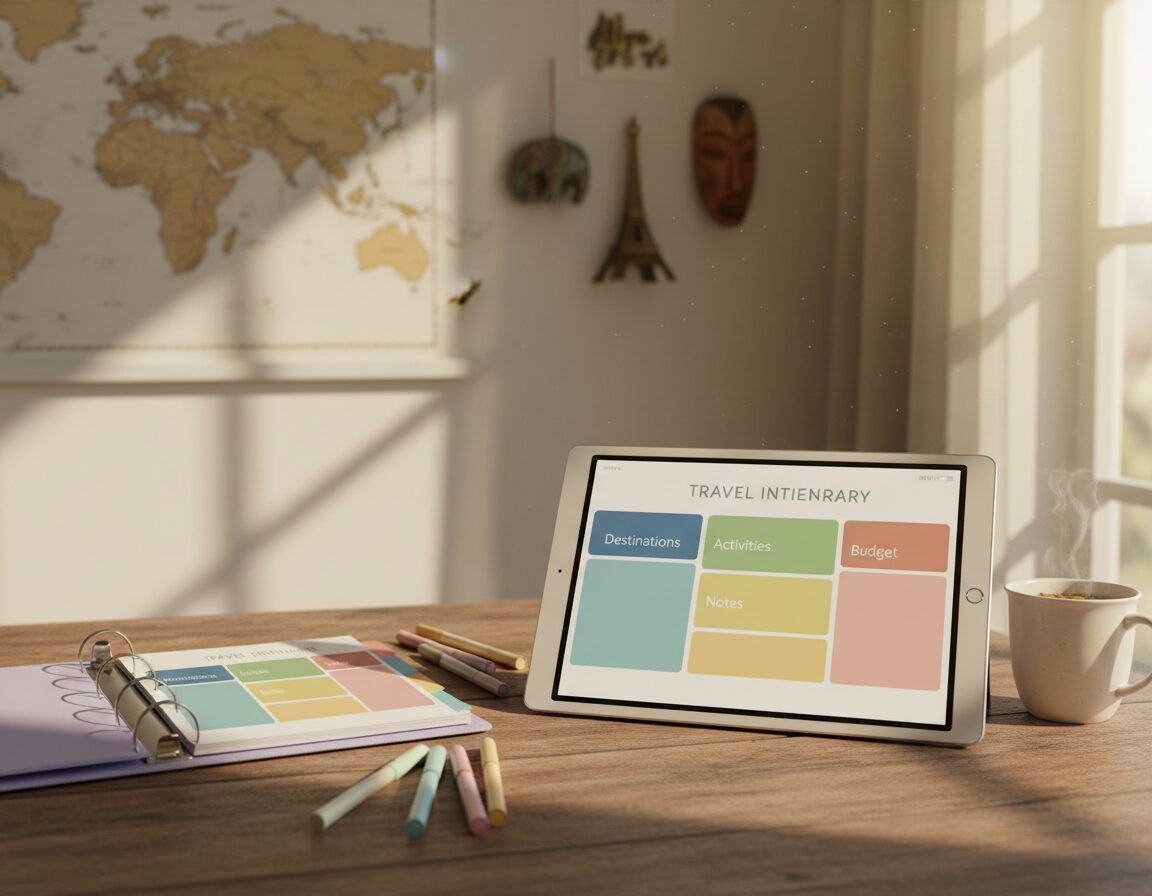
Editing on Google Docs Versus MS Word
I often use Google Docs to edit my planner. The major advantage is accessing my itinerary from any phone or laptop while I’m away. For offline work on a long train journey, I’ll switch to MS Word.
Both options let you tweak your schedule effortlessly. It’s about what feels most convenient for you.
Personalising the Template for Various Adventures
Tailoring your planner template is crucial. A business trip needs different sections to a beach holiday. You can easily adjust the budget and daily schedule to fit.
For a tangible record, download the PDF. You can print it in A4, A5, Half, or Letter size. I love having a physical trip itinerary to pop in my bag—it’s a reassuring backup.
This blend of digital flexibility and a printed list creates the most organised experience. You’re prepared for anything.
Crafting a Flawless Itinerary
The secret to a seamless trip lies in a well-crafted itinerary that balances structure with spontaneity. It’s your daily blueprint, turning a list of ideas into a smooth sequence of events.
This approach works for any event, from a child’s birthday at Disneyland to a lovely Christmas weekend with the family. You design your day, including every flight, transfer, meal, and bit of fun.
Mapping Out Road Trips and Business Travels
Different journeys need different focuses. For a road trip, my detailed itinerary maps the route and manages driving time between stops.
For a business trip, I use a specific template. It tracks flights, transfers, and meetings in one clear schedule.
This method ensures I never miss a key detail, whether I’m on the road or in a boardroom.
Integrating Budget, Schedule, and Activities
The real magic happens when you weave your budget, schedule, and activities together. A good planner template has space for all three.
I always include a spending tracker. It stops nasty surprises on a trip to places like Disneyland.
By mapping everything in advance, I guarantee time for all the activities we love. This is especially helpful for a complex multi-destination European trip.
| Trip Type | Key Focus | Essential Itinerary Feature |
|---|---|---|
| Road Trip | Route & driving time | Detailed daily mileage and stop list |
| Business Trip | Punctuality & meetings | Integrated schedule with transport links |
| Family Holiday | Group activities & budget | Shared activity planner and cost tracker |
A clear itinerary is the key to success. It lets you focus on the fun, not the logistics.
Smart Packing and Checklist Strategies
Nothing sours a journey faster than realising you’ve left a crucial item sitting on your bedroom floor. That moment of panic is utterly avoidable. I’ve found that a simple, reliable packing list is the strongest defence against this disappointment.
Never Forget the Essentials
I now consider a detailed checklist non-negotiable. Forgetting something vital forces an unnecessary purchase on the road—it hikes your expenses and dampens your mood instantly.
My method is straightforward. I use a dedicated packing template within my main planner template. This is especially useful for a road trip or a long business engagement. Having everything noted down saves me money and a huge amount of last-minute stress.
Here’s what works for me:
- I integrate the packing list directly into my trip itinerary. This lets me see my schedule and my essentials in one glance.
- I check the list twice: once when packing and again before walking out the door. This final step is crucial.
- For group holidays, I swear by a comprehensive family getaway checklist to keep everyone organised.
This approach turns a chaotic process into a calm, routine part of the trip. A good planner with a built-in checklist ensures you’re ready for any adventure, with all your essentials securely packed.
Conclusion
I’ve learned that the best journeys aren’t about rigid schedules, but about having a reliable framework to fall back on. A thoughtful itinerary hands you the gift of calm.
For a short weekend or a longer trip, a consistent planner makes all the difference. It neatly manages your budget and daily plans, so you’re always prepared.
Investing a little time upfront lets you savour the experience completely. You can immerse yourself in the journey, knowing the details are sorted.
I wholeheartedly encourage you to try this approach. Simply download the planner template and step into your next adventure with a light heart and an organised mind.