
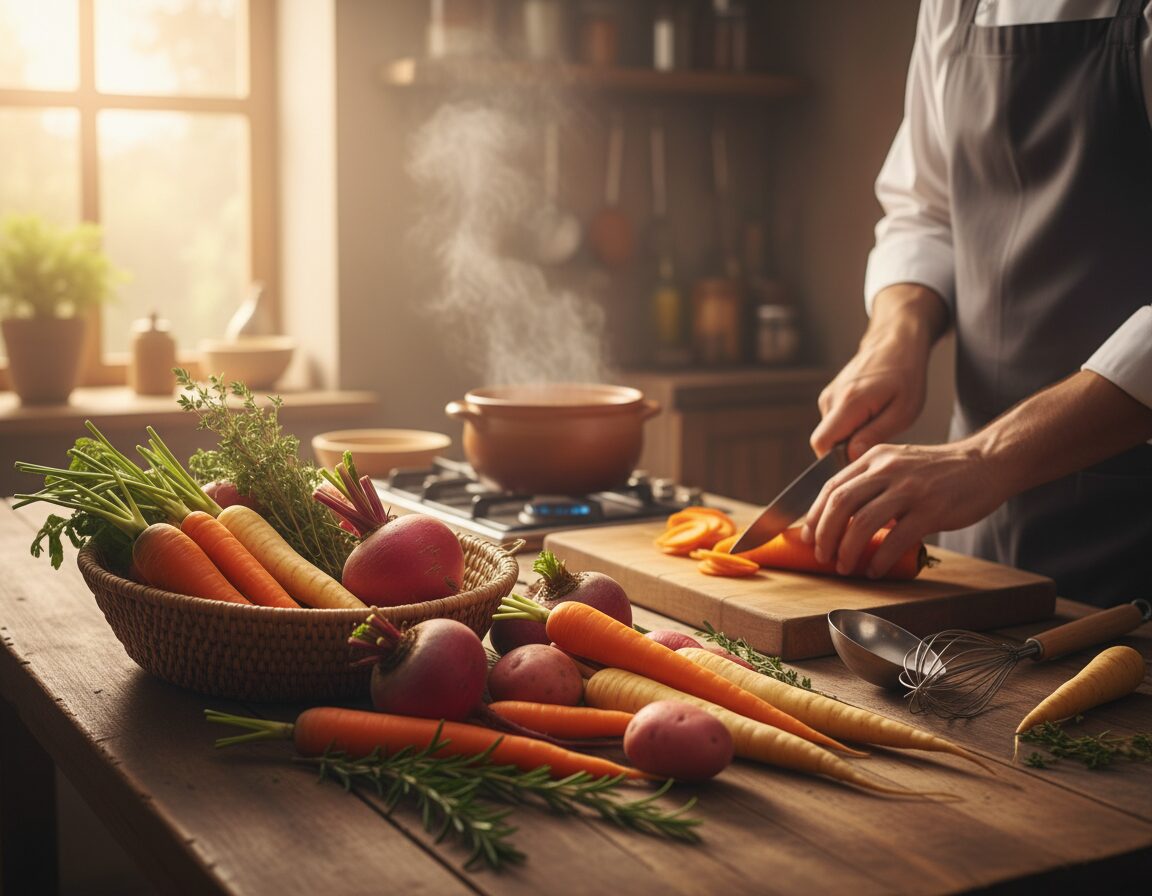
I love cooking with root vegetables because they are earthy, cheap and full of flavour — and they can carry a whole meal when treated right.
On weeknights I aim for fuss-free methods that still look and taste like someone tried. I’ll share the roasting approach I use when I want hands-off results, plus a crisp sage finish and a sweeter balsamic-maple twist for when I fancy something different.
I focus on details that actually matter: tray size, oven temperature, how to avoid steaming, and how to make ahead without ending up with soggy pieces. I’ll also say what’s worth peeling and what I don’t bother with — small steps that lift texture and flavour.
This is very much practical, real-life advice for UK autumn and winter. Think traybakes, simple sides and a few recipes that stretch a roast or turn into a proper supper when you need it.
Key Takeaways
- Root veg can be the star of a weeknight traybake or a Sunday roast.
- Roasting is hands-off — but tray size and oven temp matter.
- Use a crisp sage finish or a balsamic-maple glaze for variety.
- Simple prep notes stop steaming and keep edges caramelised.
- Make-ahead works if you reheat correctly to avoid sogginess.
Why I keep coming back to root vegetables in autumn and winter
On cold afternoons I turn to humble roots — they keep well, stretch the budget and pack proper flavour.
I rely on them because they are reliably tasty and filling. They store in a cool pantry, so I can buy in bulk and not worry. That matters when bills are tight and time is short.
Their taste range is surprisingly wide: sweet, nutty, earthy and sometimes a touch bitter. That variety makes simple dishes feel composed rather than dull.
How I use colour and convenience
I shop by colour — beets and carrots for brightness; parsnips and turnips for a savoury edge. I roast some, mash others, and sneak them into soups and warm salads.
On busy days I peel (or not), chop, and let the oven do the rest. They make reliable side dishes that can quietly become the main if people are especially hungry.
| Colour | Typical flavour | Best uses | Storage |
|---|---|---|---|
| Orange (carrot) | Sweet | Roast, soup, mash | 2–3 weeks cool, dry |
| Beet red | Earthy, sweet | Roast, salads, braise | 2–3 weeks cool, dry |
| Pale (parsnip/turnip) | Savoury, nutty | Traybake, roast, stew | 1–2 weeks cool, dry |
What I buy at the market and how I choose the right size
I shop the market for pieces that promise even roast times and honest flavour. I favour a basic basket that covers colour, sweetness and bite.
My go-to mix is carrots, parsnips, turnips, sweet potatoes and beets. These five give balanced taste and texture. I pick medium pieces that feel heavy for their size — large ones can be woody or hollow.
How I plan around cook times
I avoid enormous beets; they take too long. If I buy a mix I either cut items to match cooking time or use two trays so nothing is underdone.
- Swap to potatoes when I want comfort.
- Choose celery root for a savoury floral note.
- Bring in rutabaga or swede for a sturdier roast.
- Use squash as a sweet, fast-softening option.
| Item | Why I pick it | Size I prefer |
|---|---|---|
| Carrots | Sweet, colourful, quick | Medium, firm |
| Parsnips | Nutty depth, caramelises well | Medium, heavy |
| Turnips & beets | Earthy contrast and colour | Small to medium for even cooking |
| Sweet potatoes & potatoes | Comforting texture, filling | Medium to avoid dry cores |
For more quick weeknight ideas that pair well with a tray roast, see this easy weeknight recipes.
Prepping root veggies without fuss
When I’m prepping veg, I aim for simple steps that cut fuss and save time. A little care at the bench makes the oven’s job easier and keeps texture honest.
Peel or scrub — my quick rules
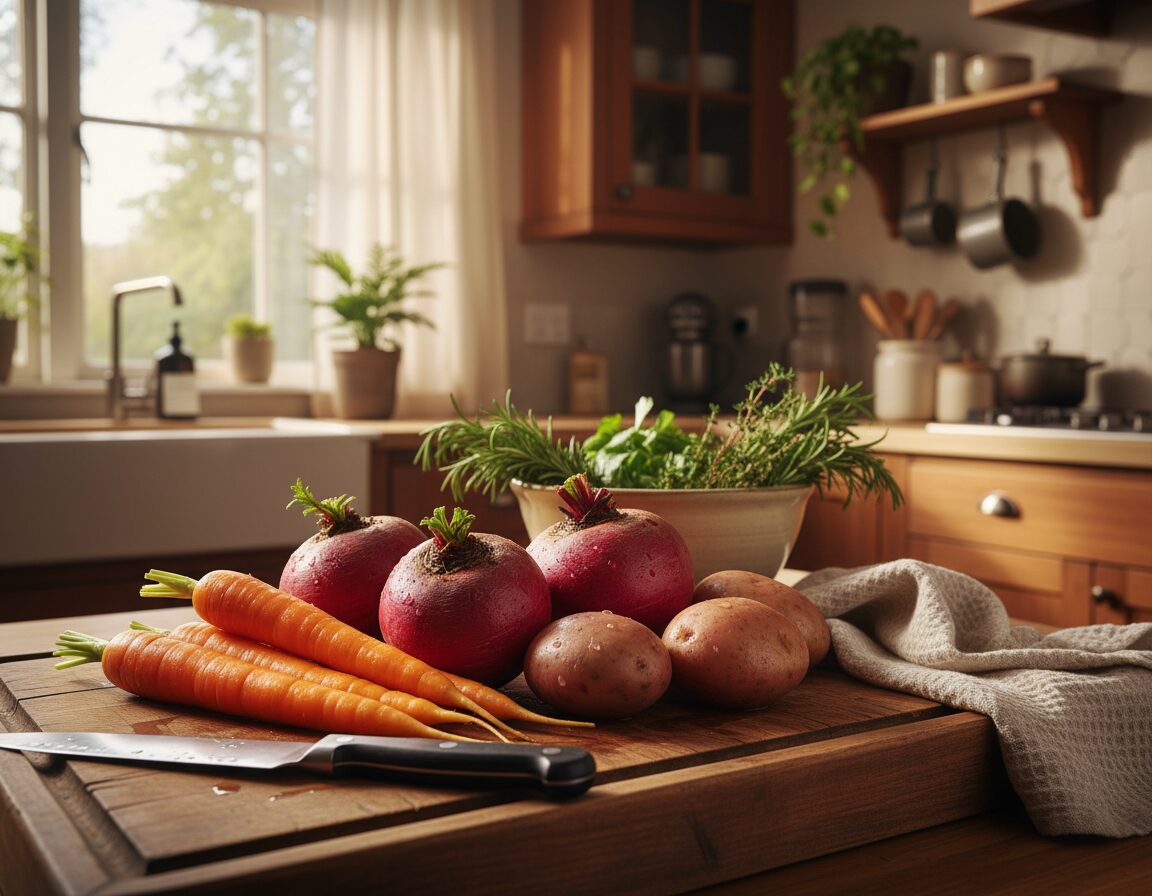
I nearly always peel beets—less mess and less bitter bite. For carrots, parsnips and sweet potato I leave the skins on and give them a proper scrub instead.
I do peel items with thick, waxy skins: turnip, swede (rutabaga) and celeriac. Those skins can stay chewy after roasting.
Cuts that roast evenly
My go-to is chunky pieces about 1–1¼ inches. They caramelise on the outside and stay fluffy inside.
- Halve long, thick ends.
- Quarter fat bits rather than aiming for perfect cubes.
- Match thickness across the tray rather than obsessing over shape.
Working ahead — keep colour and crispness
If I chop earlier in the day or the night before, I submerge the pieces in cold water, cover and refrigerate. This stops browning for a day or two.
Right before roasting I drain and pat dry—kitchen paper or a clean tea towel is essential. Wet veg steam, and steamed veg never get crisp edges.
| Item | Peel? | Tip |
|---|---|---|
| Beet | Yes | Use gloves if you mind stains |
| Carrot / parsnip | No (scrub) | Keep skins for flavour and texture |
| Turnip / swede | Yes | Peel thick skins to avoid chewiness |
Quick practical note: beet juice stains—my hands often look like craft projects for days, so I either wear gloves or accept it.
For more batch-friendly ideas that pair well with a tray roast, see these easy slow-cooker ideas.
My favourite roasted root vegetables recipe for a weeknight or a roast dinner
I keep this short and honest — a method that works whether it’s a simple side or part of a roast. Big chunks, a hot oven and herbs that hold up make the difference.
Ingredients for deep flavour
Olive oil, salt, black pepper and plenty of chopped fresh thyme, rosemary and sage. I toss beet, carrot, parsnips, sweet potatoes and turnips in the mix so each piece gets a glossy coat.
Oven set-up that works
I roast at 425°F on a parchment-lined baking sheet. Use a large rimmed baking sheet rather than a deep dish — it lets steam escape and edges caramelise.
No-steam rules and timing
- Single layer only; leave space between pieces.
- Turn once when undersides brown — not before they release.
- Group beets and carrots on one tray; parsnips, sweet potatoes and turnips on another.
| Tray | Typical finish | Check at |
|---|---|---|
| Faster (parsnips/sweet potatoes/turnips) | Tender, caramelised | about 25–30 minutes |
| Slower (beets/carrots) | Firm but soft inside | 30–40 minutes |
I start checking at roughly 25 minutes. The dish is done when a knife slips in easily and edges are caramelised. That’s my simple, reliable recipe for a proper roasted root tray every time.
Crispy sage leaves and sage oil (the quick finish that tastes restaurant-level)
A minute in hot oil turns ordinary leaves into a crunchy, fragrant topping that nails the finish.
Why bother? The crisp leaves add a welcome crunch and a savoury perfume that lifts the whole flavour of the tray. It makes a simple side feel considered rather than plain.
How I crisp sage in a minute and keep the oil for drizzling
I warm a couple of tablespoons of olive oil in a small pan until it just bubbles. Then I lay in whole sage leaves and watch them closely — about one minute is usually enough.
- The leaves darken slightly and go crisp; the oil should smell herby but not burnt.
- I lift the leaves onto kitchen paper to drain and keep the infused oil for drizzling.
- Do this at the very end — fried leaves go soft if they sit in steam for long.
| Use | Timing | Note |
|---|---|---|
| Roasted tray as a side | Drizzle & scatter before serving | Adds crunch |
| Bowl of lentils or greens | Drizzle oil, top with leaves | Acts like a simple main |
| Leftover idea | Reheat briefly, add oil | Refreshes the recipe |
A tangy balsamic and maple glaze version when I want something sweeter
When I want a sweeter finish, I reach for a balsamic-and-maple glaze that gives glossy edges and a bright tang. I use this version when I want glossy, tangy-sweet edges—great with pork, sausages or a simple lentil supper.
The simple ratio I use for balsamic vinegar, maple syrup, and olive oil
My go-to mix: ¼ cup olive oil, 3 tbsp balsamic vinegar, 2 tbsp maple syrup. Toss the chopped veg in a big bowl so the glaze coats evenly before it hits the tray.
Roast at 425°F in a hot oven for about 40–45 minutes, stirring every 15 minutes so the glaze caramelises and does not burn.
Spice ideas to shift the flavour profile
- Ground cumin for warm depth.
- Smoked paprika for a smoky edge.
- Extra black pepper if you want less sweetness.
| Veg | Typical bake | Note |
|---|---|---|
| Sweet potatoes | 40–45 minutes | Natural sugars pair well with balsamic |
| Carrots | 35–40 minutes | Glossy, sweet edges |
| Squash / potatoes | 35–45 minutes | Keep an eye in the final 5 minutes—glaze can go bitter if dry |
Roasting rules I stick to every time
A hot oven and a clear plan are the two habits that save my traybakes from ending up limp or pale. These are short, practical rules I follow every time I roast — they stop the usual problems: soft, pale pieces or burnt edges.
Why 425°F works and how that fits UK ovens
425°F is the sweet spot because it browns sugars fast so you get caramelised edges before the insides go mushy. For UK cooks that’s about 220°C, or roughly 200°C on a fan oven. I always preheat properly so the tray hits steady heat the moment it goes in.
Never cover the tray
I never cover the tray. Covered trays trap steam and turn roasting into steaming — that kills crisp edges and makes the pieces soggy.
Tray choice, space and paper
I use large baking sheets and line them with parchment or greaseproof paper. I’d rather use two baking sheets than pile everything on one; crowding stops browning.
How much olive oil is “enough”
Coat the pieces so they look lightly slicked all over — not swimming. Dry patches go leathery; too much oil makes the dish greasy. A thin, even coat of olive oil helps caramelise and prevents sticking to the baking sheet.
- Start checking at the recommended time, then trust colour and texture over the clock.
- Turn veg once when undersides are golden.
- If a glaze is used, line the tray with paper for easier cleanup and less sticking.
| Rule | Why it matters | Quick fix |
|---|---|---|
| High heat (425°F / 220°C) | Fast browning, crisp edges | Preheat oven fully |
| Single layer on large baking sheets | Air circulation prevents steaming | Use two trays if needed |
| Light coat of olive oil | Even caramelisation, no sticking | Toss in a bowl before the tray |
Make-ahead, storing, and reheating without losing the crisp edges
If I’m making food ahead I prefer a partial roast and a quick finish later. That way the tray tastes like it has just come from the oven rather than a reheated plate.
What I do a few hours ahead
I stop the roast at about 30 minutes, then transfer the pieces to a clean baking sheet so they don’t sit in hot oil and go soft. I’ll hold them at room temperature for up to three hours — an hour or two is ideal if the kitchen is warm.
Fridge life and a quick reheat
In an airtight container they keep for up to four days. To revive them I preheat the oven to 375°F and spread the pieces on a tray. Reheat for 10–15 minutes until edges wake up again.
Freezing so pieces don’t clump
Cool completely on paper-lined trays, then flash-freeze for 2–4 hours in single layers. Transfer to bags once solid.
| Scenario | Hold / storage | Reheat |
|---|---|---|
| Few hours ahead | Room temp up to 3 hours | Finish in oven 10–15 minutes at 375°F |
| Fridge | Airtight, up to 4 days | 375°F for 10–15 minutes |
| Frozen | Flash-freeze on baking sheets, bag | 400°F for 20–30 minutes from frozen |
Quick tip: don’t microwave unless you don’t mind losing crispness. A short oven blast is worth the extra minutes for better texture.
How I serve roasted root veg as side dishes or a main meal
When time is tight I let a single hot tray do most of the work for the whole meal. A tray of caramelised pieces sits happily on the table and pairs with many everyday mains.
Weeknight pairings I rely on
- Roast chicken thighs or a quick tin of baked salmon for an easy protein match.
- Sausages—an honest, filling side dish that feeds the family without faff.
- A speedy chickpea stew or lentils for a meat-free option that still feels hearty.
Turning the tray into a main
If I need a one-bowl meal I pile the roasted root on warmed bowls, add cooked lentils or a soft-boiled egg, and crumble feta or goat’s cheese on top. It eats well warm or at room temperature and stretches a small amount of protein further.
Simple gravy-friendly tip for roast dinners
I keep seasoning classic—salt, black pepper and rosemary—so the tray sits alongside roast potatoes, gravy and Yorkshire puddings without clashing. That lets the roasted root and potatoes share the spotlight rather than fight each other.
Balancing sweet and sharp flavours
- If the tray is heavy on sweet pieces, I add something tangy—wholegrain mustard, pickles or a lemony dressing—to cut through the sweetness.
- A drizzle of the sage oil or a spoon of balsamic glaze at the end lifts the whole dish and adds layered flavour.
Holiday and Sunday roast service
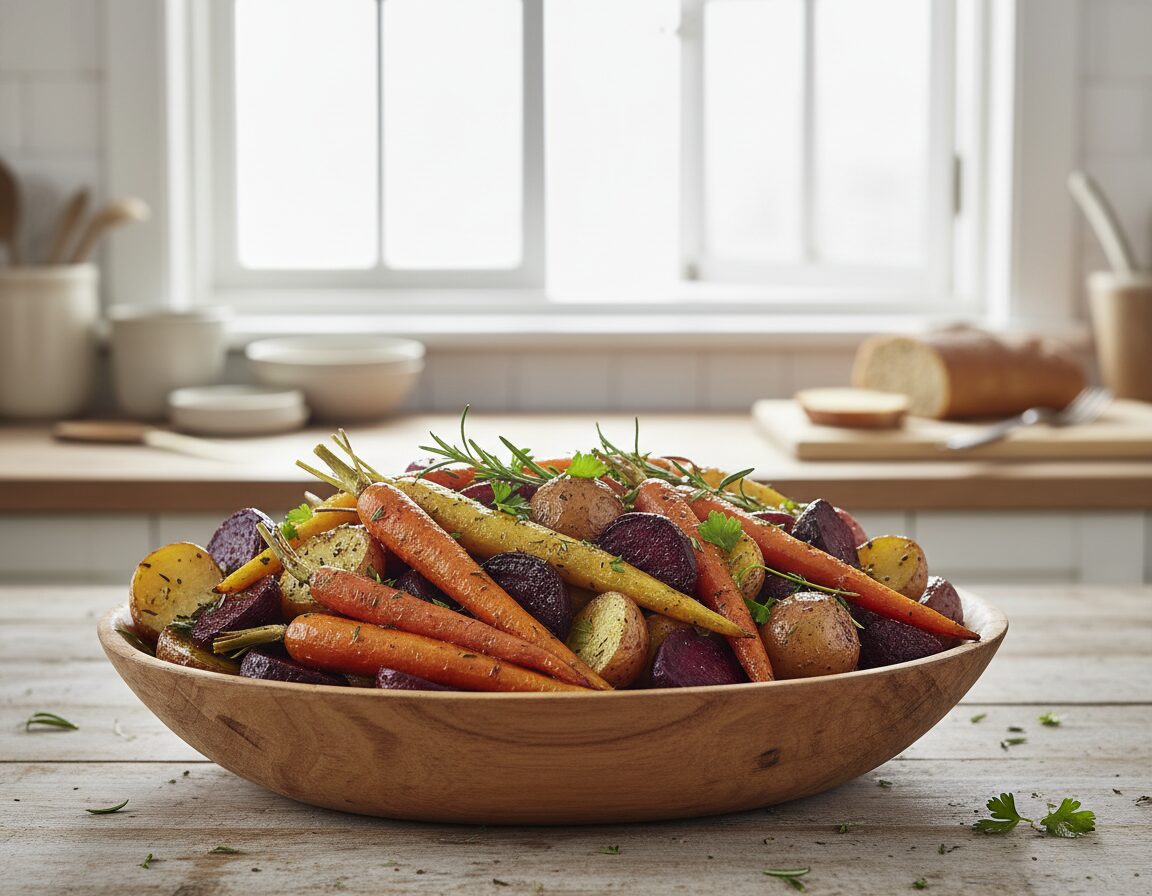
For bigger meals I spread the roasted root on a large platter and finish at the last minute with crispy sage leaves or a scatter of chopped parsley. It looks generous, keeps the kitchen calm, and pairs well with traditional sides like potatoes and greens.
| Occasion | Pairing idea | Finish |
|---|---|---|
| Weeknight | Chicken thighs, sausages, baked salmon | Sage oil or a squeeze of lemon |
| One-bowl meal | Lentils, soft-boiled egg, feta | Cracked black pepper, chilli flakes |
| Holiday / roast | Roast potatoes, gravy, Yorkshire puddings | Crispy sage or balsamic glaze |
Using up the leafy tops so nothing goes to waste
Those forgotten bunch-tops can be a cheap, bright way to boost flavour. I keep the approach simple and non-judgy — if the tops look fresh and smell green, I keep them. If they are slimy or off, I bin them.
What I do with carrot tops and other leaves
My go-to: a quick, loose pesto-style blend. I toss the carrot tops, a splash of olive oil, something nutty or seeds, a garlic clove, lemon and salt into a blender. It’s looser than proper pesto and perfect for drizzling over roasted root vegetables or stirred into yoghurt as a quick sauce.
- I keep beet leaves if they look tidy; they make a green sauce or shallow fry nicely.
- Celery leaves are brilliant as a punchy garnish for soups or stews.
- Start small—carrot tops can be slightly bitter, so balance with lemon and salt the first time.
| Leaf | When to keep | Best use |
|---|---|---|
| Carrot tops | Fresh, bright, not slimy | Pesto-style drizzle, stir into yoghurt |
| Beet leaves | Tidy, no holes | Sauté or blend into sauces |
| Celery leaves | Bright, crisp stems | Garnish soups, finish salads |
Conclusion
In short: a hot tray, clear timings and a quick finish make seasonal fare sing. This post is about easy, affordable meals you can trust to work in a weeknight routine.
Key idea: roast the pieces hot, give them space on the tray and check them by colour rather than the clock. A short blast at the end—often a few minutes—wins you caramelised edges and tender insides.
Two easy finishes lift the dish: crispy sage and sage oil for savoury depth, or a balsamic‑maple glaze for glossy, sweeter top notes. Use these to match whatever main you’re serving.
Make-ahead is practical—prep earlier in the day, chill for a few days if needed, then spread pieces out and reheat for crisp edges. Treat this recipe as a template: swap what’s in season, don’t overthink peeling, and trust your eyes for colour and caramelisation.