
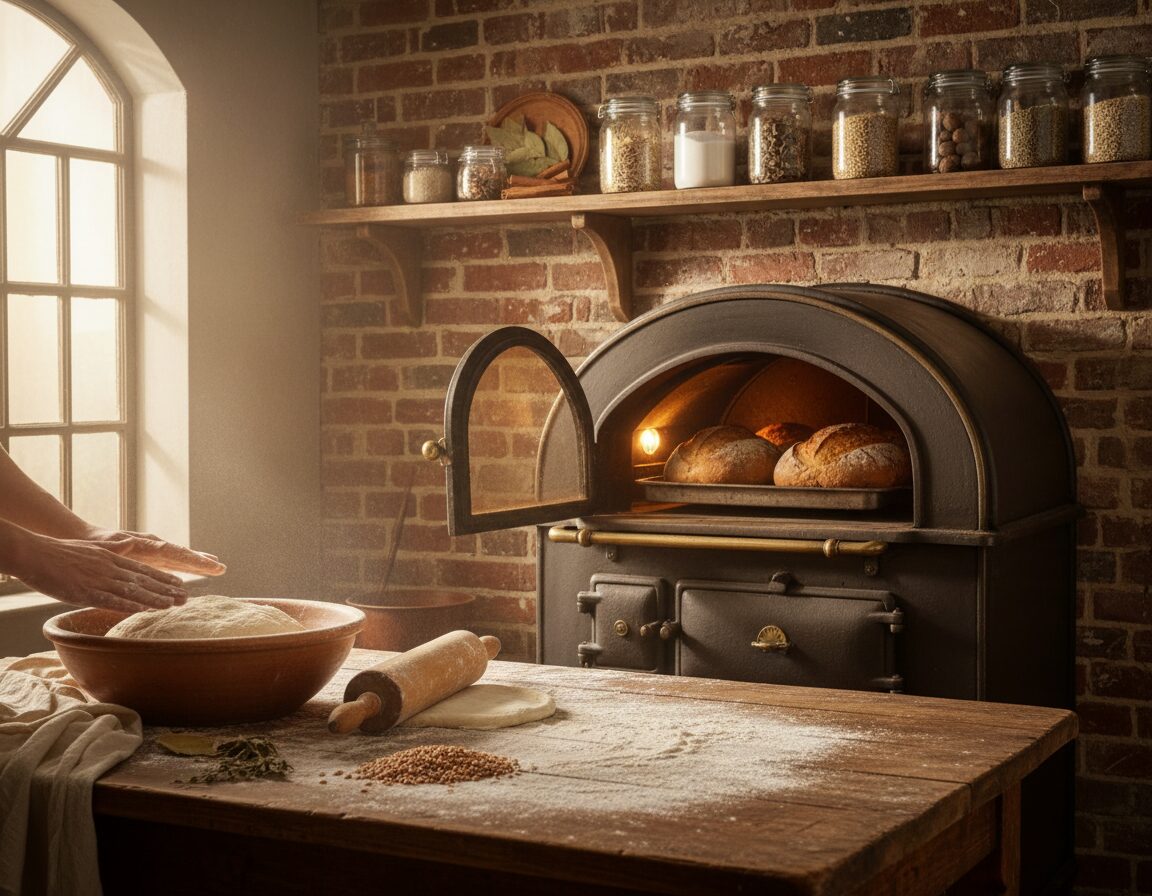
I often start with the idea that traditional baking methods are less mysterious than they seem — once you know what each step does. I write from my own kitchen, so I talk about what I look for with my eyes and hands: texture, smell and the little visual clues that tell you a mix is ready.
My aim is practical. I show the familiar mixing routes — creaming, rubbing-in, whisking and folding — and explain why yeast fermentation matters for good bread. I balance old practice with modern tools: a digital scale, a steady oven and the confidence to trust touch when timing shifts.
Expect fewer split batters, lighter crumb and crisper pastry when you grasp the simple science behind each process. I’ll also point out when you must not improvise — leavening and ratios are not places for guesswork.
Key Takeaways
- Understand what each step achieves — air, structure, tenderness and flavour.
- Learn creaming, rubbing-in, whisking and folding as core routes.
- Use scales and a reliable oven, but trust touch and smell too.
- Recipes allow wiggle room, except for leavening and ratios.
- Small tests stop common faults — denser cake or soggy pastry.
How I set myself up for success before I start baking
I begin by reading the recipe twice and laying out everything I need. Bowls, tins, scales and spoons go on the counter so I don’t hunt mid-mix.
Mise en place isn’t fussy. I measure ingredients into small piles or little bowls. That habit stops mistakes when life interrupts me.
Weighing vs measuring
I weigh almost always — it’s the most reliable way to handle flour and sugar. If you must use cups, use the dip-and-sweep method for dry ingredients so you don’t compact them.
Ingredients and temperature
I use Grade A large eggs and unsalted butter. For cakes, eggs and milk should be room temperature. Room-temperature butter bends but does not look greasy — about 65–70°F (18–21°C).
Choosing the right flour
Keep flour simple: cake flour for tender crumb, plain for general use, bread flour for strength and chew. Swap them and texture changes quickly.
- Read the recipe twice, then set up.
- Weigh key dry ingredients when possible.
- Trust room temperature for eggs, milk and butter.
- Use the right flour for the job — it affects final texture and baking times.
Traditional baking methods that shape texture, flavour and structure
I learned early on that the way you handle fat and sugar decides whether a cake feels light or dense.
Creaming butter and sugar means beating room-temperature butter with granulated sugar until pale and fluffy. The sugar cuts into the butter and traps tiny pockets of air. I add eggs one at a time and flour last to keep the air — that’s how you get a finer, lighter crumb.
Creaming, reverse creaming and whisking
Reverse creaming gives a tighter, even structure. I mix fat with flour first to coat the particles, then add liquid so the cake has fewer big air pockets.
Whisking eggs and sugar makes pale, ribboning foam for sponges. I stop beating once it holds shape and fold gently so the batter keeps lift.
Folding, rubbing-in and melt-mix-bake
Folding is a down-across-up motion while turning the bowl — stop the moment the dry ingredients vanish. I learned that the hard way after overworking batter and losing lift.
Rubbing-in uses cold fat worked into flour until it feels like cool breadcrumbs. Leave visible fat lumps for flaky pastry; blend them away for short, tender crumb.
Melt, mix and bake—melt butter with chocolate and stir in flour for fudgy, dense results. Minimal mixing keeps that rich texture.
- I pick each technique by the end result: light and airy, tight and even, or fudgy and dense.
- Keep equipment simple — a spatula, whisk and a bowl will do most jobs.
Understanding leavening the traditional way: yeast, fermentation and chemical raising agents
Getting reliable lift is mostly about choosing the right leavening and then watching what the dough does. I call leavening “how we get lift” — it is the backbone of traditional methods for bread and lighter bakes.
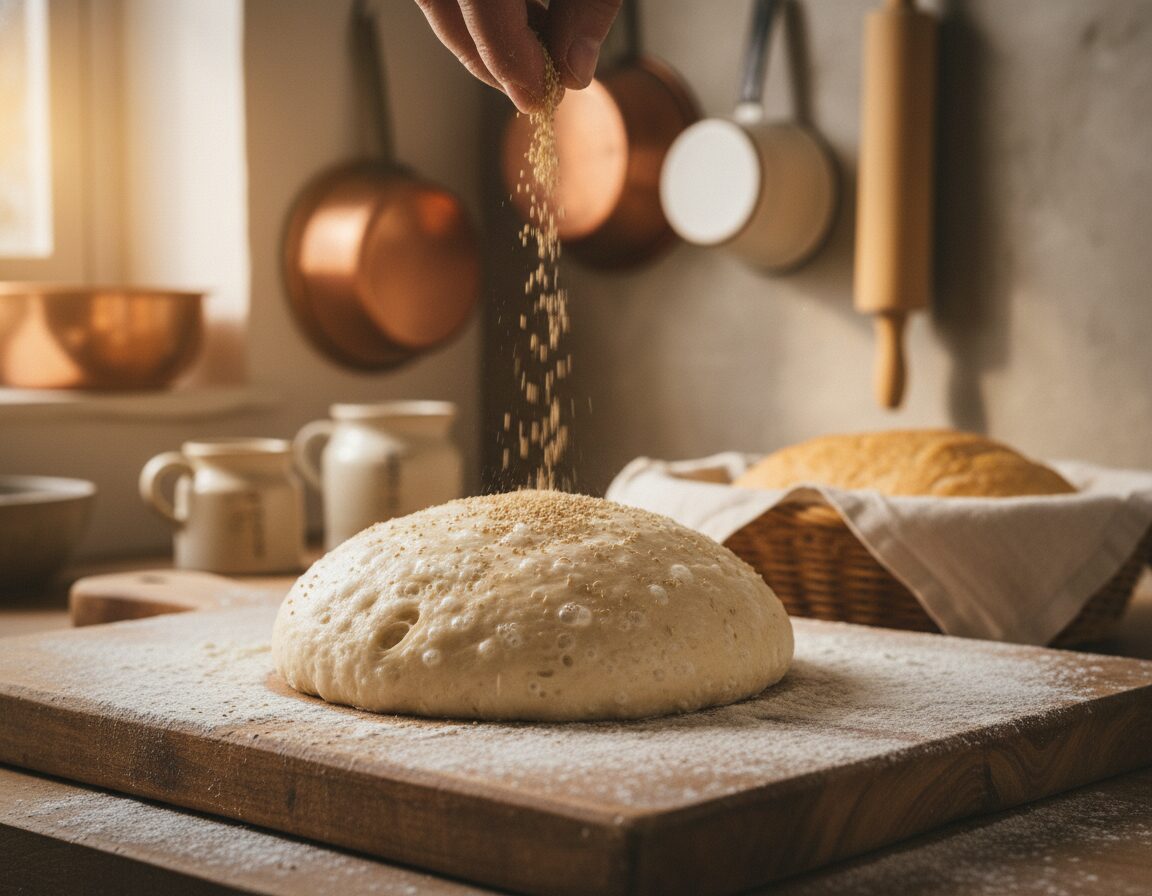
Natural fermentation vs instant yeast
I use a starter when I want deeper flavour and a chewier crumb. A slow rise gives subtle acids and aromas that instant yeast cannot match.
Instant yeast speeds up the day. I pick it when I need steady results and less waiting. The dough responds differently — quieter bubbles and a shorter proving time.
Choosing: starter for flavour; instant yeast for speed and predictability. I adapt my baking techniques to each choice.
Baking powder and baking soda: which one I reach for
I think of baking powder as self-contained. It brings its own acid and so works in a plain batter.
Baking soda needs an acid to react — yoghurt, buttermilk or brown sugar. Use soda if a recipe already has acidity; use baking powder when it doesn’t.
How long “proofing time” really takes in a British kitchen
Proofing times on recipes are estimates. In a chilly kitchen one hour can become two. I watch the dough, not the clock.
Room heat and humidity matter — a warmer spot or covered bowl speeds things up. I check elasticity and size rather than slavishly following time.
- I avoid adding too much extra flour when slowing down proofing.
- Use a warm surface or a little extra water to help fermentation if the kitchen is cold.
| Leavening agents | Speed | Flavour |
|---|---|---|
| Starter (natural) | Slow | Complex |
| Instant yeast | Fast | Clean, predictable |
| Baking powder / soda | Immediate | Neutral to slight tang |
Practical note: I plan my day around the dough. If timings don’t match, small heat, covered bowls and patience fix most issues. That keeps the process simple and reliable.
Working with bread dough by hand without guesswork
I don’t rely on gadgets for a good loaf. I use touch, sight and a few simple tests so busy days still end with decent bread.
Reading the dough as I knead
At first the mix looks shaggy and sticky. As gluten forms it becomes smoother and more elastic.
I avoid dumping in extra flour. A light dusting and a bench scraper work. Give the dough time to absorb water — that keeps the crumb soft.
My finger-dent proofing check
Press a finger into the dough. If it springs back fast it needs more time. If the dent fills slowly, it’s ready.
If the mark stays and the dough collapses, it may be over-proofed. I gently reshape, shorten the second rise and accept a flatter loaf — it still tastes good.
How I tell when bread is baked
I listen for a hollow tap on the base and, when I want certainty, check the internal temperature. Aim for about 93°C in the middle.
Remember carryover heat — the loaf continues to cook as it cools. I wait before slicing so the crumb sets and doesn’t turn gummy.
Quick cues I use:
- Feel: smooth, tacky dough means good elasticity.
- Proof: slow fill of a finger-dent = ready.
- Bake: hollow tap + ~93°C = done.
| Cue | What I feel | Action |
|---|---|---|
| Kneading | Shaggy → smooth, less sticky | Keep going until elastic |
| Proofing | Dent fills slowly | Move to bake |
| Baking | Hollow sound, warm centre | Cool on a rack before slicing |
Getting cakes right: tins, mixing order and knowing when they’re baked
Good cakes begin with small choices — the tin you pick and the order you mix change everything.
Tin prep matters. For round or square cake tins I cut a parchment round for the base and leave the sides ungreased. The batter grips the sides and climbs, giving a taller, even rise.
If I have no parchment, I butter and flour only the base. After baking I run a knife around the edge so the cake releases cleanly.
How I add eggs and flour to avoid splits and toughness
I always cream butter and sugar first until pale and airy. Then I beat in eggs one at a time to keep the emulsion stable.
I fold in the flour last and stop as soon as the mix looks uniform. Over-mixing tightens the crumb and makes cakes dry.
If the batter splits, I add one spoonful of the measured flour and mix briefly. That calms a curdled mix and lets me carry on without wasting ingredients.
How I check doneness without watching the clock
Oven times are guides — I check early. I press the centre lightly; if it springs back it’s ready.
I also look for the edges pulling slightly from the tin and, when in doubt, a clean toothpick. If the toothpick has crumbs, bake a few minutes more.
Practical tips:
- Start checks a few minutes before the recipe time to account for hot spots.
- Use the middle shelf for even colour; move tins if your oven browns unevenly.
- If the top browns too fast, lower the temperature by 10–20°C and extend the time.
| Issue | Sign | Simple fix |
|---|---|---|
| Split or curdled batter | Oily look, separation | Add a spoonful of flour, fold gently |
| Dry edges | Dark, crisp rim | Lower shelf, tent with foil |
| Sunk middle | Centre falls after baking | Check doneness earlier, reduce rise speed (cooler oven) |
Traditional pastry techniques for pies and tarts that stay crisp
A good pie or tart starts at the counter, where dough feels cool and the air smells faintly of butter.
Crispness is a heat-and-timing game. You drive off surface moisture and set the fat–flour structure before any wet filling goes in. The oven’s steady heat seals the base so it stays dry once filled.
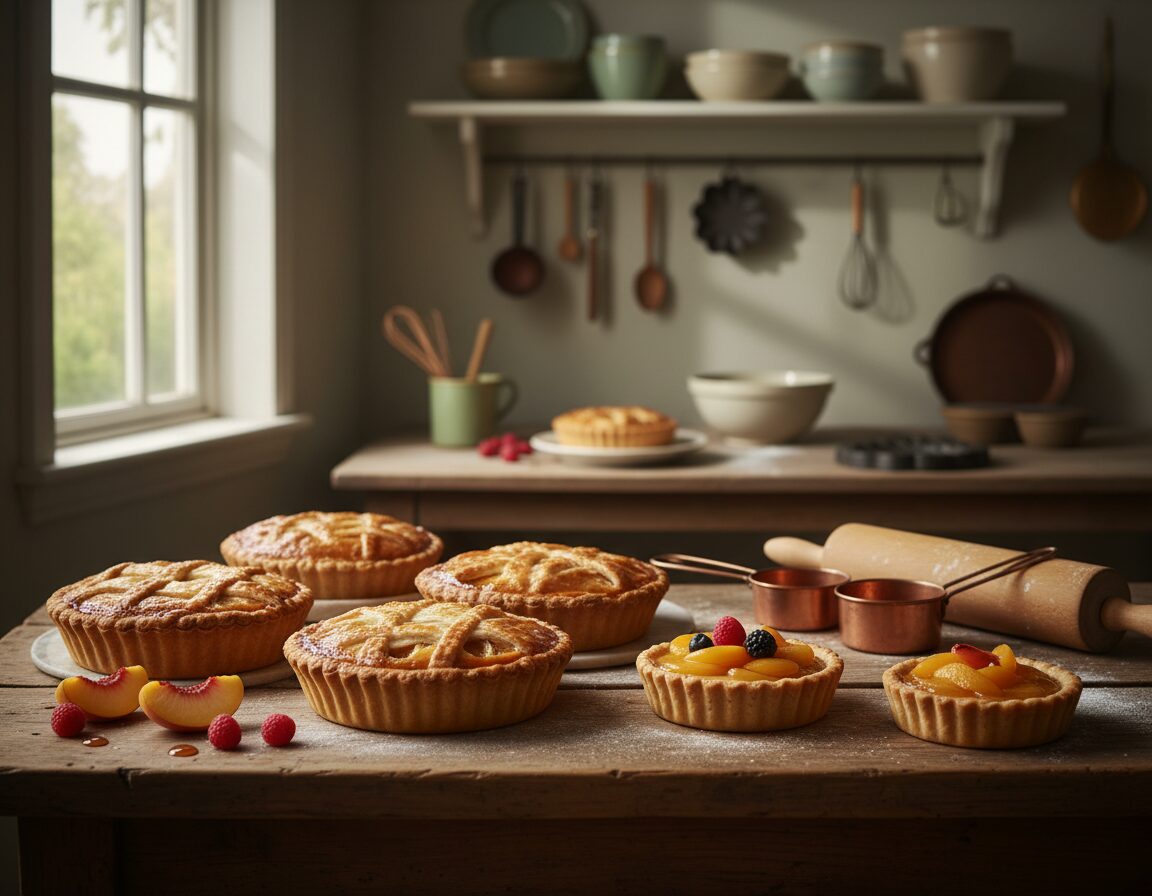
Blind baking a pie crust with foil and weights
I chill the unbaked shell, then press foil tight into the corners. I fill the foil with weights or dried beans so the sides don’t slump. I bake at 375°F (190°C) until the surface is very lightly brown — pale gold, dry-looking and with edges just colouring.
I often remove the weights for the last 5–8 minutes to let the base dry and firm. That step stops a raw patch under a wet filling.
Blind baking a tart shell by pricking the base
For a fluted tart tin I prick the chilled shell with a fork and skip weights. The fluted edge supports the sides and the pricks stop bubbling. Bake at the same 375°F until the shell is barely beginning to brown.
- Keep butter cold and don’t overwork the dough.
- Use just enough water to bring the mix together.
- Chill before the oven to help the fat hold structure.
| Problem | Sign | Fix |
|---|---|---|
| Shrinking sides | Gap between tin and pastry | Reduce handling; chill before baking |
| Bulging base | Air pockets under crust | Prick or use weights |
| Soggy bottom | Wet centre after filling | Finish blind bake without weights to dry base |
Heat, ovens and equipment: traditional instincts with modern control
I keep things simple. A few habits around heat and equipment make the process calmer and more reliable in a normal UK oven.
What I borrow from past practice and what I use from modern gear
I still trust my senses—smell, sight and a light tap—because no two ovens behave the same. That old instinct helps when a recipe needs a little prompt or a cool-down.
From modern equipment I welcome accurate temperatures, steady timers and the option of fan for even heat. Together they save lots of guesswork.
Preheating and rotating tins for even browning
My preheat rule is simple: I don’t count the oven as ready until the walls and shelve are stable at temperature. I leave it a few minutes after the indicator clicks.
I rotate tins once, halfway through, to tackle hot spots. Not constantly—just one smooth turn. It fixes uneven colour and helps rises stay level.
When I use convection fan and when I avoid it
I use the fan for roasts, traybakes and pastries because it gives steady air and crisper edges. I avoid it for sponges, custards and soufflés; the moving air can dry or dome them.
- Middle shelf for most cakes; lower-middle when I want a firmer base.
- Treat oven times as a range—start checking a few minutes early.
- Small adjustments beat panic: a lower rack, a foil tent or one gentle rotation.
| Situation | Setting I use | Why | Quick tip |
|---|---|---|---|
| Traybakes and pastries | Fan on | Even colour, crisper edges | Check 5 minutes early |
| Sponges and custards | Fan off | Gentle heat avoids doming and drying | Use middle shelf, steady temp |
| Uneven browning | Rotate once | Fixes hot spots | Turn halfway through bake |
| Base not cooked | Lower shelf | More direct heat to base | Move down and extend time slightly |
Chocolate, custard and gelatine: classic techniques that prevent disasters
Some moments in the kitchen feel risky — and chocolate, eggs and gelatine are often where things go wrong.
Melting chocolate safely
Chocolate scorches fast when you rush. I chop it into small, even pieces and microwave in short bursts. I stop and stir each time.
I usually stop while a few lumps remain and let the residual heat finish the mixture — that prevents a seized mess.
Alternatively, I use a bowl over simmering water. The bowl must not touch the water. Keep steam off the chocolate and use low heat.
Tempering eggs for custard
Eggs curdle if hit with hot milk. My trick is to whisk hot milk into beaten eggs a little at a time. Then I return the warmed mixture to the pan and cook gently.
If I see steam rising, I slow down — custard likes patience. If it looks grainy, I strain it through a sieve and rescue the sauce.
Blooming gelatine for smooth creams
I sprinkle powdered gelatine over cold water at about four times the weight. Let it sit for five minutes to bloom. Then I dissolve it into a warm mixture on low heat.
Quick save tips:
- Seized chocolate: gentle warmth and a splash of cream or butter often revives it.
- Curdled custard: strain and lower the heat; finish slowly.
- Clumpy gelatine: warm gently and stir; avoid boiling.
| Risk | Cause | Simple fix |
|---|---|---|
| Scorched chocolate | High heat, uneven pieces | Chop small, short bursts, stir |
| Curdled custard | Hot milk added too fast | Temper eggs, strain if needed |
| Clumpy gelatine | Added dry to hot mix | Bloom in cold water first |
Conclusion
I find the quickest gains come from focusing on touch and timing rather than strict oven minutes. Once you know what each step does—building air, shaping gluten and managing heat—you can follow recipes with calm confidence.
When something is off, I first check ingredient temperature, mixing intensity, flour choice and oven accuracy. Those are the big levers that affect texture and structure.
Practise one technique at a time—creaming, folding, rubbing-in or kneading—over a few bakes and your hands will learn the feel. Light cake needs trapped air and gentle mixing; good bread needs dough development and patient proofing.
Remember: UK kitchens vary. Check early, rotate once if needed, and trust your senses. For a simple recipe to try, see my Gugelhupf cake recipe. Quiet repetition beats hurry—skills grow into reliably good products.