
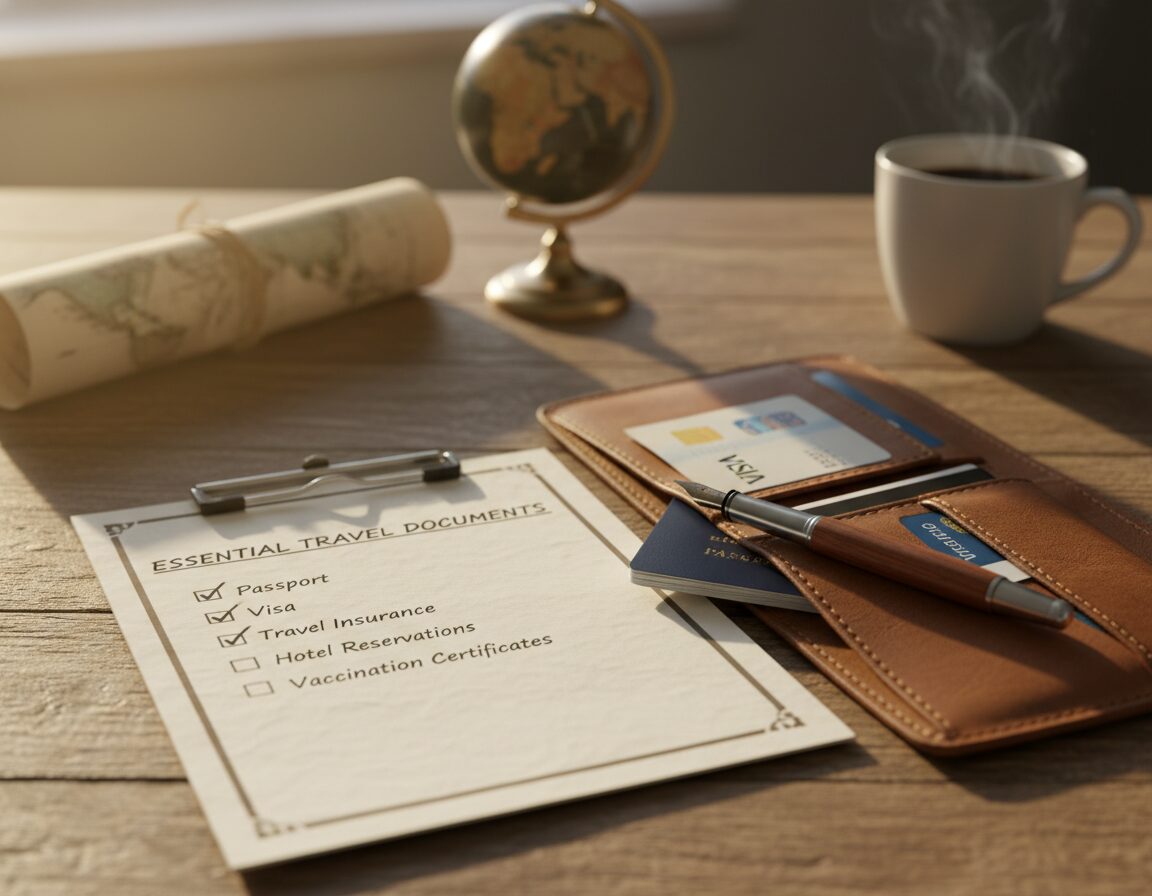
My heart used to race with last-minute panic before every holiday, scrambling for papers and hoping I hadn’t forgotten something vital. Now, my simple, personal travel documentation checklist turns that pre-departure frenzy into calm confidence.
I start by gathering every essential item in one spot on my kitchen table. This simple act is the foundation of a stress-free journey. For peace of mind, I always consult the Foreign, Commonwealth & Development Office’s guidance for British travellers.
Securing a reliable travel insurance policy is my very first step. It’s the safety net that protects my investment and health abroad. Understanding your policy is crucial, which is why I find tips on navigating travel insurance claims so valuable.
My passport gets its own special, easily accessible pocket. I check its validity dates well in advance. Creating a thorough list helps me stay organised, ensuring all my documents are ready long before I leave home.
This preparation makes any trip smoother, letting me focus on the joy of the experience ahead.
Key Takeaways
- Begin your preparations by collecting all essential items in one central place.
- Purchase a comprehensive travel insurance policy as your first priority for financial and medical protection.
- Ensure your passport is both easily accessible and valid for the duration of your journey.
- Use a detailed checklist to stay organised and avoid last-minute rushes.
- Prepare all your required documentation well before your departure date.
- Review official travel advice for your destination to stay informed and safe.
- Being thoroughly prepared reduces stress and creates a smoother travel experience.
Assessing Your Travel Documentation Needs
Before I even consider booking a flight, my first move is to look up the official guidance for the place I’m planning to visit. This isn’t just about passports—it’s about understanding exactly what I may need for a smooth entry.
I always check the Foreign, Commonwealth & Development Office’s travel advice for the specific country. Their updates cover entry rules, safety risks, and any special paperwork. It’s my go-to source for reliable information.
If my itinerary includes several nations, I research each one separately. Every destination has its own regulations that could affect my insurance or required documents. Staying informed helps me avoid nasty surprises.
Requirements can change without much warning. That’s why I look for the latest advice close to my departure date. This simple habit keeps my journey safe and compliant.
Understanding these needs early also lets me assess my insurance properly. Some places require specific cover, like medical evacuation, which might not be in a standard policy. For clarity, I consult a comprehensive guide to travel insurance.
Taking these steps means I can pack my bags with confidence, knowing I’ve got the essentials sorted.
Pre-Trip Preparations for Passports and Visas
I treat my passport like a perishable ingredient—it has a strict expiry date that needs checking long before I plan to use it. Getting these core documents right is the foundation for a hassle-free journey.
Many nations will refuse entry if your passport doesn’t have at least six months left. I always verify this date first. Renewals can take up to ten weeks, so I apply early to avoid panic.
Review Passport Validity and Conditions
My rule is simple: ensure my passport has plenty of validity remaining. I also check for blank pages. Some places require a specific number for stamps.
It’s a step that brings immediate peace of mind. I never leave it to the last minute.
Apply for Any Required Visas
Next, I research if I need a visa for my destination. Each country has its own rules. The application process can take time and careful attention.
I use the table below as a quick guide for common spots. It helps me plan my timeline.
| Destination | Passport Validity Required | Visa Required? | Key Note |
|---|---|---|---|
| Turkey | 6 months beyond entry | e-Visa online | Apply at least 48 hours before travel. |
| USA | Valid for duration of stay | ESTA authorisation | ESTA is not a visa but mandatory for visa waiver. |
| Thailand | 6 months beyond arrival | Not for short tourist stays | Check stay length limits carefully. |
| Schengen Area | 3 months beyond intended stay | Not for UK citizens for short stays | 90-day limit in any 180-day period applies. |
Keeping my passport and any visas in order is my top priority. It makes the whole trip start smoothly.
Securing EHIC/GHIC and Travel Insurance
Getting my health cover sorted feels like putting on a seatbelt before a long drive. It’s a non-negotiable step for peace of mind. I view my Global Health Insurance Card and my travel insurance policy as two essential layers of protection that work best together.
Confirm EHIC/GHIC Details and Expiry Dates
I apply for my Global Health Insurance Card at least two weeks before I go. This little card provides access to state healthcare in the EU and Switzerland. It’s valid for four years, so I always check the expiry date as part of my routine.
I keep the card in my wallet, but I remember it’s not a replacement for proper travel insurance. It’s a helpful first layer, not the complete solution.
Ensure Comprehensive Travel Insurance Coverage
That’s why I always buy a separate insurance policy. My global health insurance doesn’t cover things like repatriation or lost luggage. A good policy fills those gaps.
I make sure my cover matches my plans. Standard insurance might not be enough for every activity or destination. I keep my insurance card and policy details together, so I can reach emergency services quickly if I need them.
travel documentation checklist Essentials
My journey towards a stress-free holiday begins with a simple, personalised list. It’s the single most effective tool I’ve found to ensure I have every necessary paper to hand. This approach turns potential chaos into calm order.
Compile Your Personal Travel Checklist
I maintain a master inventory on my phone. Before each new trip, I tailor it to the specific country I’m visiting. This step lets me make sure I’ve noted any special visa rules or required inoculations for that destination.
Updating my list saves me a huge amount of time and hassle later on. It prevents that awful moment of realising I’ve forgotten a crucial document, like proof of my insurance policy. This personalised system is my safeguard against oversights.
I always review my complete inventory a few days before departure. This gives me ample opportunity to source anything that’s missing, such as additional insurance endorsements. Having everything accounted for brings real peace of mind and lets me focus on the excitement ahead.
Organising Digital and Physical Copies of Documents
I’ve learned that having both digital and physical copies of my important papers is like having a spare key—it’s a simple precaution that saves a lot of hassle. This dual approach means I’m covered whether I lose my bag or my phone battery dies.

Secure Digital Storage Solutions
I make sure to store digital versions of my passport and insurance documents in a secure folder on my phone. This lets me access them at any time, even in an emergency abroad.
I always include the contact details of my insurance provider in these files. That way, I can reach them quickly from a foreign country. Having a digital backup has saved me during more than one trip.
Protect Your Paper Documents on the Go
Carrying a physical copy in my hand luggage is a habit I’ve developed for every journey. I always include my passport there too.
I organise these essential documents by destination. This ensures the right identification and insurance are ready. It’s a small step that makes a huge difference.
Travelling with Children and Family
The laughter of my kids on holiday is priceless, and ensuring their paperwork is in order protects that joy. A family adventure requires a few more thoughtful steps than going solo. I focus on their specific needs from the very start.
Extra Identification and Permissions for Children
Every child needs their own passport. I remember that for British youngsters under 16, it’s only valid for five years, not ten. Checking this expiry date with plenty of months to spare is a must.
I always carry extra proof of relationship, like a birth certificate. Some destinations have specific requirements. If I’m travelling alone with my children, a signed letter of consent from the other parent can be essential for entry into a new country.
Managing Family Travel Paperwork
My best tool is a dedicated family travel checklist. It helps me make sure each member has their own valid identification and insurance cover noted down. This single list stops anything from being missed.
I keep all our essential documents together in one folder. Having everyone’s papers in one spot makes the whole trip smoother. It turns potential chaos into a calm, organised journey for the whole family.
Health and Safety Documentation
Looking after my health abroad starts with a simple, proactive habit: checking the official requirements well before I pack my bags. This isn’t about fear—it’s about taking sensible steps to protect myself.
Keep Vaccination Records Up-to-Date
My first port of call is always the NHS website. I look for the latest vaccination rules for the country I’m visiting. Some places require proof against diseases like yellow fever for entry.
I make sure my own records are current and stored with my other essential documents. This small task prevents any hassle at borders. It’s a key part of my health safety routine.
Carry Your Health Insurance Card and Policy
I always have my Global Health Insurance Card on me. It provides access to state healthcare in many European countries. But I never see it as a replacement for my proper travel insurance policy.
My insurance is my primary source of cover for serious issues. The card is handy for minor treatments. I keep both details in my wallet and saved on my phone.
For those planning a pet-friendly journey, similar health precautions for your furry companions are wise. Always check the specific rules.
| Destination | Common Vaccination Advice | Health Insurance Note | Key Advice |
|---|---|---|---|
| Thailand | Hepatitis A & Typhoid recommended | Card useful, but full travel insurance essential | Carry proof of any prescribed medications. |
| Spain | Routine UK vaccines up to date | GHIC valid for state healthcare | Keep your insurance emergency number handy. |
| USA | No mandatory vaccines for tourists | No public health cover; robust insurance vital | Ensure your policy includes medical evacuation cover. |
| Australia | Check for any regional health alerts | Reciprocal health agreement with UK exists | Declare any pre-existing conditions to your insurer. |
Having this health documentation complete lets me relax. I know I’m prepared for most situations, from a small scrape to a bigger emergency.
Additional Documentation for Driving Abroad
Driving abroad opens up incredible possibilities, yet I never hit the road without first sorting my paperwork. It’s a different kind of preparation that ensures smooth journeys and avoids any nasty surprises at a rental desk or police stop.
Obtain an International Driving Permit
I always check if I may need an International Driving Permit for my destination. The rules vary significantly between countries, so I verify this well in advance.
Applying for one is straightforward through the Post Office, but it requires planning. I make sure to get it sorted before I travel to keep my trip on track.
Prepare Vehicle Insurance Proof for Foreign Roads
Equally important is confirming my vehicle insurance provides the right cover for foreign roads. A standard policy might not be enough once I cross a border.
I keep all my driving documents together with my travel insurance details. This simple habit means I’m prepared for any situation I might face.
Having the correct permits and robust insurance makes driving abroad much less stressful. It lets me enjoy the journey with real confidence.
Plan for the Unexpected on Your Trip
I think of preparing for the unexpected as packing an umbrella—it might not rain, but having it brings immense peace of mind. This simple mindset turns potential disasters into manageable hiccups. My focus is on two practical areas: securing my vital details and having a clear action plan ready.
Backup Contact Information and Key Details
I make sure all my contact information and itinerary details are saved digitally, separate from my phone. This means I can access them even if I lose my device. I also keep a physical copy of my insurance policy and passport details in a different bag from my main luggage.
Establish an Emergency Procedure Checklist
My personal checklist always includes the 24-hour FCDO number, 020 7008 5000, for urgent advice abroad. It also has the contact details for my insurance provider, so I can get help fast. Finally, I verify the entry rules and official guidance for every country I’m visiting well before I go.
Practical Steps for Keeping Documents Secure While Travelling
I treat my hand luggage as my personal safe—it’s where my most vital papers live from the moment I leave home until I return. My passport and insurance policy are always in there. This simple rule gives me constant peace of mind.
I use a sturdy, waterproof folder to keep all my essential documents together. It protects them from spills or rain, especially when I’m moving between different countries. This small investment saves a lot of potential hassle.
My hand luggage never leaves my sight during the trip. It holds all my identification and insurance details. I make sure to keep it with me at all time.
I always check the latest airport security rules before I fly. Regulations often limit liquids in hand luggage to 100ml. That’s why I pack my papers in a separate, secure folder within my luggage. It keeps my documents and insurance policy organised and easy to reach.
This approach to managing my luggage makes every journey smoother. Keeping items in my hand luggage ensures everything is accessible. Good health abroad starts with knowing your papers are safe.
Conclusion
Seeing my papers neatly organised gives me the same settled feeling as a well-stocked pantry before a big dinner. That quiet confidence is what this whole process is for.
I’ve spent years refining my own approach. Having everything in order makes a world of difference, whether your journey is for leisure or concerns about health.
I hope this travel checklist helps you feel prepared for your next big trip. Staying organised is the best way to ensure a safe and smooth experience for everyone.
That’s the ultimate goal. It replaces worry with peace of mind, so you can truly enjoy your time away.