
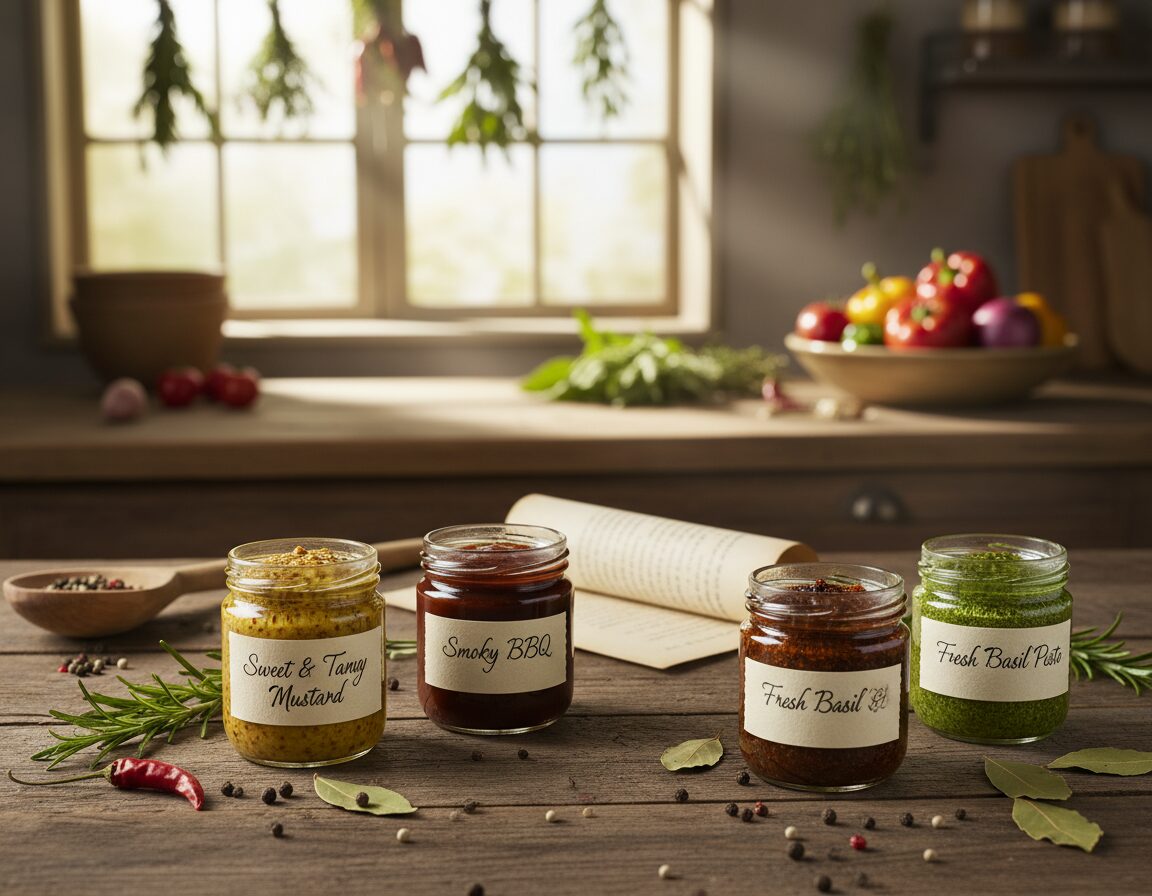
I make homemade condiments because they taste brighter, cut down on single-use packaging and let me tweak every jar to suit my family’s mood.
I’ll set expectations straightaway — this is what I actually use at home, not a fantasy pantry. In my kitchen I focus on a short core set that covers most meals: ketchup, mustard and mayo, plus a few twists that turn them into new sauces.
Most of these come together in minutes with common ingredients from a local Tesco or Sainsbury’s. I’ll explain the quick recipes, sensible shortcuts (yes, jar mayo with a stick blender), and simple storage for the pantry and fridge.
I’m honest about food safety — especially egg-based sauces — and I share what’s worth the fuss and what isn’t. Expect clear, practical tips you can use tonight.
Key Takeaways
- Making your own condiments gives better flavour and less waste.
- A small core set covers many meals and is quick to adapt.
- Most recipes use supermarket ingredients and simple methods.
- Shortcuts save time without sacrificing taste.
- Follow basic food safety for egg-based sauces.
How I stock my kitchen for homemade condiments without overthinking it
I keep a short, no-fuss stash of staples so I can make a sauce in minutes. It’s about usefulness, not perfection — what fits my life in a small UK kitchen.
My baseline pantry ingredients that cover most recipes
Vinegar (cider or white wine), sugar or honey, salt, pepper, mustard powder or seeds, neutral oil and two dried spices. These few items turn into ketchup-style, mustardy or sweet-tart sauces fast.
Fresh add-ins that make everything taste “alive”
I rarely keep more than three fresh things: lemon for brightness, garlic for depth and a small bunch of herbs. My rule — if you can only buy one fresh thing, buy lemon. It lifts every ingredient without fuss.
Jars, bottles and labels I keep on hand
I use small jars for thick sauces and a couple of squeeze bottles for ketchup-style stuff. Everything gets a simple label: name + date. It stops the fridge becoming a graveyard of mystery pots.
- I don’t bother with fancy oils or rare spices unless a recipe needs them.
- Buy extras only when you know you’ll use them for sandwiches, roast veg or quick chicken.
Tools that genuinely make this easier (and what I skip)
Fewer gadgets, smarter choices — that’s my rule for making sauces fast. I keep the gear list tiny so you can start today without hunting for odd tools.
Why the stick blender is my go-to
An immersion blender is the one tool that changes mayo from fiddly to five-minute easy. I use a mason jar: add egg, mustard and a splash of vinegar, pour the oil on top, then put the stick right at the bottom.
Keep the blender still until the mixture thickens, then slowly raise it to pull the oil into the emulsion. That single step saves time and makes a stable sauce every time.
When a whisk and bowl still win
I reach for a small whisk and bowl for vinaigrettes, quick ketchup and honey-mustard. It’s less washing up, and the effort is low — usually one simple step by hand.
- I skip fancy blenders, mini-choppers and specialist squeeze bottles unless I actually use them.
- Split mayo? Rescue it by whisking a fresh egg yolk in a clean bowl, then slowly whisk the split mayo into it.
- Quick clean-up: rinse blade and jar immediately, soak the whisk while you eat, and wipe surfaces — it cuts the dread of mess.
My five-minute core set: ketchup, mustard, and mayo
I rely on three quick sauces that turn simple meals into something worth smiling about. They take minutes, use everyday ingredients and give me a base to spin into other flavours.
Quick tomato ketchup using tomato paste and cider vinegar
Mix 100g tomato paste, 2 tbsp apple cider vinegar, 1 tbsp sugar, and a pinch each of salt and pepper. Add ¼ tsp each of onion powder and garlic powder, a pinch of oregano, a dash of celery salt and a little allspice.
Stir well and chill. This recipe keeps for up to 2 weeks in the fridge.
Surprising shortcut for a spoonable mustard
I blend 4 tbsp sweetened condensed milk with 1 tbsp cider vinegar, 1½ tsp ground mustard and ¼ tsp turmeric. Add salt to taste and more vinegar if you want bite.
This mustard is ready in minutes and stores chilled for about 2 weeks.
Fast mayonnaise in a jar — and how I keep the emulsion stable
In a tall jar whisk 2 egg yolks, 1 tsp Dijon, 1 tsp lemon juice and a pinch of salt. Pour 200ml neutral oil on top and use an immersion blender. Keep the blender base still until it thickens, then lift slowly.
Store airtight for 3–4 days. Correct jar size and slow blending are the tricks that stop it splitting.
- Make once, spin many ways — these three are the base for burger sauce, honey mustard and spicy mayo.
- Tweak acidity and salt to suit what you’re eating; small changes make a big difference.
| Sauce | Key ingredients | Time | Fridge life |
|---|---|---|---|
| Ketchup | Tomato paste, cider vinegar, sugar, spices | 5 minutes | Up to 2 weeks |
| Mustard | Sweetened condensed milk, ground mustard, vinegar, turmeric | 2–3 minutes | Up to 2 weeks |
| Mayo | Egg yolks, Dijon, lemon, neutral oil | 5 minutes | 3–4 days |
Homemade condiments that taste better than shop-bought (and why)
A good sauce starts with simple, familiar ingredients and a clear idea of what it’s for. I find that fresher acidity and a tighter balance beat clever lab formulations made to last months.
Choose things you recognise on the label. I avoid long lists of additives not because I’m judgemental, but because I like to know what I’m eating. That control lets me dial the flavor for the meal.
Adjust sweetness, salt and acidity to suit the food
Chips want punchy salt and tang. Burgers take a hint of sweetness. Salads need brighter acid. My tasting trick is simple: taste the sauce on the actual dish, not a spoon. Context changes everything.
Waste, convenience and the quiet wins
When you go through a lot of bottles, making a jar at home cuts packaging and last-minute trips. The small wins add up — fewer “we’re out” moments and less fridge clutter.
- I’ll admit shop options are fine sometimes; I just prefer making the ones I use most.
- Start small: one jar, one whisk, one easy recipe — and build from there.
| Benefit | Why it matters | When to try |
|---|---|---|
| Better taste | Fresher acid and balance | Everyday sauces |
| Clear ingredients | Know what you eat | If you avoid additives |
| Less waste | Fewer bottles | When you use a lot |
Ketchup, but the way I want it
My ketchup starts with tomato paste and ends with small tweaks that bring it to life. I use paste for body and deep tomato flavour, then thin and brighten with apple cider vinegar rather than water.
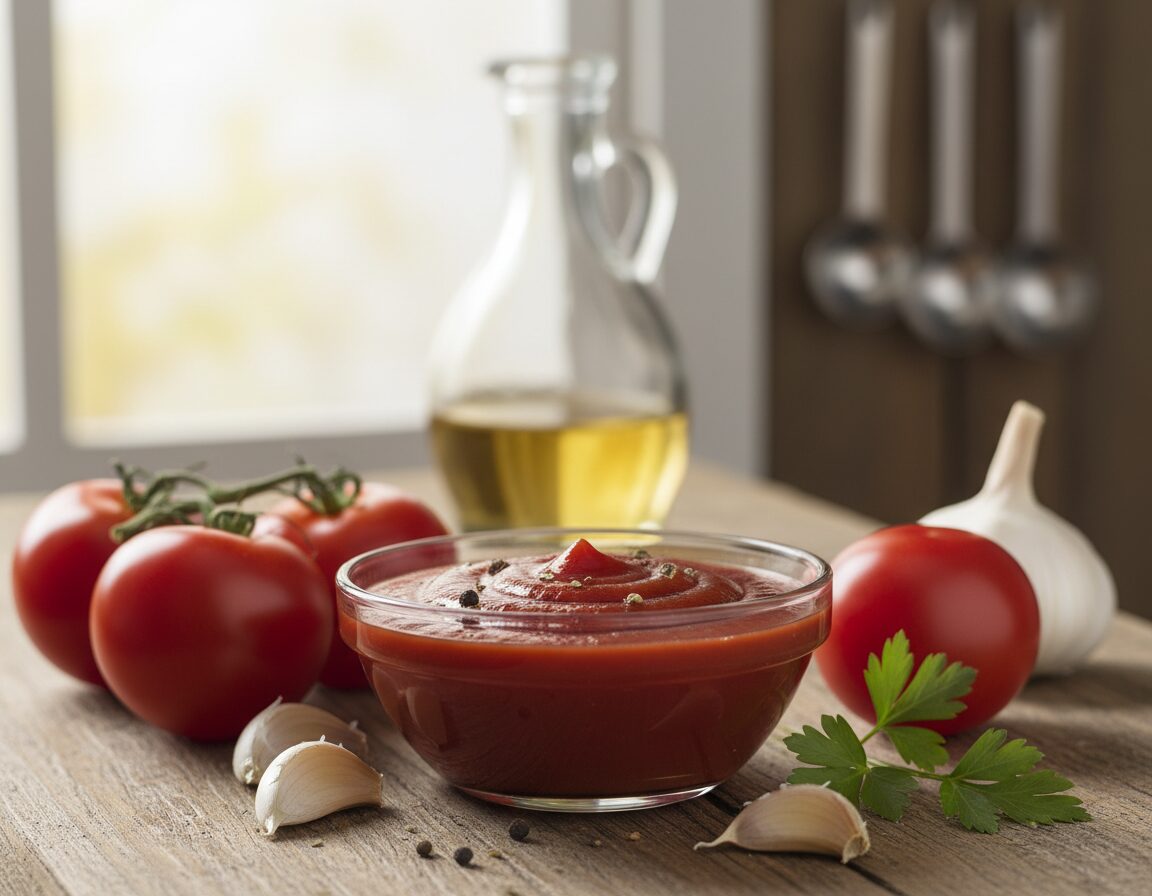
How I balance sweet, savoury, and tart without it tasting flat
My rule is simple: sweetness, salt and acid must all be present, plus a savoury note from garlic or onion powder.
I add sugar sparingly, then salt, then a little vinegar and a final taste. I adjust in tiny amounts — ketchup can go from nice to too sharp if you overdo the vinegar.
Spice options that work for chips, burgers, and hot dogs
- Smoky: sweet smoked paprika for chips and charred burgers.
- Warm: a pinch of allspice or a clove-like note for richer burger sauces.
- Peppery: black pepper and a touch of celery salt for hot dogs and dipping.
For chicken dips, I push tang and black pepper rather than extra sweetness so the flavour cuts through the fat.
How long I keep it and what container works best
I store this quick sauce in a clean jar if I’m spooning it, or a sterilised squeezy bottle for the classic squeeze. It lasts up to two weeks in the fridge.
Bin it if it smells odd, shows mould or starts fizzing. My habit: always use a clean spoon and wipe the rim before sealing — it keeps jars tidy and fresh for longer.
- Quick recipe base: tomato paste, cider vinegar, sugar, salt, pepper, oregano, garlic/onion powder, celery salt, allspice.
- Fridge life: up to two weeks with clean handling.
Mustard for sandwiches, dressings, and marinades
Mustard is the quickest way to lift a sandwich from fine to memorable. I use it as a spread, a binder in marinades and a quick sauce for salads or fries.
Texture choices: smooth, partially ground, or seeded
Choose smooth if you want even coverage on bread. Powder or ground mustard gives that silk finish.
For more bite, crush seeds lightly — a pestle or the back of a spoon does the job. Seeded mustards make a chunkier spread for rustic sandwiches.
Easy flavour twists
My shortcut base is sweetened condensed milk plus vinegar. It’s an easy make and gives surprising body and sweet-tang balance. Add ground mustard and a pinch of turmeric and you’re done in under five minutes.
For honey-mustard, stir in honey and a little mayo or lemon; it doubles as a dressing or a dip. To nudge things Dijon-style, boost the black pepper and use a sharper mustard powder. Fresh herbs flip it again for wraps and salad dressings.
- Why it pays off: Mustard is the easiest big-impact spread — small effort, big flavour.
- Marinade tip: Use mustard as a binder so spices cling to chicken or veg.
- By hand: A bowl and spoon are all you need — no blender required.
| Texture | Best for | How to make |
|---|---|---|
| Smooth | Sandwiches, dressings | Mustard powder or blitzed seeds |
| Partially ground | Wraps, marinades | Crush seeds lightly by hand |
| Seeded | Charcuterie, rustic sandwiches | Whole seeds folded in |
I store jars chilled; overnight the flavour usually mellows and the components blend, which I prefer. Keep it covered and use within two weeks for best taste and safety.
Mayonnaise and creamy bases I make on repeat
Creamy bases are the sauces I reach for most nights — quick, versatile and forgiving.
Classic lemon and Dijon mayonnaise
I make a simple mayo in a jar: egg yolks, Dijon, lemon juice, salt, a pinch of cayenne and neutral oil. Put everything in a tall jar, press the immersion blender to the bottom, then lift slowly as it thickens. It usually sets in minutes.
Store chilled and use within 3–4 days.
Spicy mayo and the quick tweaks I trust
My spicy mix is mayo plus chilli sauce, a squeeze of lemon and a little black pepper. It works as a dip for chips, sushi or chicken — adjust the heat to taste.
Street-cart white sauce and yoghurt options
The white sauce is tangy, peppery and drizzleable for wraps and rice bowls. I thin mayo with a touch of vinegar and milk or yoghurt to keep it pourable.
When I want lighter, I pick strained yoghurt. Salt first, add acid, then herbs — that stops a watery, bland sauce.
- If mayo splits, start a fresh yolk and slowly blend the broken mix into it.
- Pair ideas: jacket potatoes, flatbread wraps, roasted veg and salad bowls.
| Base | Key add-ins | Best for |
|---|---|---|
| Classic mayo | Dijon, lemon, cayenne | Sandwiches, dressings |
| Spicy mayo | Chilli sauce, lemon | Chips, sushi, chicken dip |
| White sauce | Vinegar, pepper, yoghurt/milk | Wraps, rice bowls |
BBQ sauces I use for chicken, chips, and summer grilling
When the grill gets fired up I want two clear options: a thick, tangy red and a creamy, sharp white. Both are quick to pull together at home and rely on familiar supermarket ingredients.
Thick, tangy Kansas City-style at home
Kansas City-style is all about thickness, a touch of sweetness and bright vinegar. I start with ketchup or tomato paste, add brown sugar or molasses, cider vinegar, a dash of Worcestershire and smoked paprika for depth.
I add sweetness slowly—taste as you go—so the flavour stays balanced, not cloying. For chips, keep it thicker as a dip; for trays of wedges thin a little with vinegar or hot water.
Alabama white sauce — creamy, peppery and zingy
Alabama white is a mayonnaise-based, pepper-forward sauce that lifts grilled or roasted chicken. I mix mayo, cider vinegar, black pepper and a little lemon. It’s a surprise hit on sandwiches and drumsticks.
It takes minutes and gives a bright contrast to smoky meat without needing a smoker.
How I add smoke and adjust sweetness the easy way
- Smoke: smoked paprika, a splash of Worcestershire or a tiny pinch of charred salt.
- Sweetness: add sugar/molasses in teaspoons and taste each time.
- Acid finish: a squeeze of lemon or a spoon of vinegar at the end lifts heavy sauces.
| Style | Best for | Quick tweak |
|---|---|---|
| Kansas City | Ribs, burgers, chips | Smoked paprika + molasses |
| Alabama white | Chicken, wraps | Extra pepper + lemon |
| Chip-friendly | Wedges, fries | Thicker for dip, thin for drizzle |
Make small batches unless it’s truly summer and you’ll use it. Store in a clean jar in the fridge and use within a week for best taste and safety.
For more easy outdoor ideas I often pair these with summer picnic recipes that match the sauces and keep feeding fuss-free.
Quick sweet-and-hot condiments that transform simple meals
When dinner feels flat, I reach for something that’s sweet, hot and fuss-free. These two simple additions take minutes and need almost no kit — just a clean jar and a spoon.
Hot honey in a clean jar
Stir together honey, chilli flakes or a dash of hot sauce, and a pinch of salt. If it needs lift, add a splash of cider vinegar. Use a small, clean jar so the mix stays tidy.
I drizzle hot honey on pizza, roasted carrots, halloumi, fried eggs and anything beige that needs help. It’s a brilliant cheat — three ingredients, one jar, a few seconds of stirring.
Honey mustard dressing for salads and wraps
Start with equal parts mustard and honey. For extra body, add a spoonful of mayo, a squeeze of lemon and plenty of black pepper. No blender — just stir and taste.
I use this dressing on chicken wraps, roasted veg bowls and slaws. It’s a pocket of richness that makes plain food feel thoughtful.
- Storage: Keep in the fridge if you’ve added mayo; plain hot honey is fine at room temperature for short periods.
- Don’t overdo it: both are punchy — a little goes a long way.
| Condiment | Main ingredients | Best on |
|---|---|---|
| Hot honey | Honey, chilli flakes/hot sauce, salt | Pizza, halloumi, roasted veg |
| Honey mustard dressing | Mustard, honey, mayo, lemon, black pepper | Wraps, salads, slaws |
Takeaway-style “special sauces” for burgers, nuggets, and sandwiches
Special sauces lift a basic burger or a tin of oven nuggets into something proper and satisfying. I mix small batches so there’s flavour without waste.
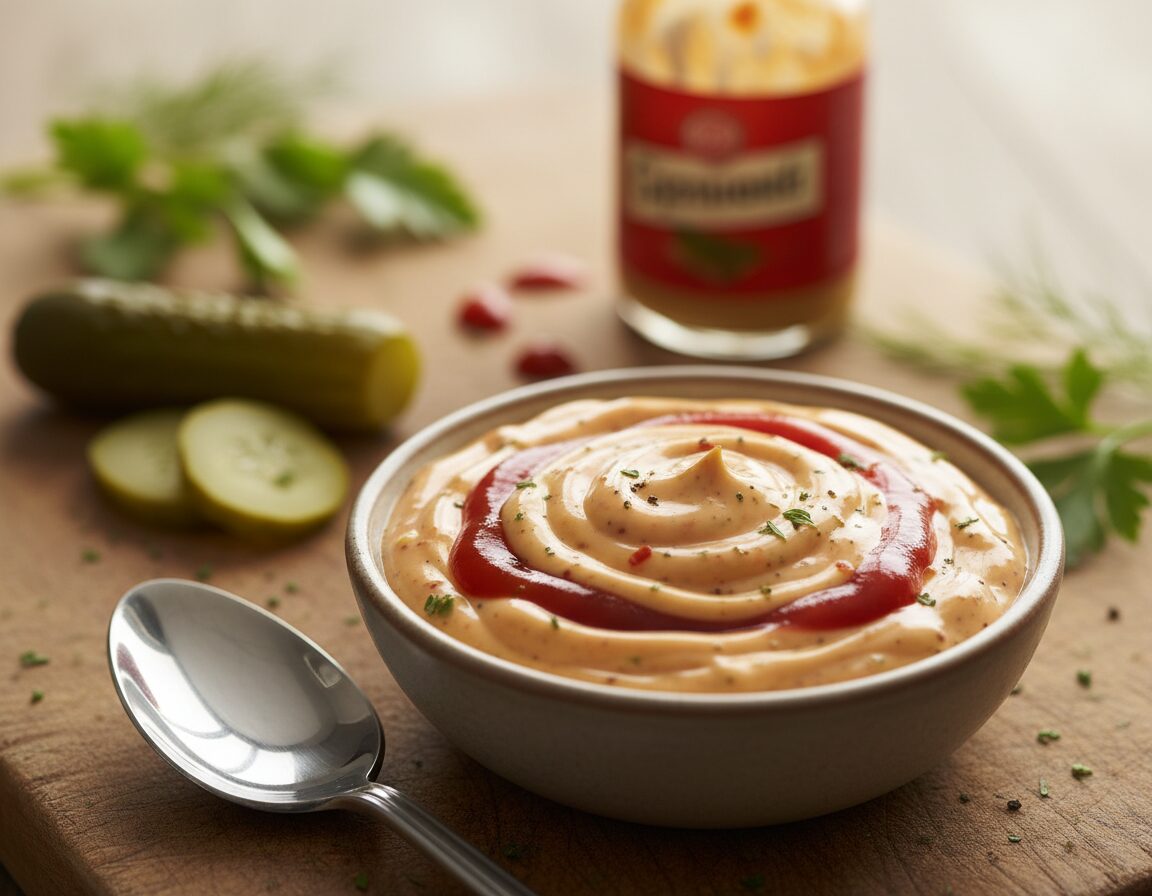
Big Mac-style sauce with everyday ingredients
What I use: 6 tbsp mayo, 1 tbsp finely chopped gherkins or pickles, 1 tsp Dijon or yellow mustard, 1 tsp white wine vinegar, 1 tsp sugar, 1 tbsp finely diced onion, a pinch of paprika, salt and pepper.
Stir everything together, taste and adjust. This makes about 120–150ml, enough for three or four burgers.
Variation: add smoked paprika for depth or a tiny splash of worcestershire for umami.
Tangy, pepper-heavy chicken-dipping sauce
I aim for a peppery, Cane’s-style dip. Mix 6 tbsp mayo, 1 tbsp ketchup, 1 tbsp cider vinegar, 1 tsp sugar, and at least 1/2 tsp freshly cracked black pepper. Stir and let it sit ten minutes so the pepper opens up.
Tip: increase pepper if you want a sharper bite. This is a great dip for nuggets and strips.
Russian-style dressing for Reuben-inspired sandwiches and beyond
Base: 5 tbsp mayo, 2 tbsp ketchup, 1 tsp prepared horseradish or 1/2 tsp hot mustard, 1 tsp lemon juice, salt and pepper. Fold in finely chopped gherkins if you like texture.
I use this on Reuben-style sandwiches, toasted cheese and even as a quick burger slaw dressing.
- Portion guidance: make 120–200ml per recipe so you don’t waste food.
- Storage: keep mayo-heavy sauces in the fridge and use within 4–7 days. Always use a clean spoon.
- Quick tweaks: make it smokier with paprika, spicier with chilli, or brighter with extra vinegar.
| Style | Main flavours | Best for |
|---|---|---|
| Big Mac-style | Mayo, pickles, mustard, onion | Burgers, fries |
| Peppery chicken dip | Mayo, vinegar, ketchup, black pepper | Nuggets, strips, dipping |
| Russian-style | Mayo, ketchup, horseradish/mustard | Reuben sandwiches, slaw, toasties |
Dressings I batch for the week (because I can’t face bottled ones)
I usually make one or two dressings on Sunday so salads aren’t an afterthought. It saves me time and stops me buying bottles that I barely use.
Caesar flair — proper umami and punch
My Caesar is anchovy, lemon, garlic, a spoon of mayo and grated Parmesan. It’s salty, tangy and bold enough to lift a bag of plain lettuce. Use it as a dressing or a dip for croutons.
Ranch that adapts to what’s in the fridge
I make ranch with yoghurt, mayo and whatever herbs I have—dill, chives or parsley. Swap in dried herbs if the fresh stuff is gone. It’s forgiving and quick, which makes it a reliable recipe when time is short.
Nutty turmeric dressing for bold, creamy flavour
For a richer option I whisk almond butter, lemon, grated ginger and turmeric with a little water to loosen. It’s great on grain bowls, crunchy salads and as a veg dip. A pinch of chilli lifts it if you want heat.
Green herb “goddess” for salads and dipping veg
Loads of herbs, a creamy base and bright acid—that’s my green goddess. Blend yoghurt or mayo with parsley, basil, a squeeze of lemon and a clove of garlic. Thin with water a teaspoon at a time if it’s too thick.
- Weekly rhythm: jar, label and use within a week for best flavour and safety.
- Quick fixes: too sharp? Add a tiny pinch of sugar or more oil/yoghurt. Too thick? Thin with a spoonful of water.
- Pantry swaps: tin tuna can replace anchovy; mustard steadies creamy dressings.
| Dressings | Main ingredients | Best for |
|---|---|---|
| Caesar | Anchovy, lemon, garlic, Parmesan | Salads, croutons |
| Ranch | Yoghurt, mayo, dill/chives/parsley | Salads, dips |
| Turmeric nutty | Almond butter, ginger, lemon, turmeric | Grain bowls, veg dip |
| Green goddess | Herbs, yoghurt/mayo, lemon | Salads, crudités |
Global sauces and pastes that deserve a spot in your fridge
A handful of international sauces turn the same ingredients into new dinners. They’re small jars with big impact — easy to reach for on a busy weeknight.
Tahini sauce — my Middle Eastern workhorse
Tahini is just sesame paste, lemon, garlic and water whisked to a pourable dressing. It brightens falafel, lifts lamb burgers, and dresses grain bowls or crunchy salads.
Balance is simple: more lemon if it tastes flat; a splash of water to loosen. I buy tahini from larger supermarkets or international grocers and it keeps well in the fridge once opened.
Ssamjang-style paste — Korean wrap shortcut
Ssamjang is a salty‑sweet, slightly spicy paste for wrapping rice and grilled meat in greens. My chunky version has a little agave and tiny apple dice for sweetness and texture.
I also use it as a quick marinade or stirred into mayo for a punchy dip. If it’s too thick, a splash of water thins it fast.
Tamarind dipping sauce for fish and summer rolls
Tamarind makes a tangy, salty, sweet and spicy dip — perfect for grilled fish, prawns or summer rolls. Look for tamarind paste or blocks in the world‑food aisle or local Asian shops; it’s worth seeking out once.
When mixing, balance tamarind with sugar and salt so it isn’t overly sour. A little chilli lifts it if you want heat.
Quick teriyaki — pantry staples version
My teriyaki takes four pantry items and about 30 minutes. Soy, sugar, mirin (or a splash of cider vinegar + sugar) and garlic simmered until glossy make a proper midweek sauce for chicken.
Use it to glaze roasted chicken or as a bowl sauce. It’s miles better than an overly sweet bottle and you can tweak salt and sweetness as you go.
- Serving ideas: drizzle tahini over roasted cauliflower; fold ssamjang into mayo; use tamarind to wake up prawns or tofu.
- Shopping tip: check bigger supermarkets’ world‑food aisles or a local international grocer for paste blocks and jars.
| Paste | Main use | Quick tip |
|---|---|---|
| Tahini | Falafel, lamb burgers, grain bowls | Add lemon for brightness |
| Ssamjang-style | Wraps, marinades | Sweeten with agave or apple |
| Tamarind dip | Grilled fish, summer rolls | Balance sour with sugar and salt |
| Teriyaki (pantry) | Midweek chicken, bowls | Simmer to a glossy finish |
Chutneys, relishes, and dips for when you want something tangy
When I want texture and brightness, I reach for a chutney or a chunky dip rather than another smooth sauce.
Mango that sits between jammy and savoury
The mango version is sweet, spicy, tangy and fruity — all at once. It lives where jam meets savoury.
I make it with chopped mango, vinegar, sugar, a little chilli and mustard seed. Cook until it’s sticky but still has bite.
Great with: sharp cheddar toasties, grilled salmon, pork or spooned onto a basic curry.
Tomato with warming spices and a hint of heat
Tomato chutney gets depth from ginger, cumin, cinnamon and turmeric. Add a pinch of cayenne and some peanuts if you want nuttiness.
It works brilliantly with dosa, but I also use it on burgers, cheese toasties and sausages.
Onion dip that beats the packet mix
My onion dip is proper French onion style — slowly softened onions, reduced stock, then folded into a creamy base with salt and pepper.
It tastes savoury and caramelised, not just powdery. Serve with crisps, crudités or warm bread.
- I reach for these when I want tang and texture, not just a smooth sauce.
- They take a little more time, but they keep well and feel like a treat.
- Store in an airtight jar, use a clean spoon and label with the date.
| Chutney / Dip | Key ingredients | Best with |
|---|---|---|
| Mango | Mango, vinegar, sugar, chilli, mustard seed | Cheese toasties, salmon, pork, curry |
| Tomato | Tomato, ginger, cumin, cinnamon, turmeric, peanuts (opt) | Dosa, burgers, grilled cheese, sausages |
| Onion dip | Slow-cooked onions, stock reduction, cream or yoghurt | Crisps, veg sticks, warm bread |
Storage, food safety, and how long I keep things in the fridge
Good storage is the quiet step that keeps flavours bright and food safe. I aim for simple habits that fit real life — not a list of rules that make you dread cooking.
What I refrigerate straight away and what’s fine in the cupboard
I put anything egg-based straight into the fridge. That includes mayo and sauces that use raw yolks.
High‑sugar or high‑acid mixtures—like quick ketchup or mustard—usually keep longer at cold temperatures. I still store them chilled and use within two weeks.
My basic rules for egg-based sauces
Keep them cold and covered. Airtight jars are my go-to. I never leave egg sauces sitting out during a buffet‑style meal and I avoid double‑dipping with dirty utensils.
If a recipe needs thinning, I only thin the portion I’m serving. Adding water or milk to the whole jar shortens shelf life, so I treat that as a serving‑time step.
How I spot when a sauce is past its best
Bin it if you see mould, fizzy bubbles, or a sharp sour smell that wasn’t there before. Separation with an off odour is another red flag.
I also label every jar with name + date — it’s the easiest safety habit. When in doubt, I chill it; I’d rather be cautious than waste a meal’s peace of mind.
- Quick at‑home timelines: ketchup and mustard — up to 2 weeks chilled; mayo — aim for 3–4 days in an airtight container.
- Prevent issues: decant what you need into a small bowl rather than hovering over the main jar with chips.
| Type | Storage | Typical fridge life |
|---|---|---|
| Egg-based mayo | Airtight jar in the fridge | 3–4 days |
| Quick ketchup / mustard | Refrigerated, clean jar | Up to 2 weeks |
| High‑sugar or high‑acid sauces | Chilled or cool cupboard short term | 2 weeks+ if kept cold |
| Thinned/served portions | Decant and chill promptly | Use same day |
Conclusion
Start small: choose one sauce you’ll actually use and make a tiny batch tonight. I usually pick a simple mayo, mustard or ketchup-style recipe so it doesn’t feel like a commitment.
Once you’ve got one base, spin it into more — mayo becomes a special sauce, mustard makes dressings, ketchup grows into a BBQ version. That stepwise approach keeps things manageable and waste-free.
Practical tip: use odds and ends — a garlic clove, half a lemon or a spoon of yoghurt — to lift flavour and cut packaging. Try one Middle Eastern tahini or a tamarind dip and see how it changes fish and veg overnight.
Keep pantry basics, a clean jar and taste as you go. Do what fits your time — five‑minute fixes on weekdays, slower chutneys at the weekend — and you’ll stick with it.