
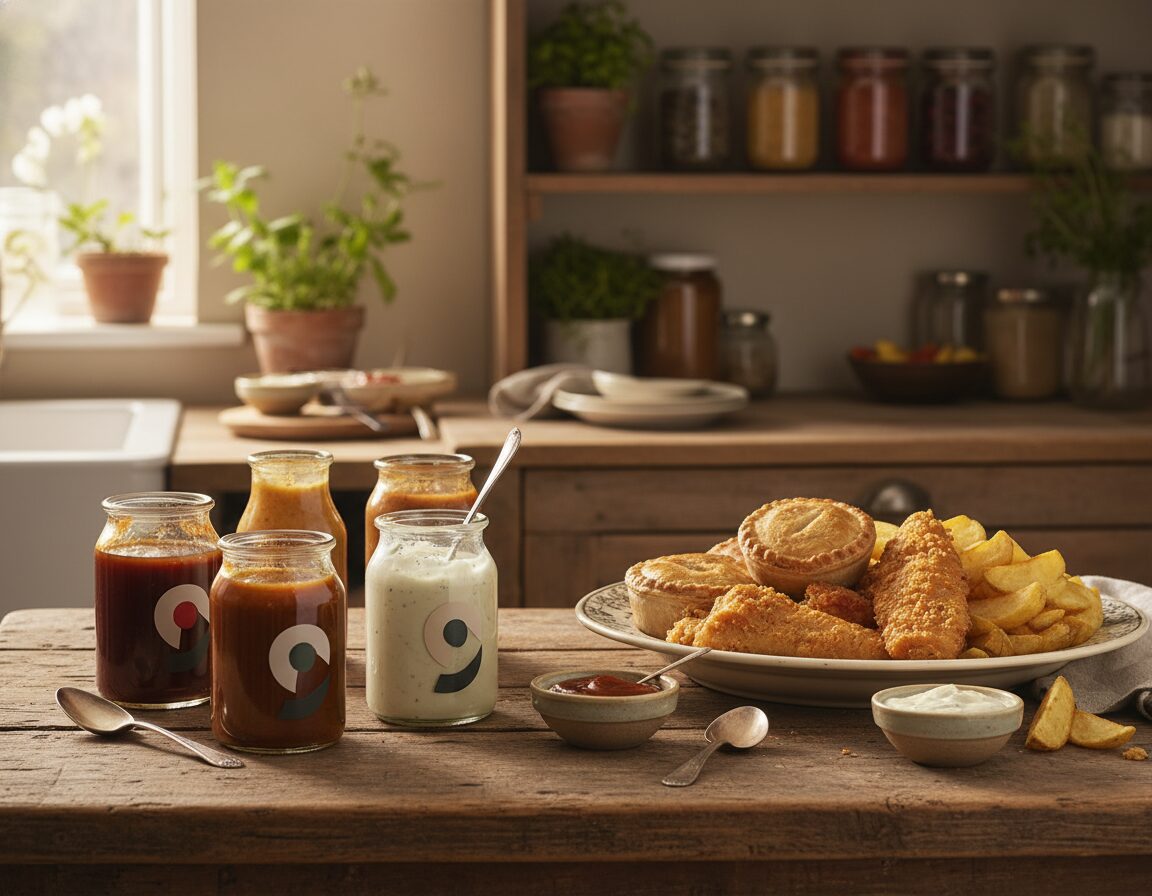
I grew up watching a spoon of brown go onto every fry-up, so I call a few everyday jars and bottles my comfort toolkit — starting with the classic traditional british sauces you actually find in cafés, chippies and on pub tables.
I’ll set out what I mean by these classics in plain terms — not restaurant reductions, but the things that lift a plate of fried fish, a roast or a bacon sandwich. I think of a sauce as the part that makes the whole meal click when everything else is salty or fatty.
Most of these condiments lean on vinegar, spice and a sweet‑savoury balance. That edge is why they cut through fried food and roast meat so well, and why some bottles spark proper debates at the table.
Key Takeaways
- I’ll describe everyday sauces you’ll see in UK cafés and pubs.
- I treat a sauce as central to how a dish tastes, not just an extra.
- Vinegar, spice and sweet‑savoury balance are common themes.
- I’ll note what to put each condiment on and common taste traps.
- Some flavours divide opinion — and that’s part of the fun.
How I decide which sauce belongs on the plate
Picking a sauce is usually a quick, gut call for me: what the dish needs most. I scan the plate for fat, salt and texture, then choose something to lift or sharpen it.
Matching richness, salt and fat with acid, heat or sweetness
If a plate is rich and salty, I reach for acid — vinegar or a sharp condiment. If it looks bland and beige, I add heat or savoury depth. And when food is already spicy, I often calm it with something sweet-fruity.
When I stick to habit and when I bend the rules
I respect classic matches — mint with lamb, brown sauce with a fry-up — but I’ll ignore them when flavours clash. I choose clean mustard heat for subtle lift, or horseradish for a fierce nasal kick, and I stop before it overwhelms the meal.
My quick pairing map for meats, fish, chips and sandwiches
| Plate | Go-to | Why |
|---|---|---|
| Roast meat | Mustard or mint | Cuts fat; adds contrast |
| Fish | Tartare or malt vinegar | Brightens oily fillets |
| Chips | Ketchup or vinegar | Simplest lift for salt and crunch |
| Sandwiches | Brown sauce or chutney | Adds sticky, fruity depth |
Traditional british sauces I keep coming back to (and why)
There are four condiments I reach for more than any others — each for a different reason. I use them week in, week out because they fix a plate fast. Below I explain what they do and how I actually use them at breakfast, for a Sunday roast or a quick midweek burger.
- Brown sauce – malty, tangy and slightly fruity; perfect with a full english or bacon sandwiches.
- Tomato ketchup – a sweet‑sharp comfort; my go-to for chips, burgers and toasties.
- Worcestershire sauce – a tiny dash adds instant umami depth to mince, stews and soups.
- English mustard – clean, sharp heat for roast meat without sweetness; Colman’s is my staple.
Brown sauce for savoury, malty tang
Brown sauce has a base of tomatoes and dates, warming spices and malt vinegar tang. It cuts through fried fat and brightens a full english.
I smear it on bacon sandwiches and breakfast plates. It’s an instant lift for anything salty or greasy.
Tomato ketchup for sweet‑sharp comfort
British tomato ketchup is less sweet than the American style. I treat it as balance — not just a kids’ condiment.
It works on chips, burgers and quick toasties when I want familiar, juicy sweetness with a sharp edge.
Worcestershire sauce for concentrated depth
A dash of Worcestershire sauce — with anchovies, tamarind and vinegar — adds savoury weight without bulk. I use it in mince, soups and on cheese on toast.
English mustard for clean, sinus‑clearing heat
English mustard is hotter than Dijon. I dab it on roast beef or stir it into a cheese sauce for macaroni. Start small — it builds fast.
| Plate | Go-to | Why |
|---|---|---|
| Full English / breakfast | Brown sauce | Cuts fat; adds malty tang |
| Chips / burgers | Tomato ketchup | Sweet-sharp comfort |
| Mince / stews | Worcestershire sauce | Instant umami depth |
| Roast / roast beef | English mustard | Clean heat; lifts rich meat |
Brown sauce and tomato ketchup: the café debates I’ve heard a hundred times
In cafés I’ve heard the same two-sided argument about brown versus red more times than I can count. I keep a calm view — both have clear jobs and strong fans.
What I hear in the flavour
Brown sauce starts with tomato and date fruitiness, then warming spices and a malty vinegar edge. That malt vinegar tang is what makes it cut through fried fat.
Why it loves bacon and sausages
It meets salt and fat with acid and a touch of sweetness. The result is contrast, not claggy richness. That’s why it works on a full english or a bacon butty.
How British ketchup tastes different
British tomato ketchup is still sweet‑sharp but usually less sugary than the American product. There’s more tang and a subtle spice note that sits behind the sweetness.
My fridge vs cupboard rule
If we use a bottle quickly it stays in the cupboard. If it lasts months, it goes in the fridge. That keeps taste fresh and avoids wasted product.
| Condiment | Core notes | Top use |
|---|---|---|
| Brown sauce | Tomato, dates, spices, malt vinegar | Full English, bacon butty |
| Tomato ketchup | Tomato, sweet‑sharp, spice edge | Chips, burgers |
| Storage tip | Cupboard if fast; fridge if slow | Keep flavour steady |
Mint sauce: the sharp green classic for lamb
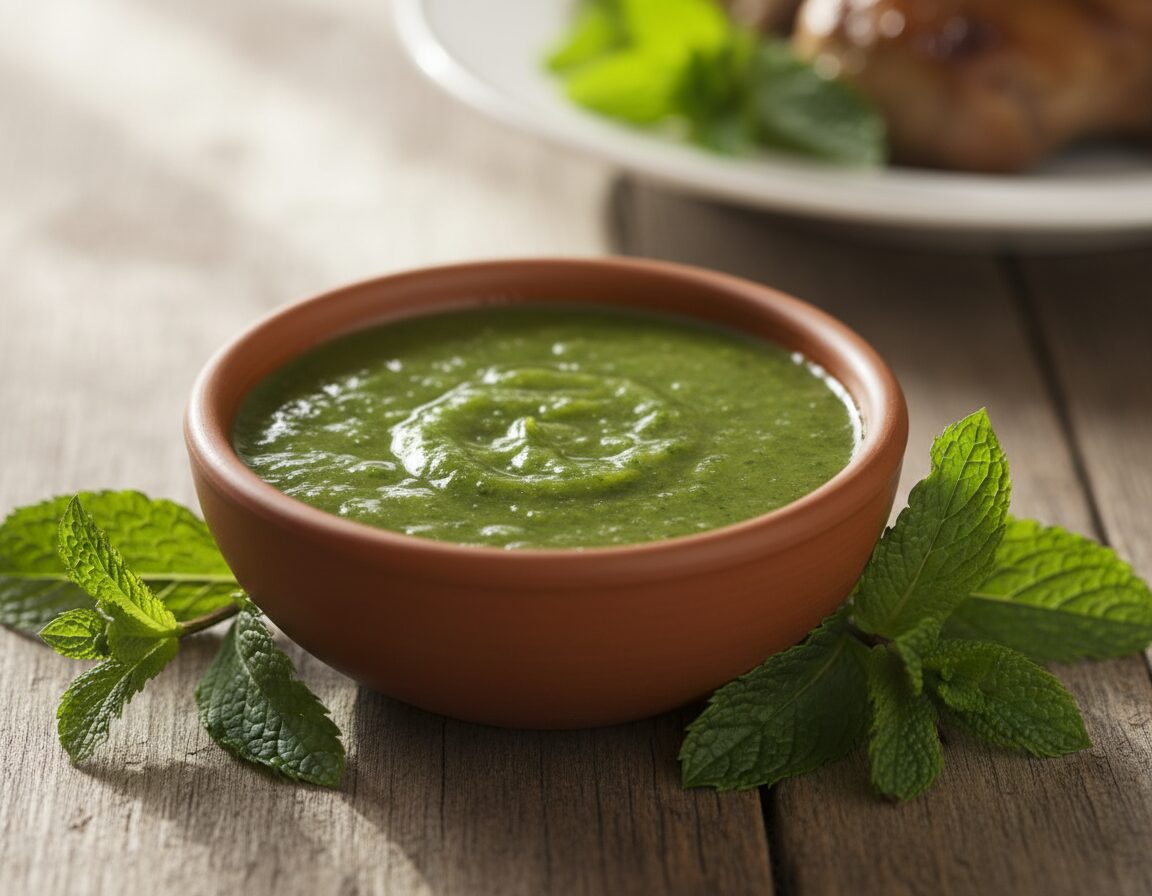
I reach for mint sauce whenever roast lamb is on the menu. It’s that bright, herb-forward lift that stops fatty meat feeling heavy.
How it’s made
Mint leaves are finely chopped and steeped in vinegar, often with a touch of sugar. The vinegar gives bite; the sugar smooths the edge.
The result is sharp, herby and properly refreshing — not a fake toothpaste mint but fresh garden flavour.
Where it shines
Spoon it alongside roast lamb for a classic match. Dab it on grilled lamb skewers for a quick, bright contrast.
Use sparingly. A little keeps the meat as the star and lets the mint sauce lift each bite.
When I bend the “mint-only-with-lamb” rule
Some people say mint belongs only with lamb. I agree at a formal roast. But I’ll ignore that rule with leftovers.
- Stir a small spoon into yoghurt for an easy dip with grilled meats.
- Use it cold at the table — don’t cook it into the pan.
- If it’s too harsh, add a pinch more sugar, not more mint.
| Use | Why | Tip |
|---|---|---|
| Roast lamb | Cuts fat; brightens flavour | Serve at table |
| Grilled meats | Fresh acid lift | Stir into yoghurt sparingly |
| Leftovers/wraps | Adds freshness | Use small spoonfuls |
Horseradish and English mustard: when I want proper heat
Heat can be a finishing touch — not a punishment — and horseradish and English mustard do it best for me. I keep both on the side and use them sparingly so the meat or cheese stays the star.
Horseradish sauce with roast beef, beetroot and smoked fish
Horseradish sauce is creamy and pungent, with a nasal, toothy kick that clears the sinuses. It’s my go-to with roast beef; a small dollop brightens each slice without hiding the beef flavour.
I also like it with beetroot — the sweet earthiness takes the heat well. And it cuts through oily smoked fish when I need a sharp counterpoint.
English mustard with ham, roast beef and macaroni cheese
English mustard is a fiery paste made from ground mustard seeds. It gives a clean, immediate burn. I use it on ham and roast beef and stir a little into macaroni cheese for a proper bite.
- Difference in heat: horseradish hits up the nose; English mustard is a direct, longer burn.
- Start small: smear thinly on sandwiches or dollop at the table for roast beef.
- If it’s too much: dilute with cream or yoghurt, add a touch of sugar, or balance with extra veg or meat.
| Condiment | Top use | Quick tip |
|---|---|---|
| Horseradish sauce | Roast beef, beetroot, smoked fish | Small dollop; serve cold |
| English mustard | Ham, roast beef, macaroni cheese | Mix into sauce or thin layer in sandwich |
| Both | Grilled meats, chicken, cheese | Start small; adjust with cream |
Fish and chip shop favourites I reach for at the seaside
There’s a neat trio I reach for at the seaside: something creamy, something sharp, and something saucy and sweet. I use each depending on whether I’ve got battered fish, scampi, sausages or a tray of chips.
Tartare sauce for a creamy, bright bite
Tartare sauce is mayonnaise with chopped capers, gherkins and lemon. It’s cool against hot batter and adds a briny lift that keeps the fish tasting fresh.
I spoon a little on the side and dunk; that way the batter stays crisp and the tartare’s tang meets the fish in each bite.
Malt vinegar — the chippy punch
Malt vinegar comes from malt syrup turned into beer and then vinegar. It has a full-bodied, pungent flavour you only get at the seaside.
I don’t drown my chips in it. I aim a thin stream across the top and wait a few seconds so it soaks in without going soggy. If I want a stronger hit, I keep a spare pot to dip into.
Curry sauce on chips: proper fusion comfort
The curry sauce I mean is a mild, savoury-sweet sauce made for chips — a bit of Anglo-Indian comfort food. It’s not a novelty; it cushions salty chips with gentle spice and sticky warmth.
Quick pairing nudges: tartare for fish, curry sauce for chips, and malt vinegar as the go-to condiment for anything fried if you like that classic seaside flavour.
- Best with fish: tartare sauce.
- Best with chips: curry sauce or a splash of malt vinegar.
- All-round: keep vinegar to hand for fried dishes you want to wake up.
| Item | Top use | Quick tip |
|---|---|---|
| Tartare sauce | Battered fish | Spoon on side; dip to keep batter crisp |
| Malt vinegar | Chips & fried dishes | Aim thin stream; wait to avoid sogginess |
| Curry sauce | Chips | Warm, mild spice — comfort food |
If you want a proper seaside benchmark, try the method I trust for the perfect tray: order the fish and chips, keep tartare on the side, add malt vinegar with restraint, and drizzle curry sauce only on a portion you plan to eat straight away. For a longer how-to, I like this guide to making the perfect fish and chips: perfect fish and chips.
Pickles and relishes for pub lunches and ploughman’s plates
A pile of bread, cold cuts and cheese can be heavy; a sharp pickle is the one thing that makes it sing. I keep a small selection at home so a ploughman lunch feels lively rather than flat.
Piccalilli: mustard-warm, chunky veg
Piccalilli is made vegetables — often cauliflower and gherkin — in a mustardy, turmeric sauce. It brings crunch and a warm spice note. I spoon a thin line into pork pies and onto mature cheese to cut the fat.
Branston Pickle: the cheese-and-pickle staple
Branston is chunky veg in a sweet‑tangy hug of vinegar, apple and tomato with warming spices. I use it in sandwiches and with cold cuts. A thin layer is enough — it’s the base that completes a cheese sandwich or a beer-side plate.
Pickled red cabbage & onion chutney
Pickled red cabbage gives bright acidity and crunch to pies and leftovers. It wakes rich, brown dishes and pairs well with british beer.
Onion chutney is sticky-sweet and sharp. I dollop it next to strong cheese or on a sandwich when I want sweetness without ketchup. Keep jars chilled and offer small spoons at the table.
- Serve thin layers in sandwiches; use small spoons for picky eaters.
- One jar in the fridge covers most pub-lunch needs.
| Pickle | Top use | Quick tip |
|---|---|---|
| Piccalilli | Pork pies, mature cheese | Thin smear |
| Branston Pickle | Cheese sandwiches, cold cuts | Small layer; balances tomato notes |
| Onion chutney | Strong cheese, burgers | Dollop at table |
Worcestershire sauce: the quiet hero in the cupboard
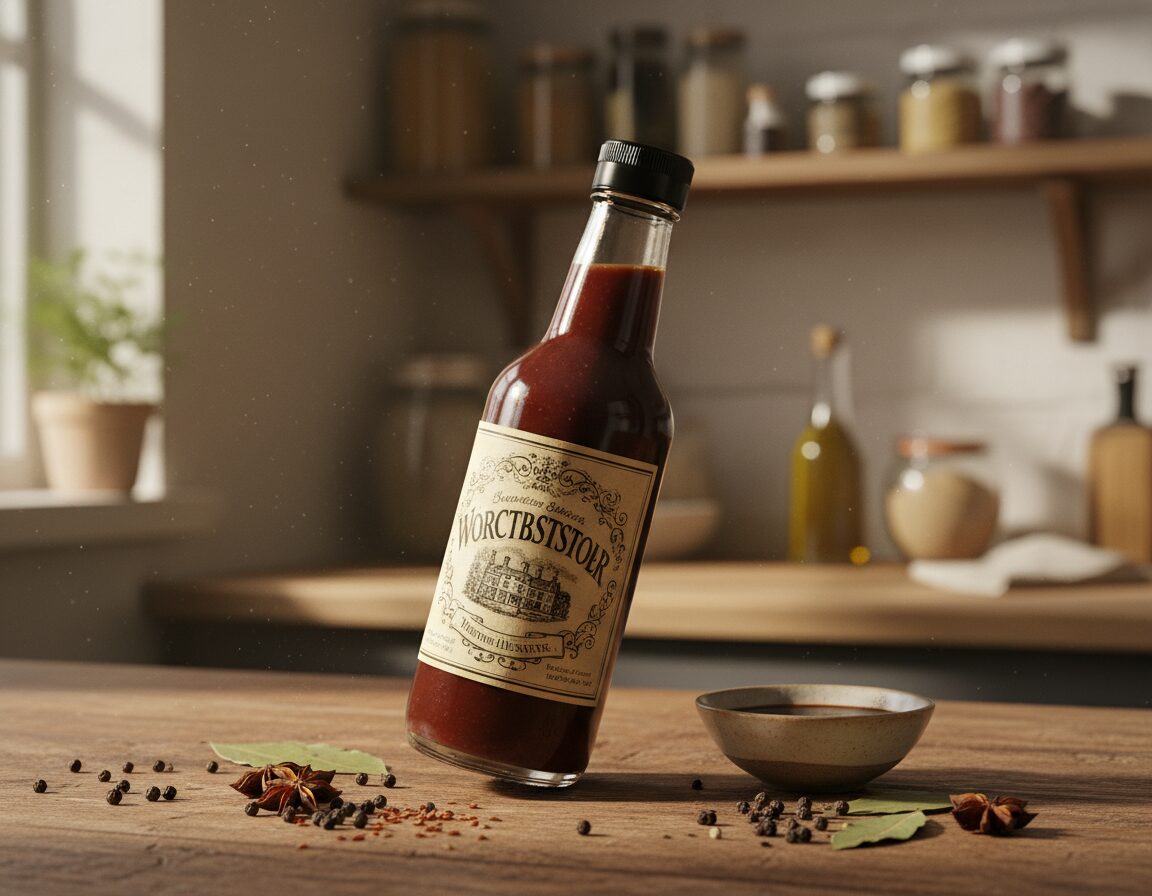
I keep a small bottle of Worcestershire sauce in my back pantry for those moments a dish needs depth without fuss. It’s the kind of condiment that works behind the scenes — adding weight and interest without shouting for attention.
What it’s made of and why it tastes so savoury
Worcestershire sauce is a dark, fermented sauce made from anchovies, tamarind, vinegar and warming spices. That mix gives it a meaty, umami-rich flavour — tangy, slightly sweet and oddly moreish. The anchovies and tamarind are why it reads as “meaty” even in vegetarian dishes.
Where I use it most
I reach for a dash in stews and soups to lift the stock. A splash in mince or casseroles adds instant savoury balance.
It’s also my trick for cheese on toast — a tiny drizzle before grilling wakes the cheese up. And I often add a few drops to a Bloody Mary to show what it does in a cocktail: deepens tomato and ties spices together.
How not to overdo it
This sauce is concentrated, so I always start with a tiny dash and taste. Add more only if needed. If you go too far and it gets harsh, fix it with extra stock, a knob of cream, more tomato or a pinch of sugar — those soften the bite fast.
- Tip: one dash at a time; taste between additions.
- Best with: stews, soups, mince, cheese on toast and cocktails.
For a simple, related midweek recipe that benefits from a splash of savoury depth, try my easy bangers and mash guide — it shows restraint with bold flavour: my easy bangers and mash recipe.
Gentleman’s Relish and mushroom ketchup: old-school umami for grown-up toast
When I want grown-up umami without standing over a pot all afternoon, I turn to two old-fashioned condiments. They are both intense, so a little goes a very long way.
Gentleman’s Relish (Patum Peperium) — a tiny tin of salty history
Gentleman’s Relish is a spreadable anchovy paste blended with butter and spices. It dates back to 1828 and tastes sharply savoury.
I use the thinnest scrape on hot toast or melted into scrambled eggs. It lifts cheese dishes and steaks, but it can dominate if you’re heavy-handed.
Mushroom ketchup — the 18th-century ancestor of our ketchup obsession
Mushroom ketchup is earthy and savoury, made from mushrooms, salt, vinegar and spices. It behaves more like a seasoning sauce than sweet tomato ketchup.
I treat it like liquid umami — a dash in risotto or stirred into a jacket potato filling adds depth without sweetness.
- Why I keep them: both are umami shortcuts for busy dishes.
- How to use: add a little, taste, then stop.
- If you dislike anchovies: lean on mushroom ketchup first or use these inside cooking rather than straight on toast.
| Product | Core notes | Best quick uses |
|---|---|---|
| Gentleman’s Relish | Anchovy, butter, spice — very salty | Hot toast, scrambled eggs, melted into cheese |
| Mushroom ketchup | Earthy, salty, vinegar backbone | Risotto, jacket potatoes, seasoning for steaks |
| Use tip | Start with a scrape or a dash | Small amounts; builds fast |
Salad cream: retro, tangy and still divisive
Salad cream divides opinion fast — people either reach for it or push it away. It’s tangier and looser than mayonnaise, which is why it can polarise a plate.
What it is: salad cream is made from vinegar, oil, egg yolks and mustard. That mix gives it a sharper, more vinegary feel than mayo and makes it runnier on sandwiches and salads.
Why it eats differently to mayo
The extra vinegar and mustard cut richness. Egg yolks bind the emulsion, but the balance tilts to acid. That changes the taste and the mouthfeel — lighter, brighter, less creamy.
How I use it
- I drizzle a little over hard‑boiled eggs for instant lift.
- I stir it into plain leaves and chopped veg for a quick salad.
- I spread a thin layer in sandwiches when I want sharpness rather than richness.
Not for every plate — I skip it on dishes that already carry plenty of acid. If someone’s unsure, I suggest mixing half‑and‑half with mayo, using less, or pairing it with salty ham or strong cheese to balance the edge.
| Use | Best with | Quick tip |
|---|---|---|
| Hard‑boiled eggs | Egg, salad leaf | Drizzle; avoid drowning |
| Sandwiches | Ham, cheese | Thin smear for sharpness |
| Quick salads | Mixed leaves, cucumber | Mix with a spoon of mayo if too tart |
Sweet and fruity sauces I use to balance rich meat and spice
Sweet condiments are my quick answer when a plate needs a gentle counterpoint to rich meat or bold spices. They save time and money — a jar does the job of a whole side dish.
Apple sauce with roast pork, gammon and even black pudding
I keep apple sauce for roast pork and gammon because its gentle sweetness cuts fat without hiding texture. A spoonful beside slices lifts the meat and brightens each bite.
I also like it with black pudding — fruit against deep savoury works better than it sounds. Don’t drown the plate; small amounts make perfect contrast.
Mango chutney as the takeaway essential for poppadoms and coronation-style fillings
Mango chutney is my go-to with poppadoms and curries and it’s key in coronation-style sandwich fillings. At home I stir a little into mayo for chicken sandwiches or dot it beside leftovers that need a lift.
Sweet chilli jam for cheese boards, flatbreads, burgers and cold cuts
Sweet chilli jam gives sticky sweet-heat and pairs brilliantly with cheese and cold cuts. I slather a little on burgers or warm flatbreads when I want spice without faff.
- Why I keep these jars: they balance salty, fatty meat or calm spicy dishes fast.
- Use less, taste more: a teaspoon often makes perfect change to a plate.
- Home tips: mix mango chutney into mayo for quick chicken fillings; pair apple sauce with roasted veg for contrast.
| Condiment | Top uses | Quick tip |
|---|---|---|
| Apple sauce | Roast pork, gammon, black pudding | Small spoon beside slices |
| Mango chutney | Poppadoms, coronation-style fillings, chicken sandwiches | Stir into mayo for extra lift |
| Sweet chilli jam | Cheese boards, burgers, flatbreads | Use sparingly; balances heat and sweet |
Conclusion
I treat a condiment as a small tool that can solve a big flavour gap. My rule is simple: pick a sauce to balance the plate — acid for richness, heat for blandness, sweetness for spicy or salty meats.
For a starter kit at home I keep one vinegary bottle, a mustard, a sweet tomato option and a creamy tartare or mayo. That covers breakfast, an english breakfast, roast meats, sandwiches, fish and chips without a crowded shelf.
Try one new sauce at a time. Use small amounts on something familiar — a sandwich or leftovers. Taste as you go and trust what you like. If it lifts the dish, it’s the perfect partner.